Has Operation Devil Hunt Failed to Stop Escaped Criminals and Recover Arms in Bangladesh?
Synopsis
Operation 'Devil Hunt' in Bangladesh has led to massive arrests but has not curbed rising violence ahead of the crucial February elections. Concerns escalate as political killings continue and weapons remain unrecovered, raising questions about the operation's effectiveness.
Key Takeaways
Operation Devil Hunt has led to significant arrests but not resolved underlying violence.
Political killings have increased, raising concerns ahead of the February elections .
Over 1,300 arrests were made in the early phases of the operation.
Weapons looted during the 2024 uprising remain unaccounted for.
Public sentiment is critical of the operation’s effectiveness in ensuring safety.
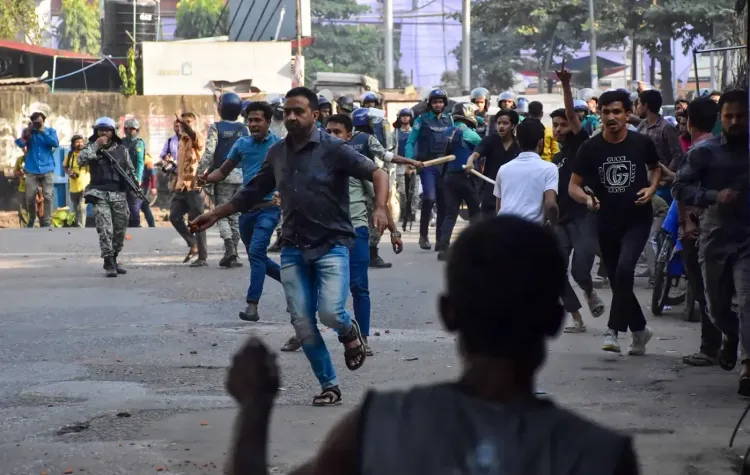
New Delhi, Jan 9 (NationPress) The crackdown known as 'Devil Hunt' in Bangladesh has emerged as one of the most extensive security operations in recent times, resulting in thousands of arrests throughout Dhaka and other regions. However, it has not effectively tackled the underlying issue of escalating violence as the February 12 elections approach, as per various reports.
While officials assert that the operation is crucial for reinstating law and order prior to national elections, the general populace and human rights organizations express significant apprehensions regarding ongoing murders, the absence of recovered weapons, and the presence of escaped convicts.
The report from 'The Daily Star' noted, “Despite the initiation of Operation Devil Hunt, the persistence of killings and the inability of law enforcement to apprehend escaped criminals and recover stolen weapons raise serious concerns ahead of the national elections.”
Furthermore, the report highlighted that eight political killings have occurred since the election schedule was announced on December 11, including the assassination of Sharif Osman Bin Hadi, a spokesperson for Inqilab Moncho and a key figure in the July uprising.
The operation was reinstated shortly after Hadi was shot on December 12 during an election campaign in Dhaka.
The second phase, which commenced on December 13, 2025, has persisted into 2026 with intensified raids. The first phase started on February 8, 2025, under the interim leadership of Chief Adviser Muhammad Yunus.
This initiative aimed to reduce rising crime rates, recover stolen arms, and capture escaped convicts following the student-led uprising that occurred in July-August 2024 and led to the downfall of the Awami League government led by Sheikh Hasina.
Reports indicate that over 1,300 arrests were made within the initial days of the operation, according to Bangladesh media. It was also noted that among those detained were primarily members of the Awami League and its affiliated organizations.
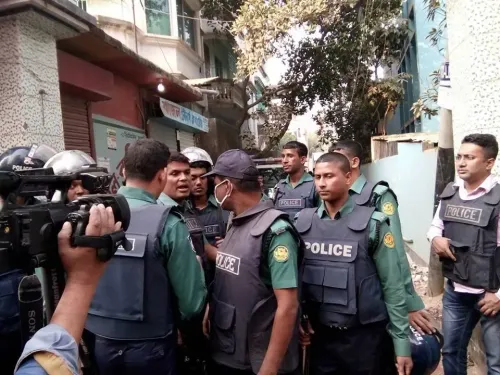
On January 3, Dhaka Metropolitan Police (DMP) arrested 98 individuals across the capital as part of 'Operation Devil Hunt Phase-2', focusing on crime-prone areas under various police jurisdictions.
Additionally, the Bangladesh Coast Guard apprehended a suspect and confiscated a firearm, hand grenades, and marijuana during a separate operation linked to Phase-2 in Bhola district.
Located approximately 117 km south of Dhaka, Bhola district is home to the largest island in Bangladesh, which shares its name.
Meanwhile, 'The Daily Star' reported, citing information from Police Headquarters, that over a thousand firearms pilfered during the July 2024 uprising remain unaccounted for, including 28 taken from Narsingdi jail.
Statistics from the police indicate that 3,785 murder cases were registered nationwide last year, inclusive of cases involving killings linked to the uprising.
Furthermore, the fates of around 710 inmates who fled from various prisons during the uprising are still unknown.
So far this year, at least four murders have transpired in Dhaka alone within the first nine days.
Bangladeshi analysts have cautioned that increasing violence could deter voter turnout, thus compromising democratic engagement. Many citizens believe the operation is more reactive than preventive, as violent incidents persist despite mass arrests.
Operation Devil Hunt encapsulates Bangladesh's challenge of reconciling security needs with public trust, while detractors assert it is politically driven.
As elections draw near, the effectiveness of the operation will be evaluated not solely by arrest figures but by its ability to restore true safety and confidence within the community.
Point of View
It is imperative to approach Operation Devil Hunt with an unbiased lens, acknowledging both the government's efforts to restore order and the legitimate concerns of citizens regarding ongoing violence and political killings. The operation's effectiveness will ultimately rest on its ability to foster a safe environment for voters ahead of the elections.
NationPress
24 Sept 2026
Frequently Asked Questions
What is Operation Devil Hunt?
Operation Devil Hunt is a comprehensive security initiative launched in Bangladesh aimed at curbing crime and restoring law and order prior to national elections.
How many arrests have been made during the operation?
Reports indicate that over 1,300 arrests were made within the first days of Operation Devil Hunt.
What concerns have been raised regarding the operation?
Concerns include ongoing political killings, the failure to recover stolen weapons, and the presence of escaped convicts.
When are the national elections scheduled?
The national elections in Bangladesh are scheduled for February 12.
What impact could rising violence have on the elections?
Increasing violence could suppress voter turnout, thus undermining democratic participation.