CM Dhami: 17 Lakh Beneficiaries Under Atal Ayushman Yojana
Synopsis
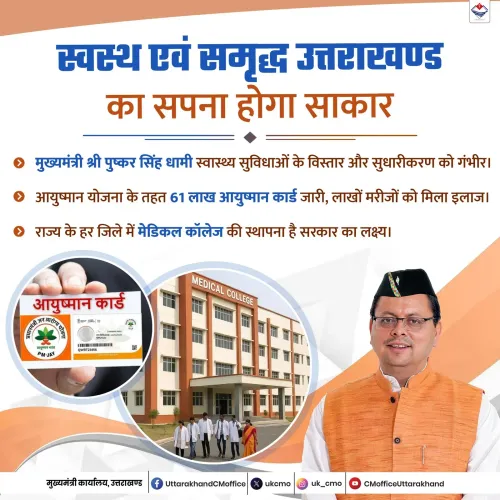
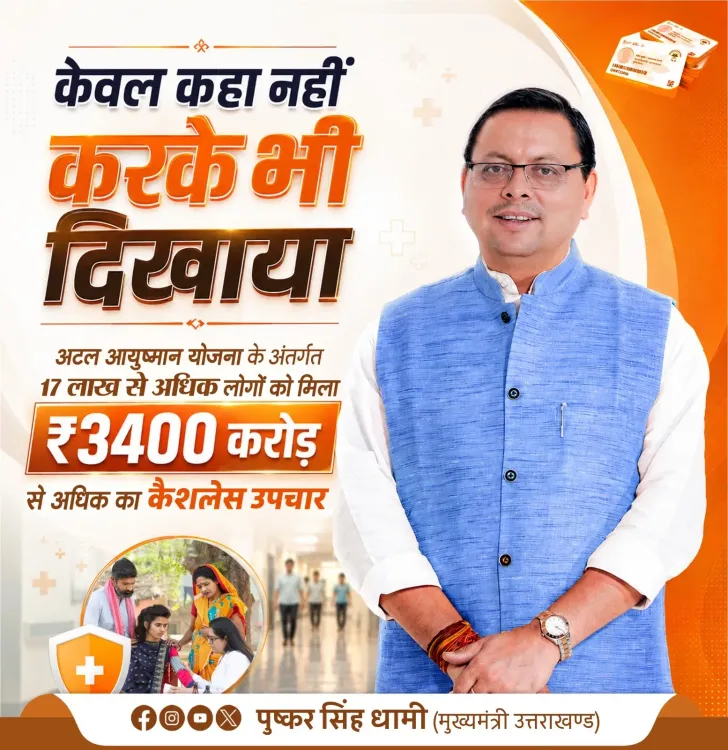
Uttarakhand CM Pushkar Singh Dhami has highlighted that the state's Atal Ayushman Yojana has extended cashless healthcare worth over ₹3,400 crore to more than 17 lakh residents, reaffirming the government's pledge that financial hardship will never obstruct medical treatment.
Key Takeaways
Uttarakhand CM Pushkar Singh Dhami made the announcement on 12 July 2026 via a post on X.
The Atal Ayushman Yojana has covered over 17 lakh beneficiaries since its launch.
Total cashless treatment delivered under the scheme exceeds ₹3,400 crore .
The scheme is Uttarakhand's state-level adaptation of the central Ayushman Bharat PMJAY , introduced around 2019 .
The government's stated goal is to ensure no citizen faces a barrier to treatment due to financial constraints.
The policy mirrors similar state-level health insurance expansions in Bihar , Madhya Pradesh and Rajasthan .
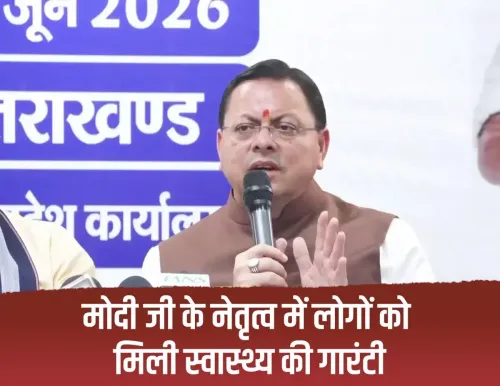
Uttarakhand Chief Minister Pushkar Singh Dhami on Sunday, 12 July 2026, reaffirmed his government's commitment to universal healthcare access, citing that the state's flagship Atal Ayushman Yojana has provided cashless treatment worth more than ₹3,400 crore to over 17 lakh residents of the state.
Context
Posting on X, CM Dhami wrote — 'हमारी सरकार प्रदेश के प्रत्येक नागरिक तक सुलभ, गुणवत्तापूर्ण एवं बेहतर स्वास्थ्य सेवाएं पहुँचाने के लिए निरंतर प्रतिबद्ध है' ['Our government is continuously committed to delivering accessible, quality and better health services to every citizen of the state']. He added that the scheme has given beneficiaries not just medical treatment but also 'financial security', and pledged that 'economic hardship should never become a barrier to anyone's treatment.'
The post underlines the BJP-led Uttarakhand government's continued push to highlight welfare delivery ahead of what observers note is an increasingly competitive political environment in the hill state.
Policy Backdrop
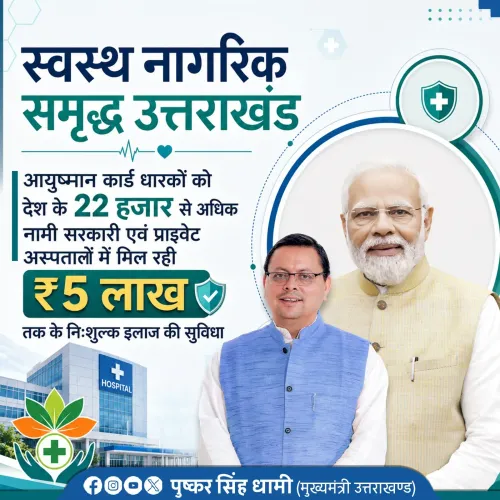
The Atal Ayushman Yojana is Uttarakhand's state-level adaptation of the central government's Ayushman Bharat Pradhan Mantri Jan Arogya Yojana (PMJAY), which was launched in September 2018 to shield poor households from catastrophic out-of-pocket medical expenditure. The national scheme offers up to ₹5 lakh annual coverage per eligible family for secondary and tertiary hospital care.
Uttarakhand adopted and rebranded the framework as Atal Ayushman Yojana around 2019, layering on state-specific hospital empanelment and local awareness campaigns. The scheme is named after former Prime Minister Atal Bihari Vajpayee, a gesture that reinforces the BJP's ideological lineage in the state.
India's states have progressively expanded health insurance coverage since the 2018 national rollout, with Bihar, Madhya Pradesh and Rajasthan following similar models — each adding branding, supplementary funding and local hospital networks to the central framework. Uttarakhand's emphasis on cashless treatment sits squarely within this federal pattern.
Stakeholders and Impact
The primary beneficiaries are low-income and economically vulnerable families across Uttarakhand, including residents of the state's remote hilly and rural areas where access to tertiary healthcare has historically been limited. Cashless treatment removes the need for upfront payment, a critical barrier in communities with irregular income.
Empanelled private and government hospitals in the state are also key stakeholders, as claim volumes directly affect their revenue streams and infrastructure planning. The ₹3,400 crore figure cited by CM Dhami represents the cumulative value of claims processed since the scheme's inception, signalling significant financial flow into the healthcare ecosystem.
What's Next
The government's stated resolve — that 'no person should face a barrier to treatment due to financial constraints' — points toward potential future expansions, whether in the sum insured, the range of covered procedures, or the number of empanelled hospitals. State budget documents and health department reports on annual claim volumes will be the key indicators to watch.
As Uttarakhand deepens its investment in publicly funded health insurance, the political and administrative test will be sustaining claim settlement speeds, preventing fraud, and ensuring that the scheme's reach extends to the most geographically isolated communities in the state.
Point of View
400 crore in cashless claims — reflects a well-established BJP playbook of anchoring welfare governance to visible, quantifiable outcomes. The post arrives at a time when health spending and insurance coverage are increasingly central to state-level political narratives across India. By invoking financial security alongside medical access, Dhami is framing the scheme not merely as a health intervention but as an economic safety net, broadening its political resonance. The real test, however, will be whether claim settlement efficiency and hospital empanelment keep pace with the government's ambitious outreach targets in Uttarakhand's geographically challenging terrain.
NationPress
11 Oct 2026
Frequently Asked Questions
What is Atal Ayushman Yojana in Uttarakhand?
Atal Ayushman Yojana is Uttarakhand's state-level health insurance scheme, adapted from the central Ayushman Bharat PMJAY programme, that provides cashless treatment at empanelled hospitals to eligible residents, particularly from low-income households.
How many people have benefited from Atal Ayushman Yojana?
According to CM Pushkar Singh Dhami's post on 12 July 2026, over 17 lakh people in Uttarakhand have received cashless treatment under the Atal Ayushman Yojana since the scheme's inception.
How much has been spent under Atal Ayushman Yojana?
CM Dhami stated that cashless treatment worth more than ₹3,400 crore has been provided to beneficiaries under the Atal Ayushman Yojana in Uttarakhand.
What is the difference between Ayushman Bharat and Atal Ayushman Yojana?
Ayushman Bharat PMJAY is the central government's national health insurance scheme launched in 2018, offering up to ₹5 lakh annual coverage per family. Atal Ayushman Yojana is Uttarakhand's state-level adaptation, introduced around 2019, with additional local hospital empanelment and state-specific branding.
Who is eligible for Atal Ayushman Yojana in Uttarakhand?
The scheme primarily targets economically vulnerable and low-income families in Uttarakhand, including those in rural and hilly areas, to provide cashless secondary and tertiary hospital care without the need for upfront payment.