CM Dhami: Over 7 Lakh Uttarakhand Farmers Getting PM-KISAN Benefits
Synopsis
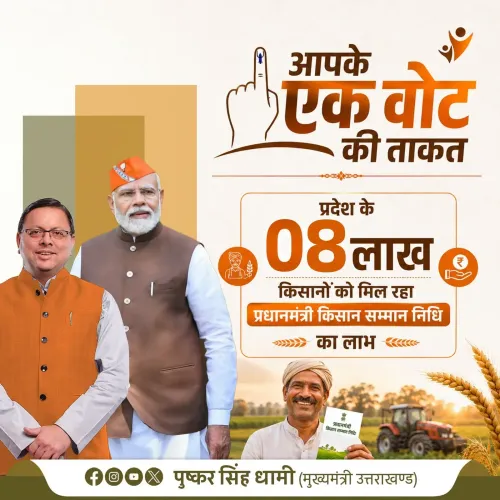
Chief Minister Pushkar Singh Dhami has stated that over seven lakh farmers in Uttarakhand are receiving PM-KISAN benefits, with the ₹6,000 annual direct income support reaching marginalised cultivators through transparent DBT delivery.
Key Takeaways
The Uttarakhand CMO quoted CM Pushkar Dhami on 20 June 2026 confirming over 7 lakh farmers are receiving PM-KISAN benefits in the state.
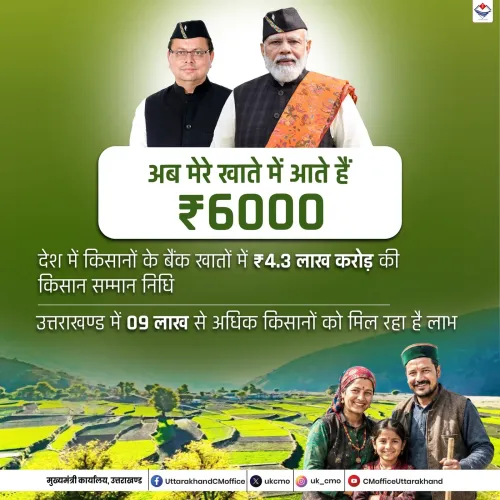
PM-KISAN provides ₹6,000 per year in three instalments of ₹2,000 directly to eligible landholding farmer families via DBT.
The scheme was launched by the Government of India in February 2019 and is Aadhaar-linked to curb leakages.
Uttarakhand has a predominantly small and marginal farmer population, making direct income transfers especially significant.
The state government has emphasised full transparency and last-mile reach in delivering the central scheme's benefits.
The next quarterly instalment data from the Union Ministry of Agriculture will provide an updated national beneficiary count.
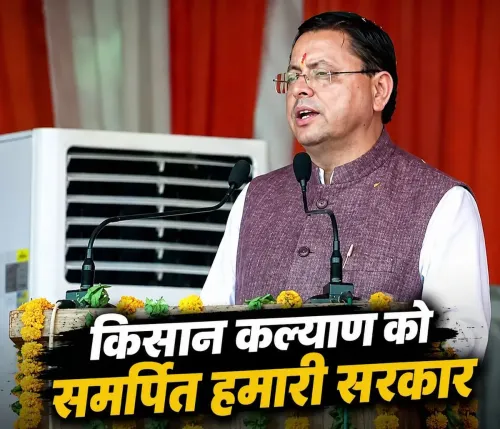
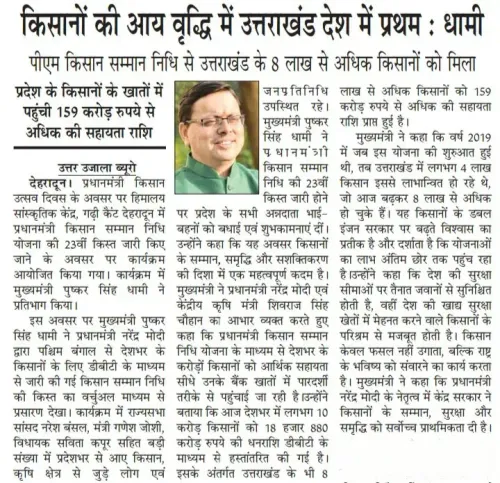
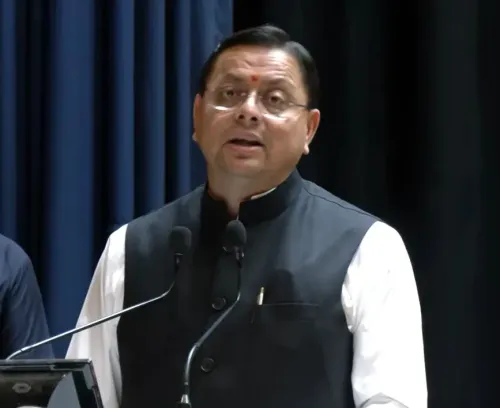
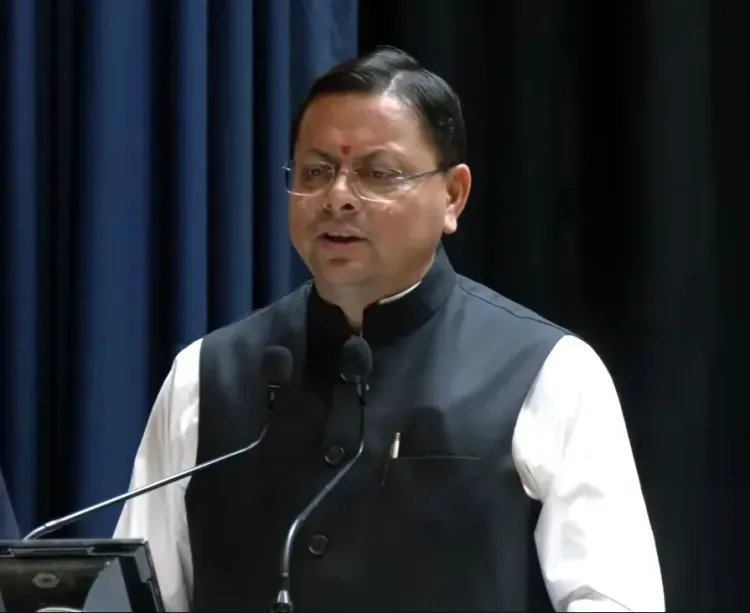
The Chief Minister's Office of Uttarakhand, citing Chief Minister Pushkar Singh Dhami, stated on Saturday, 20 June 2026 that more than seven lakh farmers in the state are currently receiving benefits under the Pradhan Mantri Kisan Samman Nidhi (PM-KISAN) Yojana, with the scheme's support reaching the most marginalised cultivators through full transparency.
Context
The Chief Minister's Office quoted CM Dhami as saying — 'aaj kareeb saat lakh se adhik kisanon ko Pradhan Mantri Kisan Samman Nidhi Yojana ka labh mil raha hai' ('Today, more than approximately seven lakh farmers are receiving benefits under the Pradhan Mantri Kisan Samman Nidhi Yojana') — and that the scheme's benefits are reaching 'annadata' (food providers) standing at the last mile with complete transparency. The statement underscores the state government's emphasis on efficient delivery of central welfare entitlements to Uttarakhand's predominantly small and marginal farming communities.
Policy Backdrop
PM-KISAN was launched by the Government of India in February 2019 as a direct benefit transfer (DBT) scheme providing eligible landholding farmer families with ₹6,000 per year, disbursed in three equal instalments of ₹2,000 directly into bank accounts. The scheme is Aadhaar-linked, a design feature intended to eliminate duplicate or ghost beneficiaries and ensure income support flows to genuine cultivators. Uttarakhand, a Himalayan state with a large share of small and marginal farmers dependent on rain-fed agriculture and horticulture, has been an active participant in the scheme since its inception.
State governments across India have routinely highlighted PM-KISAN uptake figures as a marker of administrative efficiency and last-mile reach. The emphasis on transparency aligns with the broader national shift towards Aadhaar-seeded DBT across social welfare programmes, a trend that has gathered pace since 2014.
Stakeholders and Impact
The primary beneficiaries are Uttarakhand's small and marginal farmers, for whom the annual ₹6,000 income supplement can partially offset input costs such as seeds, fertilisers, and irrigation. In a state where landholdings are typically fragmented and farm incomes are modest, direct cash transfers carry meaningful weight in household budgets. The stress on 'last-mile' delivery signals that the state administration is working to ensure even the most geographically remote cultivators — a significant cohort in Uttarakhand's hilly terrain — are not excluded from the scheme.
CM Dhami has consistently positioned the implementation of central schemes as a governance priority since taking office in 2021, frequently using public communications to highlight beneficiary numbers and delivery metrics as evidence of ground-level impact.
What's Next
Attention will now turn to the release of the next quarterly instalment data by the Union Ministry of Agriculture and Farmers' Welfare, which will provide an updated national picture of PM-KISAN disbursements. Any announcements in the Uttarakhand state budget regarding supplementary farmer support measures or state-funded top-ups to the central scheme will be watched closely by agricultural policy observers. The state's ability to sustain and expand the verified beneficiary base will be a key metric of its farm welfare delivery record.
Point of View
CM Dhami is aligning Uttarakhand's messaging with the broader national DBT narrative that has been central to the ruling dispensation's governance identity since 2014. The absence of a state-funded top-up to PM-KISAN, which some states have introduced, suggests Uttarakhand is currently content to highlight implementation rather than augment the central entitlement. Sustained beneficiary growth and timely instalment release will ultimately determine whether the claim of comprehensive reach holds up to independent scrutiny.
NationPress
19 Sept 2026
Frequently Asked Questions
What is the PM-KISAN scheme and how much money do farmers get?
PM-KISAN (Pradhan Mantri Kisan Samman Nidhi) is a central government scheme launched in February 2019 that provides eligible landholding farmer families with ₹6,000 per year, paid in three instalments of ₹2,000 each, directly into their bank accounts via direct benefit transfer.
How many farmers in Uttarakhand are getting PM-KISAN benefits?
According to a statement by Chief Minister Pushkar Singh Dhami cited by the Uttarakhand CMO on 20 June 2026, more than seven lakh farmers in the state are currently receiving PM-KISAN benefits.
Who is Pushkar Singh Dhami?
Pushkar Singh Dhami is the BJP Chief Minister of Uttarakhand, in office since 2021. He has frequently highlighted the implementation of central welfare schemes, including PM-KISAN, as a governance priority.
How does PM-KISAN money reach farmers?
PM-KISAN uses Aadhaar-linked direct benefit transfer (DBT) to deposit funds directly into beneficiary farmers' bank accounts, a mechanism designed to eliminate intermediaries and reduce leakages.
What happens next with PM-KISAN disbursements in Uttarakhand?
The next quarterly instalment release by the Union Ministry of Agriculture and Farmers' Welfare will provide updated beneficiary and disbursement figures. Any state budget announcements on supplementary farmer support measures in Uttarakhand will also be significant to watch.