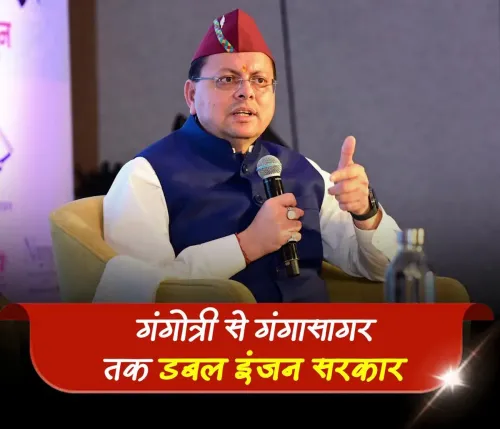
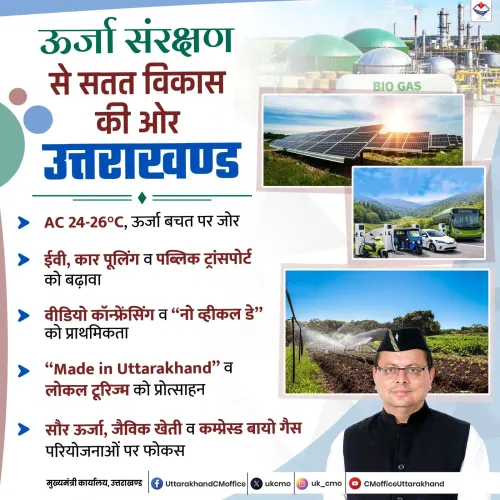
CM Dhami flags off 11 clean fuel vehicles under Uttarakhand green mobility push
Synopsis
Uttarakhand CM Pushkar Singh Dhami flagged off 11 clean fuel vehicles and handed out capital grants under the state's Clean Mobility Transformation Policy on 28 July 2026, while announcing EV charging network expansion across Dehradun, Haridwar, Haldwani, and Rishikesh.
Key Takeaways
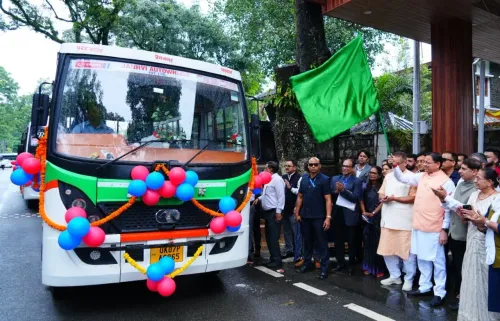
11 new clean fuel vehicles were flagged off by CM Dhami at Mukhya Sevak Sadan, Dehradun, on 28 July 2026 .
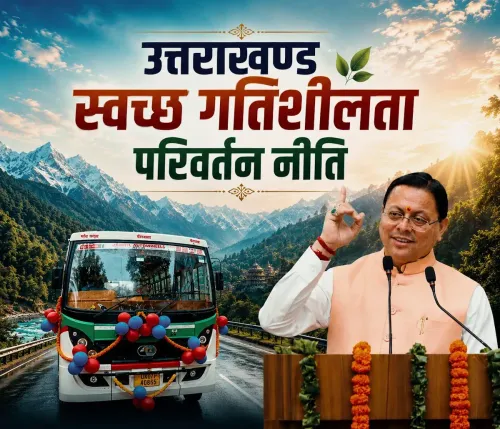
Capital grants and incentive amounts were distributed to beneficiary vehicle owners under the Uttarakhand Swachh Gatishilata Parivartan Niti .
The state is developing an EV charging station network across Dehradun, Haridwar, Haldwani , and Rishikesh .
The policy aligns with the central government's FAME II scheme (2019) supporting EV adoption and charging infrastructure nationally.
Dhami framed the initiative as a 'balanced coordination of ecology and economy' suited to Uttarakhand's Himalayan and pilgrimage tourism economy.
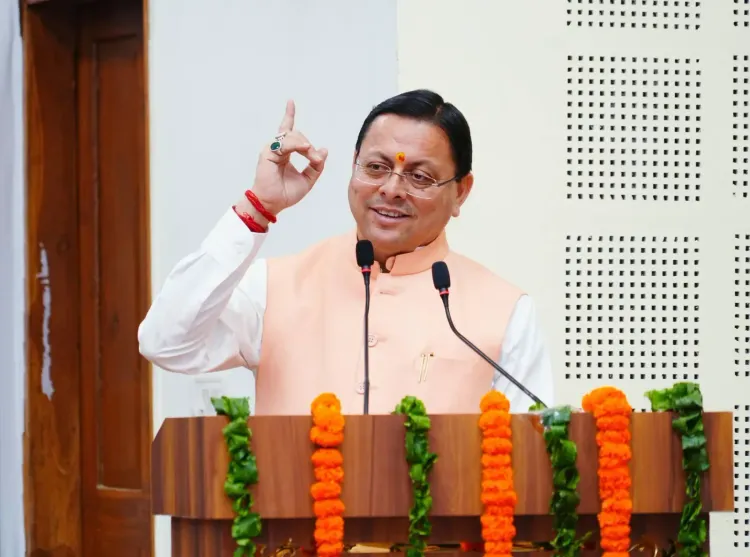
At the Mukhya Sevak Sadan in Dehradun on Tuesday, 28 July 2026, Uttarakhand Chief Minister Pushkar Singh Dhami distributed capital grants and incentive amounts to beneficiary vehicle owners under the state's clean mobility scheme — then flagged off 11 new clean fuel vehicles to mark the policy's expanding reach.
Posting about the event, CM Dhami wrote: 'हमारी सरकार "इकोलॉजी और इकोनॉमी" के संतुलित समन्वय के साथ विकास की नई दिशा तय कर रही है' — 'Our government is charting a new direction for development through a balanced coordination of ecology and economy.' The line captures the political argument Dhami is making: that environmental responsibility and economic growth are not competing goals in Uttarakhand, but a single, integrated strategy.
What the Uttarakhand Clean Mobility Transformation Policy does
The Uttarakhand Swachh Gatishilata Parivartan Niti (Uttarakhand Clean Mobility Transformation Policy) is a state level scheme that offers capital grants and financial incentives to vehicle owners who switch to clean or electric fuel. The programme sits alongside — and draws political momentum from — the central government's FAME scheme (Faster Adoption and Manufacturing of Hybrid and Electric Vehicles), which has been operational since 2015 and was significantly expanded under FAME II in 2019.
Uttarakhand's particular geography makes the policy more than routine optics. The state's Himalayan ecosystem is acutely sensitive to air and noise pollution, with several of its most visited cities — Haridwar and Rishikesh — sitting on the Ganga and drawing millions of pilgrims and tourists annually. Diesel and petrol vehicles in high density corridors pose a direct threat to air quality in these zones.
Four cities, one charging network
The state government is building out an EV charging station network across Dehradun, Haridwar, Haldwani, and Rishikesh — the four cities named by Dhami as priority zones for electric vehicle adoption. The choice is deliberate: these are Uttarakhand's largest urban centres and its busiest tourist corridors, where the volume of vehicles creates the most acute pressure on air quality and where a charging network can achieve the fastest uptake.
The flagging off of 11 new clean fuel vehicles at Tuesday's event is a visible, symbolic marker of that rollout — beneficiaries receiving both financial support and the vehicles themselves under the scheme's framework.
Ecology meets economy in a Himalayan state
For a state whose economy depends heavily on pilgrimage tourism, hydropower, and its natural landscape, the 'ecology and economy' framing is not merely rhetorical. Degraded air quality or environmental damage in Rishikesh or Haridwar carries direct economic consequences. The push for green transport is, in that sense, also a bet on protecting Uttarakhand's core revenue base.
The next test for the policy will be in the numbers: how many vehicle owners have claimed grants, how many charging stations are operational across the four cities, and whether uptake among commercial operators — auto rickshaws, shared cabs, intercity buses — follows the early momentum. Those figures will determine whether Tuesday's ceremony marks a turning point or a photo opportunity.
Point of View
The BJP government in Uttarakhand is converting a national EV policy into a state level identity — particularly useful ahead of the next assembly cycle. The focus on Haridwar and Rishikesh, India's foremost pilgrimage cities, signals that green mobility is being deployed as much for optics in high footfall religious corridors as for measurable emission cuts. The real measure of the policy's ambition will come from charging infrastructure density and commercial vehicle uptake data, neither of which has been disclosed yet.
NationPress
27 Oct 2026
Frequently Asked Questions
What is the Uttarakhand Clean Mobility Transformation Policy?
The Uttarakhand Swachh Gatishilata Parivartan Niti is a state scheme that provides capital grants and financial incentives to vehicle owners who switch to clean or electric fuel, and supports the development of EV charging infrastructure across key urban centres.
Which cities are getting EV charging stations in Uttarakhand?
The state government is expanding EV charging station networks across four cities: Dehradun, Haridwar, Haldwani, and Rishikesh.
What did CM Dhami do at Mukhya Sevak Sadan on 28 July 2026?
CM Pushkar Singh Dhami distributed capital grants and incentive amounts to beneficiary vehicle owners under the clean mobility policy and flagged off 11 new clean fuel vehicles.
How does Uttarakhand's EV policy connect to the central FAME scheme?
Uttarakhand's clean mobility policy complements the central government's FAME scheme (2015, expanded as FAME II in 2019), which provides national level support for electric vehicle adoption and charging infrastructure development.
Why is green transport important for Uttarakhand specifically?
Uttarakhand's Himalayan ecosystem is ecologically sensitive, and its economy depends heavily on pilgrimage tourism in cities like Haridwar and Rishikesh — making clean transport both an environmental and an economic priority for the state.