CM Dhami Pushes Reverse Migration, Self-Employment in Uttarakhand
Synopsis
The Uttarakhand government under CM Pushkar Singh Dhami is pushing reverse migration and self-employment, with Bageshwar district as a focal point. The Mukhyamantri Swarozgar Yojana underpins the effort to stem decades of rural out-migration from the state's hill districts.
Key Takeaways
The Chief Minister's Office of Uttarakhand confirmed on October 14, 2026 that the Dhami government is actively promoting reverse migration and self-employment.
Bageshwar district in Kumaon division is highlighted as a focal area for these initiatives.
The Mukhyamantri Swarozgar Yojana , introduced around 2021 , provides loans and subsidies to self-employment ventures to reduce out-migration pressure.
Uttarakhand's hill districts have faced sustained out-migration for decades due to limited local economic opportunities.
Returning migrants and rural youth are the primary target beneficiaries of the state's self-employment push.
District-level rollout data and state migration statistics will be the key metrics to watch for measuring impact.
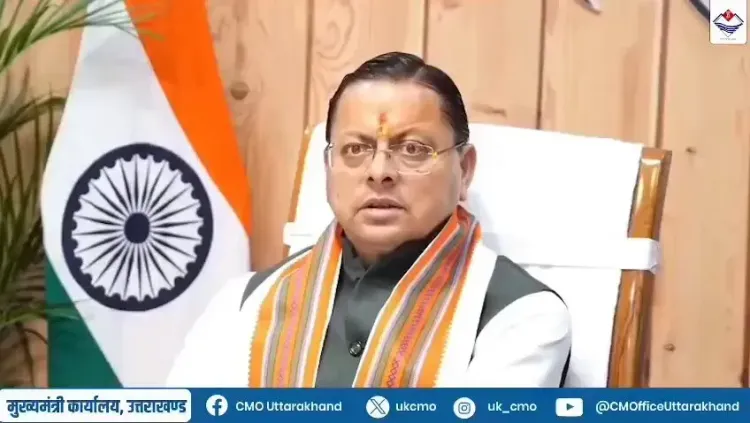
Decades of silent exodus from Uttarakhand's hills may be finding a counter-force. The Chief Minister's Office of Uttarakhand posted on Wednesday, October 14, 2026, that the state government under Chief Minister Pushkar Singh Dhami is actively promoting reverse migration and self-employment — with Bageshwar district emerging as a focal point of these efforts.
A hill state's oldest wound: the migration crisis
Uttarakhand's hilly districts have bled population for generations. Limited job opportunities, poor connectivity, and the gravitational pull of plains cities like Dehradun, Delhi, and Haridwar have hollowed out entire villages in the Kumaon and Garhwal ranges. Bageshwar, a district in the Kumaon division, has been among the hardest hit — a landscape of locked houses and ageing residents left behind by working-age youth seeking livelihoods elsewhere.
The economic and demographic cost is steep. Ghost villages are not a metaphor in Uttarakhand — they are a documented, recurring feature of the state's census data. Reversing that arc requires not just aspiration, but structured economic intervention at the grassroots level.
Mukhyamantri Swarozgar Yojana: the policy spine
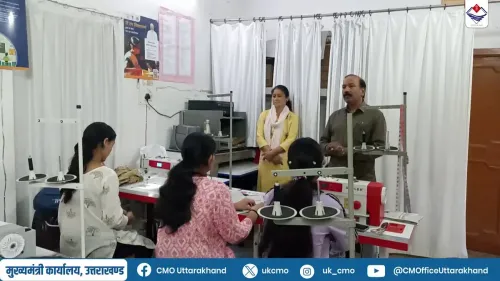
The Dhami government's push is anchored in the Mukhyamantri Swarozgar Yojana, a scheme introduced around 2021 that offers loans and subsidies to individuals looking to start self-employment ventures in the state. The programme is specifically designed to reduce the economic compulsion that drives out-migration — giving rural youth and returning migrants a viable reason to stay or come back.
The state's messaging around Bageshwar signals a district-level focus. Local implementation — setting up micro-enterprises, skilling returning workers, and creating supply chains for hill produce — is where such policies either prove themselves or stall. The government's communication push this week appears aimed at amplifying those local success signals.
Why 'reverse migration' is the harder half of the equation
Preventing out-migration is one challenge. Convincing those already settled in cities to return is another. Reverse migration requires not just economic incentive but infrastructure confidence — roads, schools, healthcare, and digital connectivity that make hill life genuinely liveable for a family, not just survivable.
The BJP-led Uttarakhand government has framed self-employment as the bridge between those two goals. A returning migrant who builds a livelihood unit — a small dairy, a handicraft enterprise, an agri-processing unit — both stabilises their own family and anchors a local economic cluster. Multiply that across Bageshwar's blocks and the demographic arithmetic begins to shift.
The real test will come in the numbers: district-level data on self-employment units sanctioned and operationalised, migration surveys in the next state economic report, and whether Bageshwar's pilot signals are replicable across equally stressed districts like Chamoli, Rudraprayag, and Pithoragarh. Uttarakhand has been here before with well-intentioned schemes. This time, the government is betting that sustained political will and targeted local execution can make the difference stick.
Point of View
Where demographic decline in rural constituencies directly threatens political and social stability. Anchoring the narrative in a specific district like Bageshwar signals a shift from state-level proclamation to block-level accountability — a harder, more credible test. However, Uttarakhand has seen successive governments launch self-employment schemes with limited sustained impact, making execution data far more politically consequential than the announcements themselves. If Bageshwar yields measurable results, it becomes a replicable template; if not, it risks becoming another line in a long list of unfulfilled hill-development pledges.
NationPress
14 Oct 2026
Frequently Asked Questions
What is reverse migration in Uttarakhand?
Reverse migration in Uttarakhand refers to the return of residents who had previously left hill districts for plains cities or other states, encouraged by government schemes that create local livelihood opportunities.
What is the Mukhyamantri Swarozgar Yojana in Uttarakhand?
The Mukhyamantri Swarozgar Yojana is a state government scheme introduced around 2021 that provides loans and subsidies to individuals setting up self-employment ventures, aimed at reducing out-migration from Uttarakhand's hill districts.
Why is Bageshwar district significant for Uttarakhand's migration crisis?
Bageshwar, in the Kumaon division of Uttarakhand, is one of the districts most affected by sustained out-migration, with many villages losing working-age populations over decades due to limited local economic opportunities.
What is CM Pushkar Singh Dhami doing about out-migration in Uttarakhand?
CM Pushkar Singh Dhami's government is promoting self-employment schemes and reverse migration initiatives, targeting rural youth and returning migrants with financial support to create livelihoods in hill districts.
Which districts in Uttarakhand face the worst out-migration?
Districts including Bageshwar, Chamoli, Rudraprayag, and Pithoragarh in Uttarakhand's hill regions have historically faced significant out-migration due to limited employment and infrastructure.