CM Dhami Sets 'Non-Negotiable' Safety Mandate for Kanwar Mela
Synopsis
Chief Minister Pushkar Singh Dhami has issued a 'non-negotiable resolve' — safe, orderly, and clean — as the governing mandate for the Kanwar Mela in Haridwar, vowing that every pilgrim leaves Devbhoomi Uttarakhand satisfied and secure.
Key Takeaways
CM Pushkar Singh Dhami declared the state's goal as 'surakshit, suvyavasthit aur swachh Kanwar' — safe, well-managed, and clean Kanwar Mela.
He described this as a 'vikalp rahit sankalp' — a resolve that admits no alternative.
The directive centres on ensuring every pilgrim leaves Haridwar and Uttarakhand with a safe and pleasant experience.
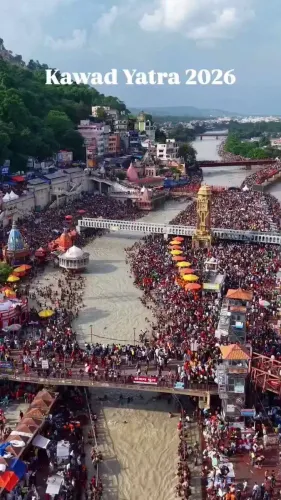
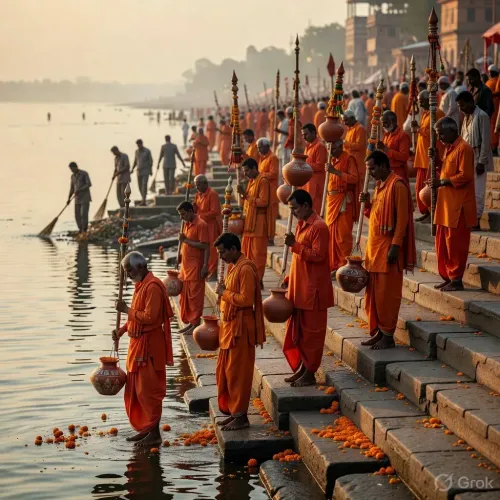
The Kanwar Mela draws millions of Kanwariyas to Haridwar annually during the Shravan month to collect Ganga water.
Uttarakhand positions the Kanwar Yatra as central to its identity as Devbhoomi and its religious tourism agenda.
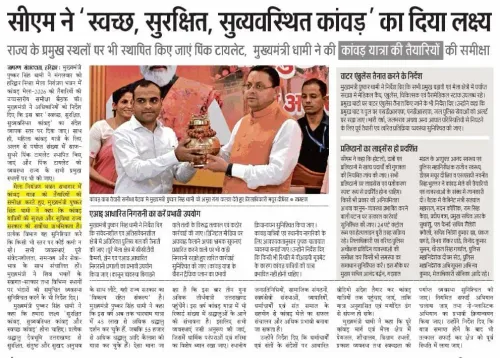
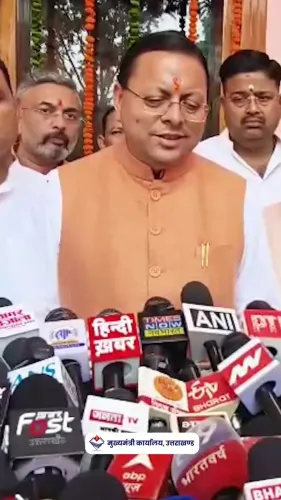
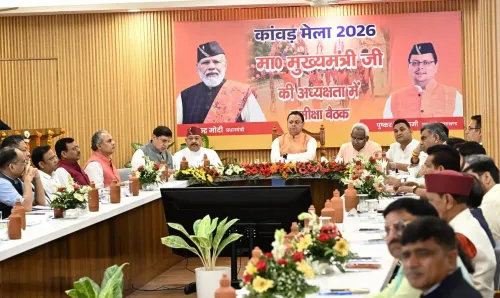
Three words frame Chief Minister Pushkar Singh Dhami's entire directive for this year's Kanwar Mela in Haridwar: safe, orderly, clean. On Wednesday, 29 July 2026, the Chief Minister's Office of Uttarakhand made the state government's position unmistakably clear — every pilgrim who enters Devbhoomi Uttarakhand must leave with a memory worth carrying home.
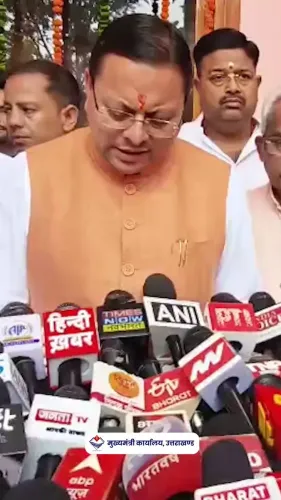
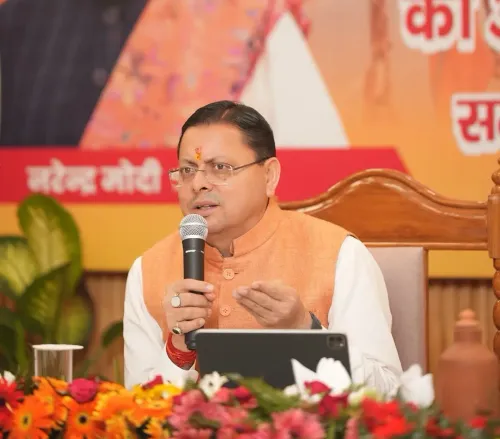
Speaking on the preparations, CM Dhami declared: 'surakshit Kanwar, suvyavasthit Kanwar aur swachh Kanwar' — 'safe Kanwar, well-managed Kanwar, and clean Kanwar' — must be the singular goal. He described it as the state government's 'vikalp rahit sankalp', a resolve that admits no alternative: every devotee should return 'safe, satisfied, and with a pleasant experience.'
Why Haridwar Carries the Weight of Millions
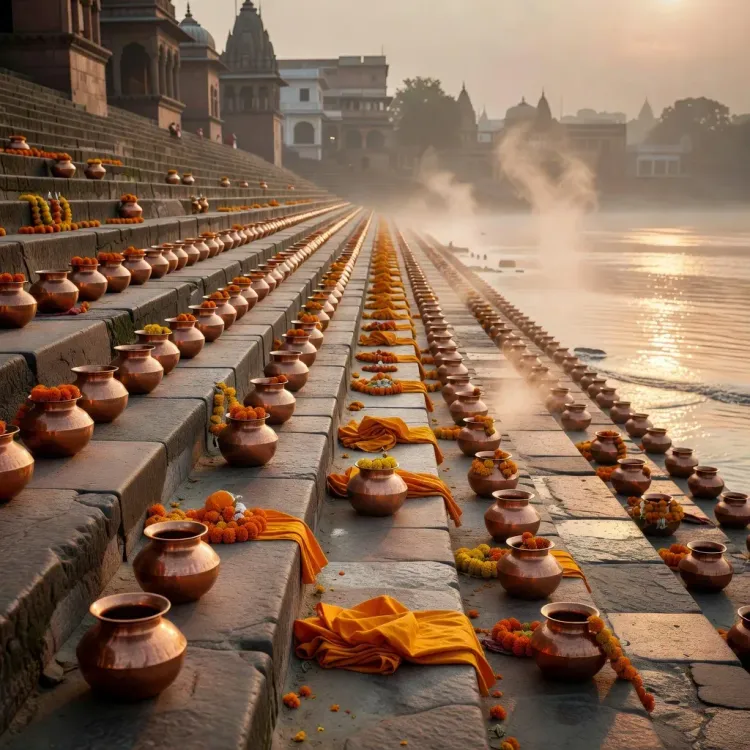
The Kanwar Mela is among India's largest annual religious gatherings. Every year during the Shravan month, millions of Kanwariyas — devotees of Lord Shiva — walk hundreds of kilometres to collect sacred Ganga water from Haridwar and carry it back to their home temples. The sheer scale transforms the city into a logistical test of the highest order: crowd management, traffic flow, sanitation infrastructure, and medical preparedness must all function in concert. Uttarakhand has long branded itself as Devbhoomi — the Land of the Gods — and the Kanwar Mela sits at the heart of that identity. A smooth yatra is not just a public-safety achievement; it is a statement about the state's capacity to host religious tourism at scale.Dhami's Three-Pillar Mandate
By publicly framing the government's commitment as 'non-negotiable,' CM Dhami is setting accountability benchmarks that his administration will be measured against. The three pillars — safety, order, cleanliness — map directly onto the three pressure points that have historically tested large pilgrim gatherings: crowd crush incidents, traffic gridlock, and sanitation failures. Stating them as an official resolve, rather than an aspiration, signals that district administrations, police, and civic bodies are expected to deliver on all three fronts without exception. Uttarakhand governments have coordinated security, sanitation, and crowd control for the Kanwar Yatra annually, but the explicit language of 'no alternative' raises the bar on what the state considers an acceptable outcome.Point of View
Order, cleanliness), his administration pre-empts any incident being dismissed as unforeseen. This fits a broader pattern in Uttarakhand of anchoring political capital to pilgrimage management, where a successful yatra season directly reinforces the Devbhoomi branding that underpins the state's religious tourism economy. The language of 'no alternative' also tightens the chain of command on district officials ahead of what is typically one of the highest-footfall events on the state calendar.
NationPress
13 Sept 2026
Frequently Asked Questions
What is the Kanwar Mela in Haridwar?
The Kanwar Mela is an annual Hindu pilgrimage held during the Shravan month, in which millions of devotees called Kanwariyas travel to Haridwar to collect sacred Ganga water and carry it back to Shiva temples in their home towns.
What did CM Dhami say about the Kanwar Mela 2026?
CM Pushkar Singh Dhami declared that the state government's goal is a 'safe, well-managed, and clean' Kanwar Mela, calling it a 'vikalp rahit sankalp' — a resolve with no alternative — so that every pilgrim returns satisfied and secure.
What does 'vikalp rahit sankalp' mean?
'Vikalp rahit sankalp' is a Hindi phrase meaning 'a resolve that admits no alternative' — CM Dhami used it to stress that delivering a safe and clean Kanwar Mela is a non-negotiable commitment for the Uttarakhand government.
Why is Uttarakhand called Devbhoomi?
Uttarakhand is called Devbhoomi, meaning 'Land of the Gods,' because it is home to major Hindu pilgrimage sites including Haridwar, Rishikesh, Kedarnath, and Badrinath, making religious tourism central to the state's identity and economy.
How does Uttarakhand manage the large crowds at Kanwar Mela?
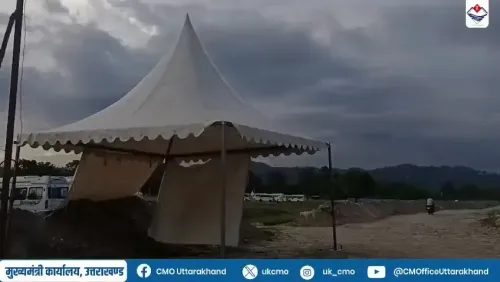
The Uttarakhand government coordinates annually with police, district administrations, and civic bodies to manage security, traffic, sanitation, and medical services during the Kanwar Yatra, which draws millions of pilgrims to Haridwar each year.