CM Dhami Hails Haridwar Kanwar Yatra 2026 as 5 Crore Devotees Converge

Synopsis
Uttarakhand CM Pushkar Singh Dhami declared Kanwar Yatra 2026 a success after around 5 crore Shiva devotees gathered in Haridwar, crediting police, health, disaster management, and sanitation teams for the orderly conduct of one of India's largest annual pilgrimages.
Key Takeaways
Uttarakhand CM Pushkar Singh Dhami announced approximately 5 crore devotees attended Haridwar Kanwar Yatra 2026 .
The yatra takes place annually during the Shravan month , with pilgrims carrying Ganga water to Shiva temples across northern India.
CM Dhami credited administration, police, health department, disaster management teams, sanitation workers, volunteers, and local residents for safe and orderly conduct.
Uttarakhand brands itself Devbhoomi and has built institutional capacity for mass pilgrimages through events including the 2021 Haridwar Kumbh Mela .
The pilgrimage has significant economic impact on Haridwar, Rishikesh, and surrounding districts through demand for food, lodging, and transport.
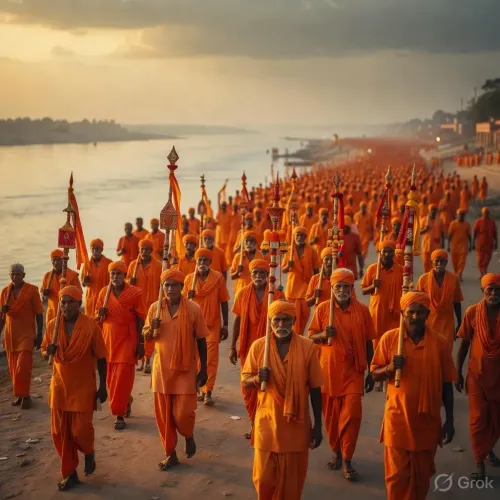
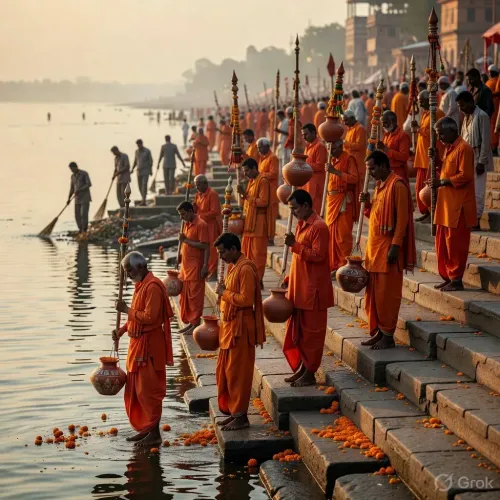
Millions of saffron-clad pilgrims, water pots balanced on decorated shoulder yokes, turned Haridwar into a river of faith — and Uttarakhand Chief Minister Pushkar Singh Dhami marked the close of Kanwar Yatra 2026 on Tuesday, August 11 with a heartfelt salute to what he called a 'magnificent manifestation of devotion.'
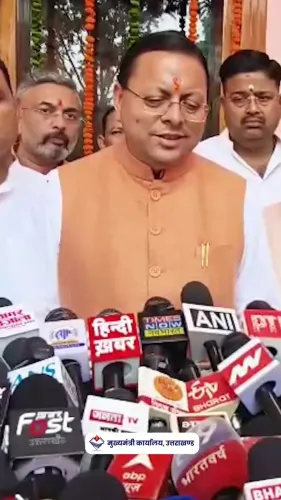
In a post on X, CM Dhami announced that approximately 5 crore Shiva devotees had converged on Haridwar for the annual pilgrimage, describing the turnout as an expression of 'unbreakable faith in Lord Shiva and trust in Uttarakhand's tradition of service and hospitality.' Translating his words: 'Aastha ke viraat swaroop ko naman' — 'A salute to the grand form of faith.'
A Pilgrimage That Turns a State Into a Shrine
The Kanwar Yatra is among the largest annual Hindu pilgrimages in the world. Every year during the Shravan month, devotees — called Kanwariyas — travel on foot to Haridwar on the banks of the Ganga, collect sacred river water in decorated pots, and carry it back to anoint Shiva temples in their home towns and villages. The yatra draws participants from across Uttar Pradesh, Haryana, Delhi, Rajasthan, and beyond, funnelling into Uttarakhand's narrow Himalayan foothills.
Uttarakhand has long branded itself Devbhoomi — 'Land of the Gods' — and the state government treats the yatra as both a sacred obligation and a logistical test of its administrative capacity. The 2026 edition, by the Chief Minister's account, passed that test at an unprecedented scale.
The Machinery Behind the Multitude
CM Dhami specifically credited the administration, police, health department, disaster management teams, sanitation workers, voluntary organisations, religious and social institutions, and local residents for making the congregation safe and orderly. The acknowledgement reflects the sheer operational complexity of hosting tens of millions of pilgrims over a compressed period — managing crowd flow, medical emergencies, sanitation, and security simultaneously.
Uttarakhand's experience managing large-scale religious gatherings stretches back decades, sharpened further by the 2021 Haridwar Kumbh Mela, which required state-wide coordination across the same agencies. That institutional muscle is now being deployed annually at yatra scale.
Devbhoomi's Pilgrimage Economy and What Comes Next
Mass pilgrimages of this scale are not merely acts of devotion — they are economic events. Millions of pilgrims mean demand for food, lodging, transport, and retail along the route, injecting significant activity into local economies in Haridwar, Rishikesh, and surrounding districts. For the BJP-led Uttarakhand government, facilitating seamless yatras is simultaneously a governance deliverable and a political statement about the state's identity as India's foremost Hindu pilgrimage destination.
CM Dhami closed his post with a prayer — 'Mahadev se prarthana hai ki samast Shivbhakton par unki kripa bani rahe' ('May Mahadev's blessings remain upon all devotees and may all their wishes be fulfilled') — and the invocation 'Har Har Mahadev!'
With Kanwar Yatra 2026 wrapped, the Uttarakhand administration's next horizon is already forming: how to raise the bar — in safety, sanitation, and service — when the pilgrims return next Shravan.
Point of View
The Chief Minister reinforces Uttarakhand's Devbhoomi identity while signalling administrative competence ahead of future electoral cycles. The pattern mirrors how other BJP-ruled states have leveraged religious mass events as proof-points of capable, culturally-aligned governance. The real policy watch is whether the 2026 scale prompts new infrastructure investment or crowd-management protocols before the next Shravan season.
NationPress
26 Sept 2026
Frequently Asked Questions
How many people attended Haridwar Kanwar Yatra 2026?
Uttarakhand CM Pushkar Singh Dhami stated that approximately 5 crore (50 million) Shiva devotees attended the Haridwar Kanwar Yatra 2026, though this figure has not been independently verified.
What is Kanwar Yatra and why is it held in Haridwar?
Kanwar Yatra is an annual Hindu pilgrimage during the Shravan month in which devotees travel to Haridwar on the Ganga river, collect sacred water, and carry it back to anoint Shiva temples in their home regions. Haridwar is one of the holiest cities in Hinduism and a primary source of Ganga water for the ritual.
What did CM Dhami say about Kanwar Yatra 2026?
CM Pushkar Singh Dhami praised the successful and orderly conduct of Kanwar Yatra 2026, thanked devotees from across the country, and credited the police, health department, disaster management teams, sanitation workers, volunteers, and local residents for managing the massive gathering safely.
When is Kanwar Yatra held every year?
Kanwar Yatra is held annually during the Hindu month of Shravan, which typically falls between July and August in the Gregorian calendar.
Why does Uttarakhand call itself Devbhoomi?
Uttarakhand is called Devbhoomi, meaning 'Land of the Gods,' because it is home to some of Hinduism's most sacred pilgrimage sites, including Haridwar, Rishikesh, Kedarnath, and Badrinath. The state government actively promotes this identity to attract religious tourism and position Uttarakhand as India's foremost Hindu pilgrimage destination.