CM Dhami launches 3 welfare schemes for Uttarakhand workers
Synopsis
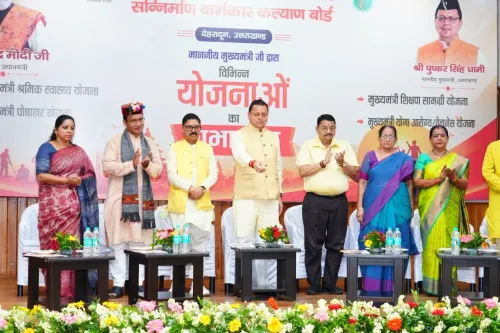
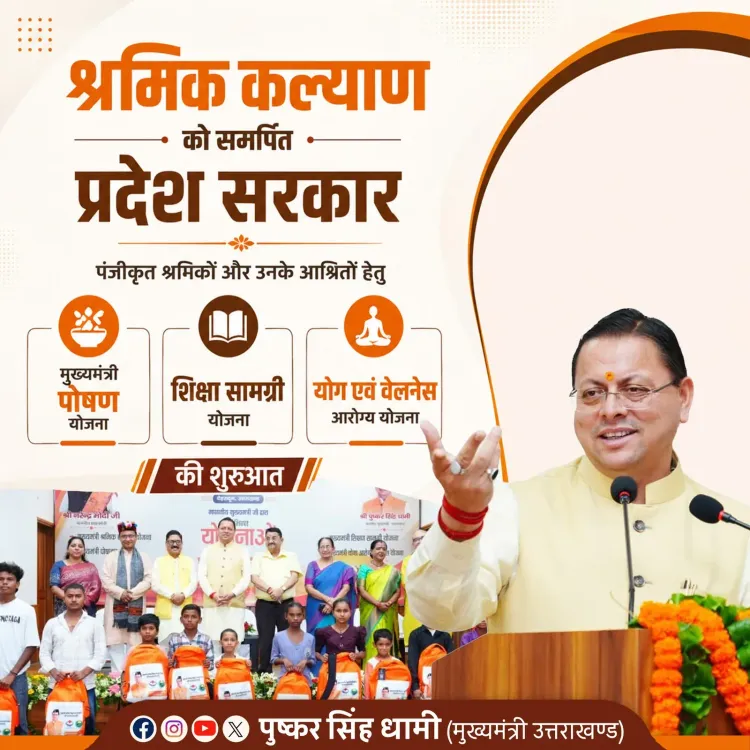
Uttarakhand CM Pushkar Singh Dhami launched three schemes — Mukhyamantri Poshan Yojana, Shiksha Samagri Yojana, and Yoga evam Wellness Aarogya Yojana — to strengthen nutrition, education, and health access for registered workers and their families.
Key Takeaways
Three schemes launched: Mukhyamantri Poshan Yojana, Shiksha Samagri Yojana, and Yoga evam Wellness Aarogya Yojana target registered workers and their families in Uttarakhand.
Coverage areas: The programmes address nutrition, quality educational materials, and yoga-based preventive healthcare for labour households.
Existing framework: The schemes operate within Uttarakhand's Building and Other Construction Workers Welfare Board, established under the central 1996 Act .
Key workforce sectors: Uttarakhand's unorganised labour is concentrated in construction, tourism, and agriculture — historically underserved by formal social security.
Watch metric: Enrollment figures and budget utilisation over the coming fiscal year will indicate real-world impact of the new programmes.
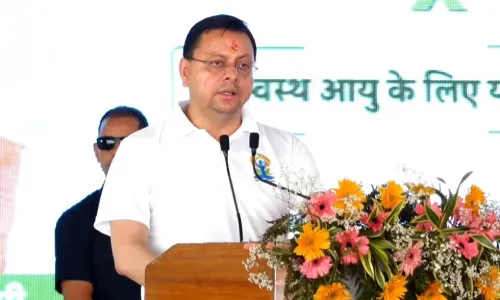
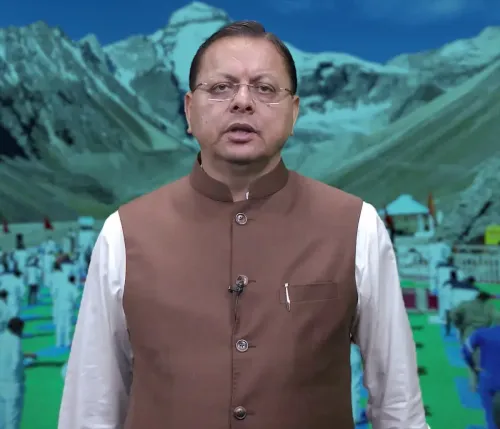
Three new welfare schemes targeting the health, nutrition, and education of Uttarakhand's registered labour force are now live — a signal from Chief Minister Pushkar Singh Dhami that the state's unorganised workers are moving to the centre of his government's social agenda.
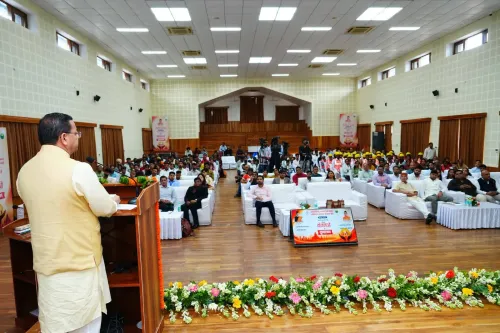
In a post on Wednesday, 29 July 2026, CM Dhami announced the launch of the Mukhyamantri Poshan Yojana (Chief Minister Nutrition Scheme), the Shiksha Samagri Yojana (Educational Materials Scheme), and the Yoga evam Wellness Aarogya Yojana (Yoga and Wellness Health Scheme). The three programmes are designed to reach registered workers and their dependants — covering better nutrition, quality learning materials, and access to yoga and preventive healthcare.
What each scheme delivers to labour families
The Mukhyamantri Poshan Yojana targets nutritional support for workers and their families, addressing a gap long documented among daily-wage earners in construction and agriculture. The Shiksha Samagri Yojana provides educational materials to dependants — a direct investment in the next generation of labour families. The Yoga evam Wellness Aarogya Yojana extends yoga and preventive health facilities, reflecting a broader national emphasis on low-cost, community-level wellness.
Dhami framed the launches as part of a wider commitment: 'shramveeron ke kalyan evam unke samagra utthan' — 'the welfare and holistic upliftment of our labour heroes.' The language is deliberate, elevating workers from beneficiaries to protagonists of state policy.
Uttarakhand's labour welfare architecture
Uttarakhand operates a Building and Other Construction Workers Welfare Board under the central 1996 Act, which collects a cess from construction projects and channels it into worker benefits. The three new schemes sit within this existing architecture, supplementing central social-security guarantees with state-funded add-ons — a model several Indian states have adopted to close gaps in coverage for unorganised-sector workers.
The state's labour force is heavily concentrated in construction, tourism, and agriculture — sectors characterised by seasonal employment, low formal registration rates, and limited access to institutional healthcare or education support. Expanding the registered worker base and ensuring enrolled families actually draw benefits will be the real test of implementation.
The enrollment and rollout challenge ahead
Announcing schemes and delivering outcomes are two distinct milestones. Enrollment figures, budget utilisation, and on-ground delivery metrics over the coming fiscal year will determine whether these programmes move the needle for Uttarakhand's labour families — or remain under-subscribed, as welfare cess-funded initiatives in several states have historically been.
For now, the launches mark a clear policy direction: the Dhami government is layering nutrition, education, and preventive health onto the existing labour welfare framework, betting that a more holistic approach will produce measurable improvements in living standards and social security for the state's workforce.
Point of View
Education, and preventive health onto the existing construction workers' welfare board framework, the state is following a well-worn Indian political playbook: expand scheme coverage, brand it at the Chief Minister level, and make the state government visible to a constituency that often falls outside formal social security nets. The real test will be enrollment depth and fund utilisation — two metrics where labour cess-backed schemes across India have a patchy record.
NationPress
28 Oct 2026
Frequently Asked Questions
What are the three welfare schemes launched by Uttarakhand CM Dhami for workers?
CM Pushkar Singh Dhami launched the Mukhyamantri Poshan Yojana (nutrition), Shiksha Samagri Yojana (educational materials), and Yoga evam Wellness Aarogya Yojana (yoga and health) for registered workers and their dependants in Uttarakhand.
Who is eligible for the Mukhyamantri Poshan Yojana in Uttarakhand?
The scheme targets registered workers and their dependants in Uttarakhand, though exact eligibility criteria have not been officially detailed yet.
What is the Yoga evam Wellness Aarogya Yojana?
It is a state scheme launched by the Uttarakhand government to provide yoga and preventive health facilities to registered labour families, aimed at improving overall wellness at low cost.
How does Uttarakhand fund its labour welfare schemes?
Uttarakhand runs a Building and Other Construction Workers Welfare Board under the central 1996 Act, which collects a cess from construction projects and uses it to fund worker benefit programmes.
What sectors do Uttarakhand's registered workers belong to?
Uttarakhand's labour force is concentrated in construction, tourism, and agriculture — sectors with high rates of seasonal and informal employment.