CM Dhami: Law and Order in Uttarakhand Will Follow Constitution
Synopsis
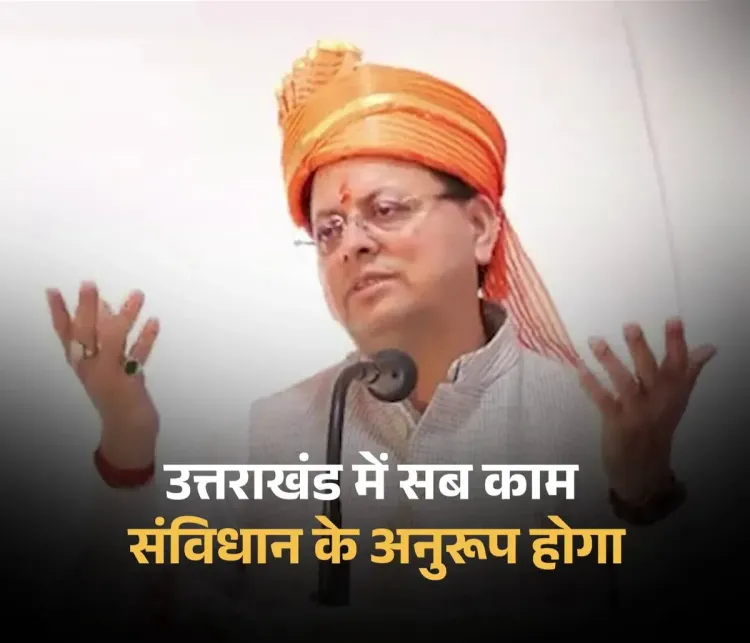
Uttarakhand Chief Minister Pushkar Singh Dhami on 24 May 2026 publicly declared that law and order in Devbhoomi Uttarakhand will be governed strictly according to the Constitution of India, signalling a firm governance posture from the BJP-led state administration.
Key Takeaways
CM Pushkar Singh Dhami posted on X on 24 May 2026 that law and order in Uttarakhand will run according to the Constitution of India .
The declaration used the term Devbhoomi (Land of the Gods), invoking the state's cultural and spiritual identity alongside its governance framework.
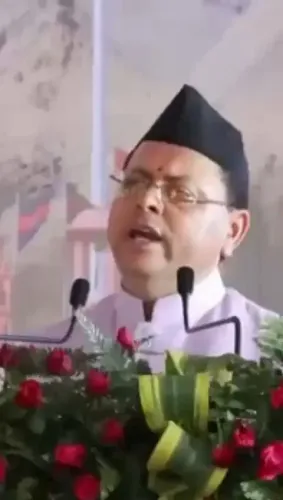
The post was accompanied by a video, indicating a deliberate public outreach effort beyond a routine administrative communication.
Uttarakhand borders China and Nepal and hosts major pilgrimage routes, making law-and-order governance especially sensitive in the state.
The BJP government under Dhami has governed Uttarakhand since March 2021 , winning re-election in the 2022 assembly elections .
The statement sets a public constitutional benchmark that can be cited in future legislative and civil society accountability discussions.
Uttarakhand Chief Minister Pushkar Singh Dhami on Sunday, 24 May 2026, issued a firm public declaration that law and order in the state will be governed strictly in accordance with the Constitution of India. The statement, posted on his official X account, was accompanied by a video and sent a pointed message to residents and officials alike about the Dhami government's governance posture.
Context
In the post, CM Dhami wrote in Hindi: 'Devbhoomi Uttarakhand mein kanoon aur vyavastha Samvidhan ke anusaar chalegi' — translated as 'In Devbhoomi Uttarakhand, law and order will run according to the Constitution.' The declaration was unambiguous in its framing: constitutional supremacy, not discretion or exception, will guide the state's law enforcement machinery. The term Devbhoomi (Land of the Gods) is the colloquial and culturally significant name for Uttarakhand, underscoring the moral weight the Chief Minister attached to the statement.
Policy Backdrop
Pushkar Singh Dhami has served as Chief Minister of Uttarakhand since March 2021, leading the Bharatiya Janata Party government through the 2022 state assembly elections, which the BJP won with a renewed mandate. The BJP-led administration has repeatedly emphasised constitutional governance and internal security as central pillars of its state agenda. Uttarakhand, which shares international borders with China and Nepal and hosts millions of pilgrims annually along routes such as the Char Dham, occupies a strategically and culturally sensitive position that makes law-and-order messaging particularly consequential.
BJP-governed states have periodically issued public affirmations of constitutional adherence in law enforcement, particularly during periods of heightened administrative or social focus. Such statements serve both as directives to the state machinery and as public signals of accountability. The Constitution of India, enacted in 1950, vests primary responsibility for public order and police with state governments under the Seventh Schedule.
Stakeholders and Impact
The most immediate audience for this declaration is the Uttarakhand Police and the state's administrative apparatus, who receive a clear signal that enforcement must remain within constitutional bounds. For residents of the state — including communities in border districts, pilgrimage corridors, and urban centres such as Dehradun and Haridwar — the statement reinforces expectations of rule-of-law governance. Civil society groups and opposition parties in the state are also likely to treat the declaration as a benchmark against which future administrative actions will be measured.
The video accompanying the post, while not described in detail in available information, suggests the message was crafted for broader public reach rather than a narrow official communication, indicating a deliberate outreach effort by the Chief Minister's office.
What's Next
Observers will watch for follow-up administrative orders, police directives, or assembly discussions that give operational shape to CM Dhami's constitutional commitment. If the statement is a prelude to specific policy action — whether on policing norms, civil administration, or security arrangements in sensitive zones — further announcements from Lucknow Road, Dehradun are expected in the coming days. The declaration also sets a public standard that opposition parties and civil society can invoke in future accountability debates in the Uttarakhand Legislative Assembly.
Point of View
Unambiguous declaration — that law and order in Uttarakhand will follow the Constitution — is a classic BJP governance signal: it simultaneously disciplines the administrative machinery, reassures citizens, and pre-empts opposition criticism. Issued via social media with a video, it is designed for mass reach rather than bureaucratic circulation, suggesting the message targets public opinion as much as officials. The framing around 'Devbhoomi' elevates the statement from routine administration to a moral and civilisational commitment, a rhetorical register that BJP leaders in sensitive border and pilgrimage states have used effectively. Whether concrete policy action follows will determine whether this remains a political posture or becomes an operational directive.
NationPress
7 Oct 2026
Frequently Asked Questions
What did Uttarakhand CM Dhami say about law and order?
CM Pushkar Singh Dhami declared on 24 May 2026 that law and order in Uttarakhand will be governed strictly in accordance with the Constitution of India, posting the statement on his official X account alongside a video.
Why is Uttarakhand called Devbhoomi?
Uttarakhand is called Devbhoomi, meaning 'Land of the Gods,' because it is home to major Hindu pilgrimage sites including the Char Dham — Badrinath, Kedarnath, Gangotri, and Yamunotri — and is considered a sacred region in Hindu tradition.
Who is Pushkar Singh Dhami?
Pushkar Singh Dhami is the Chief Minister of Uttarakhand and a senior BJP leader. He has held the post since March 2021 and led the party to victory in the 2022 Uttarakhand Legislative Assembly elections.
What does the Constitution say about law and order in Indian states?
Under the Seventh Schedule of the Constitution of India, 'public order' and 'police' are state subjects, meaning state governments are primarily responsible for maintaining law and order within their territories, subject to the constitutional framework.
What is the BJP government's governance record in Uttarakhand?
The BJP government under CM Dhami has governed Uttarakhand since March 2021, focusing on internal security, pilgrimage infrastructure, and constitutional governance. The party won a second consecutive term in the February 2022 state assembly elections.