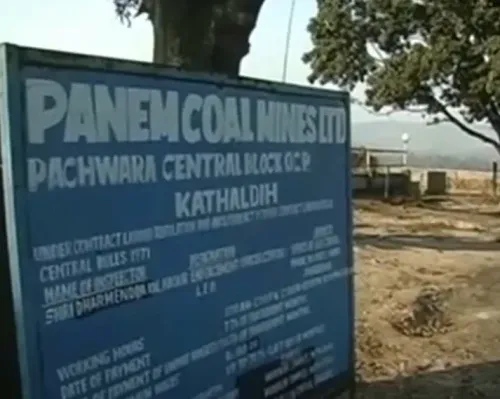
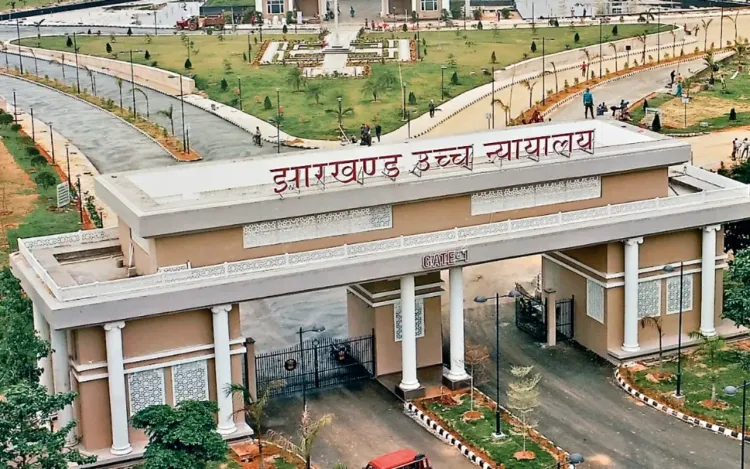
Jharkhand High Court Orders Accountability on Dhanbad's Air Quality Crisis
Synopsis
In a bold move, the Jharkhand High Court has summoned key officials to address the alarming air pollution and illegal mining in Dhanbad. The court's actions highlight a growing concern for public health and environmental safety in the region.
Key Takeaways
High Court's Intervention: The Jharkhand High Court is actively addressing air pollution and illegal mining in Dhanbad.
Summons Issued: Key officials from local authorities and BCCL are required to appear in court.
Public Health Risks: Deteriorating air quality poses significant health concerns for residents.
BCCL's Environmental Efforts: The company is working on initiatives to improve environmental conditions.
Accountability Emphasized: The court is holding officials accountable for the pollution crisis.
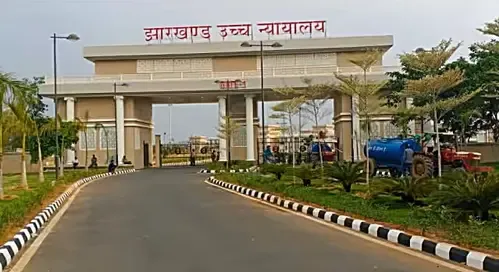
Ranchi, March 12 (NationPress) The Jharkhand High Court has taken a firm stance against the escalating air pollution and unlawful mining practices in Dhanbad. During a public interest litigation (PIL) hearing on Thursday, the court reprimanded local authorities.
A division bench led by Chief Justice M.S. Sonak has mandated the Deputy Commissioner and Senior Superintendent of Police (SSP) of Dhanbad, along with the Member Secretary of the Jharkhand State Pollution Control Board and the Municipal Commissioner of Dhanbad, to appear in person on April 2.
The court has also summoned the Chairman-cum-Managing Director (CMD) of Bharat Coking Coal Limited (BCCL) to present proposals to mitigate pollution in the coal-mining region.
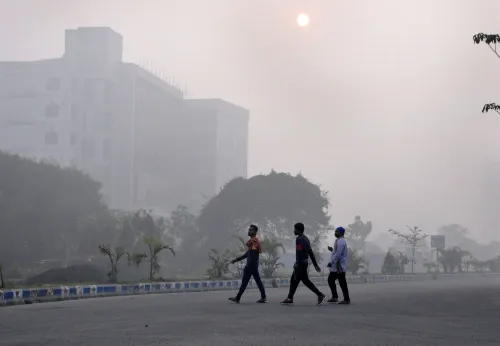
During the proceedings, the bench highlighted its concern regarding the declining air quality in Dhanbad, aggravated by persistent illegal mining and the transport of unlawfully mined coal.
The bench questioned the effectiveness of police interventions, noting a lack of visible action to combat illegal mining.
Furthermore, the court expressed alarm over the rising levels of coal dust, which have significantly deteriorated pollution levels in Dhanbad, posing serious health risks to residents, including various respiratory issues.
Advocate Amit Kumar Das, representing BCCL, informed the court that the company is working on environmental improvement initiatives by transforming abandoned open-pit mines into parks.
BCCL also reported filing multiple FIRs to tackle illegal mining, yet claimed the police have not responded adequately to these reports.
The court ordered that a separate petition filed by BCCL be linked with the main PIL initiated by the Rural Unity Forum.
Previously, the court requested the District Mining Officer to report on measures taken to combat illegal mining in Dhanbad. However, the state's affidavit suggested that pollution levels were manageable but lacked specific details about actions against illegal mining.
The petitioner, Rural Unity Forum, argued that the Dhanbad Municipal Corporation and district administration have not effectively addressed the pollution crisis, claiming that most pollution control measures are merely theoretical and have not led to any tangible improvements.
In its defense, BCCL asserted that coal transportation is conducted under appropriate conditions, and measures such as water sprinkling and regular monitoring are in place to mitigate dust.
However, the court seemed skeptical of these claims and indicated that it would hold senior officials accountable for the intensifying pollution issues in Dhanbad.
Point of View
This situation emphasizes the urgent need for accountability and effective governance. The judiciary's intervention reflects a commitment to public health and environmental integrity, urging authorities to take meaningful action against illegal practices.
NationPress
14 Oct 2026
Frequently Asked Questions
What prompted the Jharkhand High Court to intervene?
The court intervened due to rising air pollution levels and illegal mining activities in Dhanbad, which pose significant health risks to the residents.
Who has been summoned by the court?
The court summoned the Deputy Commissioner, SSP, Municipal Commissioner of Dhanbad, and CMD of BCCL to address the pollution crisis.
What actions has BCCL claimed to have taken?
BCCL claimed to have filed FIRs against illegal mining and is working on environmental projects, including the development of parks from abandoned mines.
How has the state government responded to pollution claims?
The state government claimed pollution is under control but failed to provide specific details on actions taken against illegal mining.
What are the health implications of air pollution in Dhanbad?
Increasing air pollution levels in Dhanbad have led to serious health risks for residents, including respiratory ailments and other illnesses.