Mandaviya hails Dhinidhi Desinghu's second YOG 2026 medal
Synopsis
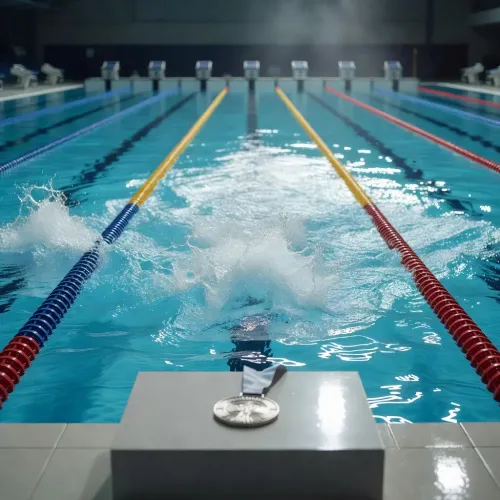
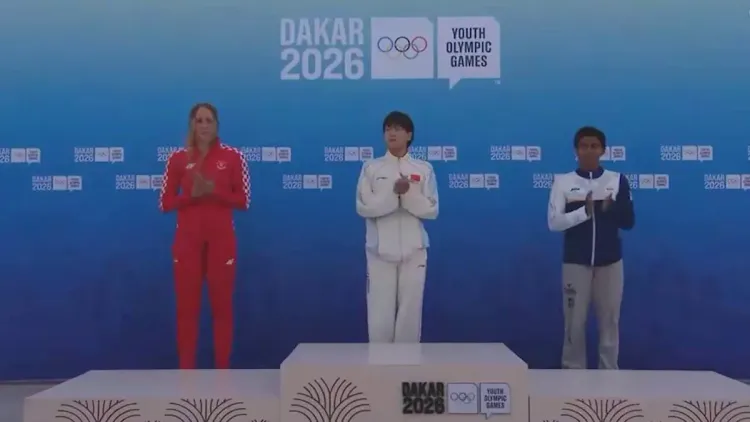
Swimmer Dhinidhi Desinghu won her second medal at Youth Olympic Games 2026 — a bronze in the Women's 200m Freestyle — earning congratulations from Union Sports Minister Mansukh Mandaviya and spotlighting India's rising ambition in international youth aquatics.
Key Takeaways
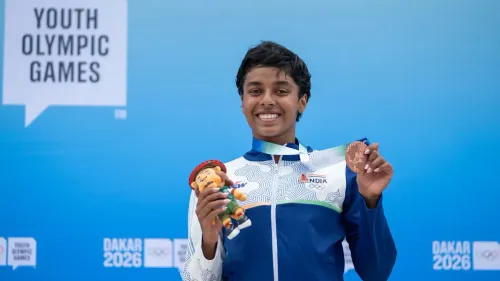
Dhinidhi Desinghu claimed a bronze medal in the Women's 200m Freestyle at the Youth Olympic Games 2026 .
This is her second medal at the same edition of the Games, marking an exceptional double podium finish.
The Youth Olympic Games is an IOC-organised quadrennial event for athletes aged 15 to 18 .
Union Minister Mansukh Mandaviya publicly congratulated her on November 7, 2026 .
The result underlines India's growing ambition in youth-level international swimming competitions.
A teenage swimmer just made history in the pool — twice. Dhinidhi Desinghu claimed a bronze medal in the Women's 200m Freestyle at the Youth Olympic Games 2026, her second podium finish at the same Games, drawing congratulations from Union Minister of Youth Affairs and Sports Mansukh Mandaviya on Saturday, November 7, 2026.
Two medals, one Games — what Dhinidhi's double means
Winning a single medal at the Youth Olympics marks a young athlete as exceptional. Winning two at the same edition places them in genuinely rare company. Dhinidhi's bronze in the 200m Freestyle follows her earlier podium finish at the same Games, signalling that her first result was no fluke — it was a declaration. The Youth Olympic Games, organised by the International Olympic Committee for athletes aged 15 to 18, are held every four years and represent the most prestigious proving ground for the next generation of global Olympic talent.
The minister's message and what it signals
Mandaviya posted: 'Heartiest congratulations to Dhinidhi Desinghu on securing her second medal at the Youth Olympic Games 2026 with a Bronze in the Women's 200m Freestyle!' The public acknowledgement from a senior Cabinet minister is not merely ceremonial. It places the swimmer firmly within the government's spotlight on emerging athletic talent — a space where policy attention and infrastructure support tend to follow. Indian sports ministers have increasingly used such platforms to amplify youth-level international performances, framing them as evidence of the country's long-term sporting ambition.
India's rising footprint in youth aquatics
Swimming has historically been one of the harder frontiers for Indian sport at the international level. A double-medal performance by a teenage swimmer at the sport's most prominent youth stage therefore carries weight well beyond the scoreboard. It raises pointed questions — and genuine expectations — about what structured support, targeted coaching investment, and competitive exposure could unlock for Dhinidhi and athletes like her in the years ahead.
India's sporting calendar is increasingly built around identifying and nurturing talent at the youth level before the full Olympic cycle. Dhinidhi's performance is precisely the kind of result that becomes a reference point in those conversations. A 15-to-18-year-old who podiums twice at a Youth Olympics does not stay a youth athlete for long. The clock to Los Angeles 2028 is already running.
Point of View
Publicly amplifying Dhinidhi's achievement serves a dual purpose: honouring the athlete and reinforcing the government's narrative of building a deep youth-sport pipeline. The timing matters — with the full Olympics cycle building toward 2028, cabinet-level attention on a teenager this decorated could translate into accelerated institutional support. The real test will be whether the congratulatory spotlight is followed by structural investment in coaching, competition exposure, and infrastructure for India's emerging swimmers.
NationPress
7 Nov 2026
Frequently Asked Questions
Who is Dhinidhi Desinghu?
Dhinidhi Desinghu is a young Indian swimmer who won two medals at the Youth Olympic Games 2026, including a bronze in the Women's 200m Freestyle.
What medal did Dhinidhi Desinghu win at Youth Olympics 2026?
She won a bronze medal in the Women's 200m Freestyle — her second medal at the Youth Olympic Games 2026.
What are the Youth Olympic Games?
The Youth Olympic Games are a quadrennial multi-sport event organised by the International Olympic Committee for athletes aged 15 to 18 years.
What did Mansukh Mandaviya say about Dhinidhi Desinghu?
Union Minister Mansukh Mandaviya posted 'Heartiest congratulations to Dhinidhi Desinghu on securing her second medal at the Youth Olympic Games 2026 with a Bronze in the Women's 200m Freestyle!' on November 7, 2026.
How many medals has India won in swimming at Youth Olympics 2026?
Based on the minister's post, Dhinidhi Desinghu alone secured at least two medals for India in swimming at the Youth Olympic Games 2026.