Dholera SIR: Gujarat minister reviews semiconductor plant, green belt drive
Synopsis
A Gujarat minister's site visit to Dholera SIR revealed two quietly remarkable stories: a semiconductor plant advancing toward India's chip self-reliance goal, and a scientific afforestation project achieving 94–97% sapling survival in some of Gujarat's most hostile saline soil — using an innovative 'Drum Method' that could become a model for industrial green belts nationwide.
Key Takeaways
Gujarat Minister Arjun Modhwadia reviewed two projects at Dholera SIR on 19 June 2025 .
The Forest Department has planted over 10.5 hectares of a planned 19.5-hectare green belt using more than 17 native species .
The 'Drum Method' isolates roots from saline soil, achieving a sapling survival rate of 94–97% — far above conventional afforestation benchmarks.
The under-construction semiconductor plant in Dholera SIR is part of India's push for domestic chip-manufacturing capacity under the India Semiconductor Mission .
Officials reaffirmed commitment to completing the semiconductor facility within the stipulated timeframe; no public commissioning date was announced.
Local MLA Kalu Dabhi accompanied the Minister during both site visits.
Gujarat Minister Arjun Modhwadia on Thursday, 19 June reviewed two landmark projects at Dholera Special Investment Region (SIR) — an under-construction semiconductor facility and a scientific afforestation drive aimed at greening the region's notoriously saline landscape. The visits underscored the state's dual push to position Dholera as both an industrial powerhouse and an environmentally responsible development zone.
Green Belt Drive: Fighting Saline Soil with Science
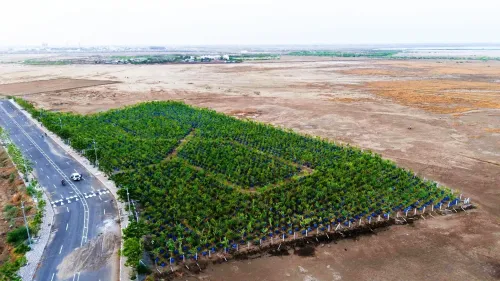
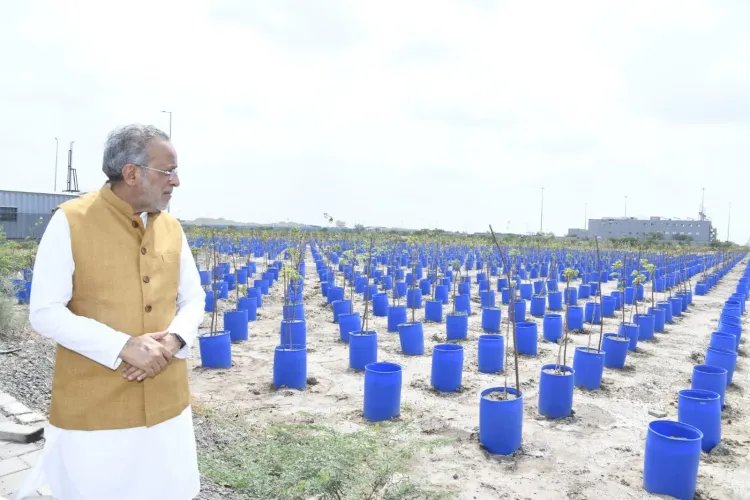
At the plantation site, Modhwadia — who holds the Forest, Environment, Science and Technology portfolios — reviewed an afforestation programme being executed by the Forest Department across 19.5 hectares, of which more than 10.5 hectares have already been planted with indigenous tree species.
The project employs the 'Drum Method', a scientific technique developed specifically for Dholera's challenging conditions. Under this approach, plant roots are physically isolated from the saline soil using specially designed drums, while targeted moisture-retention techniques ensure adequate water supply for saplings — a critical intervention given the area's limited freshwater availability.
The results, according to the Forest Department, have been striking: a plantation survival rate of between 94 and 97 per cent, well above what conventional afforestation methods typically achieve in comparable terrain. The programme covers more than 17 native species, including banyan, peepal, paras peepal, arjun, gulmohar, kanji, khakhro, kesudo, gunda and gundi.
Praising the effort, Modhwadia said: 'This planned afforestation will prove to be a milestone for Dholera's green future.'
Semiconductor Plant: Progress on Civil Works and Timelines
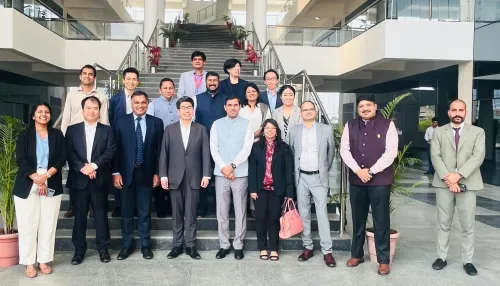
The Minister subsequently visited the private company's semiconductor facility currently under construction within Dholera SIR, inspecting the status of civil works and technical infrastructure. He held a high-level meeting with the company's management and engineering teams to assess project timelines and commissioning schedules, with officials reiterating their commitment to meeting the stipulated deadlines.
Modhwadia said the facility would 'provide a new direction to India's digital and electronics revolution.' He also discussed the plant's potential to generate local employment and catalyse economic growth in the broader region.
Dholera SIR: India's Greenfield Industrial Ambition
Dholera SIR, located roughly 100 kilometres south of Ahmedabad, is one of India's most ambitious greenfield industrial corridors, developed under the Delhi-Mumbai Industrial Corridor (DMIC) project. The semiconductor plant under construction there is part of India's broader push to build domestic chip-manufacturing capacity — a strategic priority that gained fresh urgency after global supply-chain disruptions exposed the country's dependence on imports.
This comes amid heightened national focus on semiconductor self-reliance, with the Centre having approved incentive packages for chip fabrication under the India Semiconductor Mission. Dholera's inclusion in this ecosystem signals its growing importance beyond conventional manufacturing.
Local Representation and Next Steps
Local MLA Kalu Dabhi accompanied Modhwadia during both site visits. No specific commissioning date for the semiconductor plant was publicly disclosed following the review, though officials indicated the project remains on track. The afforestation programme is expected to continue expanding across the remaining 9 hectares of the designated plantation zone.
Point of View
The absence of a disclosed commissioning timeline is the key detail mainstream coverage glosses over: India's semiconductor ambitions have a credibility gap between announcements and operational capacity, and Dholera is a test case for whether that gap closes. The dual industrial-ecological framing is smart politics, but execution on both fronts simultaneously in challenging terrain will be the real measure of Dholera SIR's promise.
NationPress
19 Sept 2026
Frequently Asked Questions
What is the Dholera Special Investment Region (SIR)?
Dholera SIR is one of India's largest planned greenfield industrial cities, located about 100 kilometres south of Ahmedabad in Gujarat. It is being developed under the Delhi-Mumbai Industrial Corridor (DMIC) project and is earmarked for advanced manufacturing, including semiconductor fabrication.
What is the 'Drum Method' used in Dholera's afforestation project?
The Drum Method is a scientific afforestation technique in which plant roots are isolated from Dholera's highly saline soil using specially designed drums, while moisture-retention measures ensure adequate water for saplings. According to the Forest Department, the approach has achieved a survival rate of 94–97%, significantly higher than conventional methods in similar terrain.
How much of the green belt has been planted so far?
More than 10.5 hectares of a planned 19.5-hectare plantation zone have been planted, featuring over 17 native species including banyan, peepal, arjun, and gulmohar.
What is the status of the Dholera semiconductor plant?
The semiconductor facility is currently under construction, with civil works and technical infrastructure under way. Gujarat Minister Arjun Modhwadia met with the company's management and engineering teams on 19 June 2025 to review timelines. Officials reiterated their commitment to completing the project within the stipulated timeframe, though no specific commissioning date was publicly announced.
Why does the Dholera semiconductor plant matter for India?
The plant is part of India's broader effort to build domestic chip-manufacturing capacity and reduce dependence on semiconductor imports — a vulnerability exposed by global supply-chain disruptions in recent years. It falls under the India Semiconductor Mission, which provides incentive packages for chip fabrication in India.