CM Himanta's Dhubri-Phulbari Bridge reshapes Assam's connectivity

Synopsis
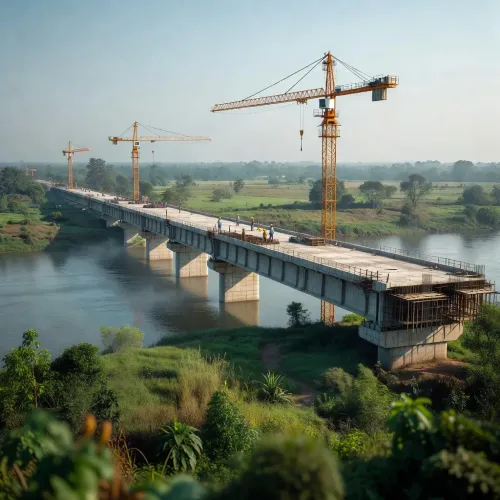
The Chief Minister's Office of Assam on 1 July 2026 spotlighted the under-construction Dhubri-Phulbari Bridge, a 12-km Brahmaputra crossing linking Assam's Dhubri district with Meghalaya's Garo Hills. The project, part of Bharatmala Phase-I, aims to cut travel distances, boost trade, and advance the Northeast's connectivity agenda under CM Himanta Biswa Sarma.
Key Takeaways
The Chief Minister's Office of Assam confirmed on 1 July 2026 that the Dhubri-Phulbari Bridge is 'steadily taking shape.' The bridge stretches over 12 kilometres across the Brahmaputra , connecting Dhubri (Assam) and Phulbari (Meghalaya's Garo Hills) .
The project is aligned with Bharatmala Pariyojana Phase-I , the central government's Northeast highway corridor programme launched in 2015 .
It will drastically reduce the road detour currently required between the two points, benefiting traders, residents, and freight operators in western Assam and the Garo Hills .
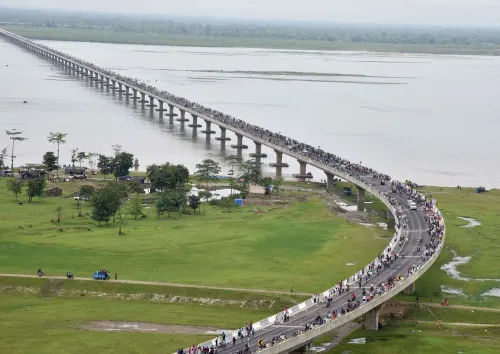
The bridge follows the precedent set by the Bogibeel Bridge , inaugurated in December 2018 , as part of Assam's sustained trans-river connectivity push.
Himanta Biswa Sarma has made large-scale infrastructure a central pillar of his administration since taking office in May 2021 .
The Chief Minister's Office of Assam on Wednesday, 1 July 2026 highlighted the ongoing construction of the Dhubri-Phulbari Bridge, describing it as a project set to 'redefine connectivity, commerce and opportunity' across the region. The post underscores the bridge's role in reducing travel distances, strengthening regional ties, boosting trade, and improving access for communities on both sides of the Brahmaputra.
Context
The Dhubri-Phulbari Bridge is a proposed structure of over 12 kilometres spanning the Brahmaputra, linking Dhubri district in Assam with Phulbari in Meghalaya's Garo Hills. Once complete, it will be among the longest river bridges in India, dramatically cutting the road distance between the two points — a journey that currently requires a lengthy detour of several hundred kilometres. The CMO's post signals that construction is visibly progressing, calling it 'another milestone in Assam's infrastructure transformation.'
Chief Minister Dr. Himanta Biswa Sarma, who has led Assam since May 2021, has consistently positioned large-scale bridge and highway projects as central to his administration's development agenda. The Dhubri-Phulbari project is one of the most consequential in that pipeline, given its cross-state reach and its potential to reshape commerce in western Assam and the Garo Hills.
Policy Backdrop
The bridge's alignment was incorporated into Bharatmala Pariyojana Phase-I, the central government's flagship highway development programme launched in 2015, which specifically prioritised optimal corridor development in the Northeast. The project fits squarely within India's Act East Policy framework, which seeks to integrate the Northeastern states more deeply with domestic markets and with Southeast Asia beyond.
Assam has seen comparable large-scale connectivity milestones before. The Bogibeel Bridge, also spanning the Brahmaputra, was inaugurated in December 2018 and served as a template for the strategic and economic value such crossings deliver. The Dhubri-Phulbari project follows that lineage, extending the connectivity push to the state's western flank, which has historically been more isolated.
Stakeholders and Impact
The primary beneficiaries include residents of western Assam — particularly those in Dhubri and adjoining districts — and traders operating out of Meghalaya's Garo Hills. For these communities, the existing road detour imposes significant time and logistical costs on everyday commerce, agriculture supply chains, and access to healthcare and education facilities.
Beyond local populations, the bridge carries strategic significance for freight movement between the Northeast and the rest of India. Reduced transit times would lower costs for goods moving through the corridor, making the region more competitive and potentially attracting investment into areas that have long suffered from poor connectivity. Border districts on both sides stand to gain from improved market access and faster emergency response capabilities.
What's Next
Construction milestones, updated completion timelines, and funding allocations are expected to feature in forthcoming state budget announcements and central infrastructure reviews. Progress on land acquisition — a common bottleneck in large bridge projects — and any revised targets from the National Highways Authority of India (NHAI) will be closely watched by stakeholders in both Assam and Meghalaya.
As Assam continues to build its infrastructure narrative ahead of future electoral cycles, the Dhubri-Phulbari Bridge is likely to remain a flagship project that the state government points to as evidence of tangible, on-ground transformation. Its completion would mark a defining moment not just for the two states it connects, but for the broader Northeast connectivity agenda that New Delhi has championed over the past decade.
Point of View
Commerce and opportunity,' the state government is anchoring its development narrative to concrete, physical outcomes that resonate with voters in historically underserved western Assam. The project also fits neatly into the central government's Act East Policy optics, allowing the state to claim alignment with a national strategic vision while asserting local ownership. As the bridge moves closer to completion, it is likely to become a recurring reference point in both electoral messaging and intergovernmental discussions on Northeast development.
NationPress
30 Sept 2026
Frequently Asked Questions
What is the Dhubri-Phulbari Bridge?
The Dhubri-Phulbari Bridge is a proposed road bridge of over 12 kilometres spanning the Brahmaputra river, connecting Dhubri district in Assam with Phulbari in Meghalaya's Garo Hills. It is one of the longest river bridge projects in India and is being developed under the Bharatmala Pariyojana.
How long is the Dhubri-Phulbari Bridge?
The Dhubri-Phulbari Bridge is planned to be over 12 kilometres long, making it one of the longest bridges across the Brahmaputra and among the longest river bridges in India.
What is the current status of the Dhubri-Phulbari Bridge in 2026?
As of 1 July 2026, the Chief Minister's Office of Assam stated that the Dhubri-Phulbari Bridge is 'steadily taking shape,' indicating active construction is underway, though an official completion date has not been specified in the latest update.
Which states does the Dhubri-Phulbari Bridge connect?
The bridge connects Assam and Meghalaya — specifically Dhubri district in Assam on one bank of the Brahmaputra and Phulbari in the Garo Hills region of Meghalaya on the other.
How does the Dhubri-Phulbari Bridge benefit local communities?
The bridge will significantly cut the road distance between Dhubri and Phulbari, which currently requires a lengthy detour. This will reduce travel time and logistics costs for residents, traders, and freight operators in western Assam and Meghalaya's Garo Hills, improving access to markets, healthcare, and essential services.