How are Mega Brahmaputra Bridges Transforming Northeast’s Connectivity?
Synopsis
Discover how major infrastructure projects, like the Dhubri-Phulbari and Bogibeel bridges, are revolutionizing connectivity in Northeast India. These developments are not just about engineering; they're paving the way for economic growth and regional integration. Find out how this transformation is reshaping lives and opportunities across Assam.
Key Takeaways
Dhubri-Phulbari bridge will be India’s longest river bridge.
Bogibeel bridge is India's longest road-cum-rail bridge.
Both bridges are essential for regional trade and mobility.
Improved connectivity boosts local economies.
Infrastructure projects enhance disaster response capabilities.
New Delhi, Jan 5 (NationPress) Major infrastructure initiatives like the Dhubri-Phulbari River bridge and the Bogibeel bridge spanning the Brahmaputra River are swiftly reshaping the logistics framework in Assam, dramatically enhancing connectivity, decreasing travel durations, and unveiling fresh economic prospects throughout the Northeast.
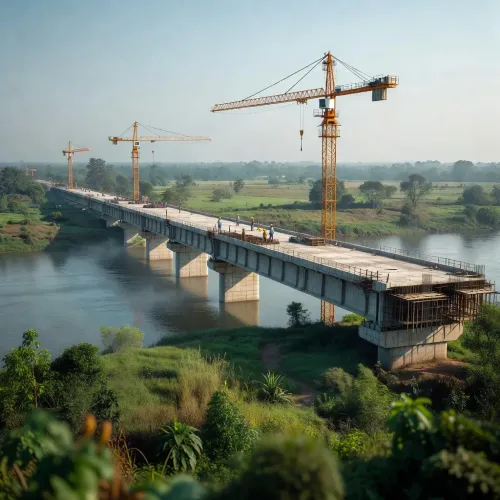
The 19.3-km Dhubri-Phulbari bridge, when finalized, will emerge as India’s longest river bridge, connecting Dhubri in western Assam with Phulbari in Meghalaya. This venture is anticipated to revolutionize regional trade and mobility by significantly shortening travel times between the two states and establishing a direct, all-weather road connection across the Brahmaputra.
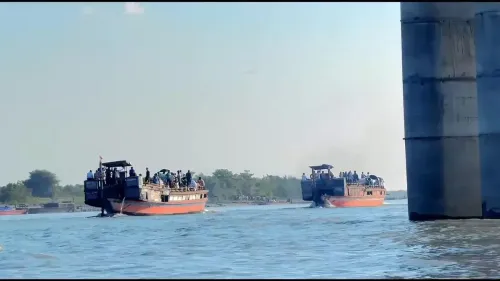
At present, residents and goods heavily depend on ferries, which are often slow and can be disrupted during the monsoon season. Recently, Assam Chief Minister Himanta Biswa Sarma emphasized that the bridge will be pivotal in enhancing trade between Assam, Meghalaya, and adjacent states, while also fortifying connections with Bangladesh.
The project is poised to lower transportation costs for agricultural products, coal, limestone, and other goods by shortening routes to ports and markets, thereby invigorating local economies.
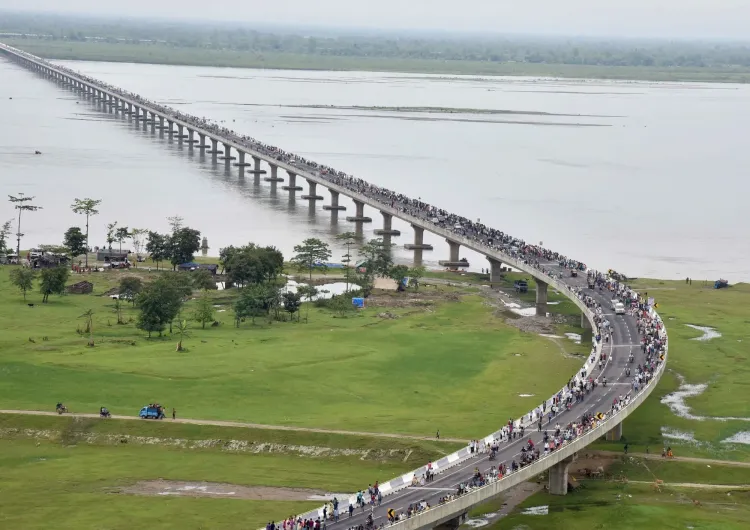
Another significant endeavor enhancing Assam’s infrastructure is the Bogibeel bridge, which links Dibrugarh and Dhemaji districts in Upper Assam. Opened in 2018, the 4.94-km bridge is India’s longest road-cum-rail bridge, serving as a crucial economic and strategic lifeline for the region. It has greatly improved access to Arunachal Pradesh and remote areas of Assam, enabling quicker transit of goods, security forces, and essential supplies.
Before the Bogibeel bridge was operational, traveling between the north and south banks of the Brahmaputra in Upper Assam required long detours or reliance on ferries. The bridge has cut travel times by several hours and has become an essential corridor for industries such as tea, oil, and natural gas, which are fundamental to Assam’s economy.
Experts in infrastructure argue that these mega bridges are not merely engineering achievements but vital catalysts for regional development. Enhanced connectivity has resulted in improved access to healthcare, education, and markets for the inhabitants of riverine and border regions.
The bridges also bolster disaster response capabilities, facilitating faster deployment of relief and rescue teams during floods, a recurring issue in Assam.
The Assam government has consistently stated that these initiatives align with the Centre’s Act East Policy, which aims to integrate the Northeast with Southeast Asia through enhanced road, rail, and river connectivity.
As work continues on the Dhubri-Phulbari bridge and other connectivity improvements across the state, Assam is experiencing a gradual transition from geographical isolation to economic integration, with the Brahmaputra increasingly serving as a bridge to opportunity instead of a barrier.
Point of View
The ongoing infrastructure developments in Assam underscore a significant shift towards enhanced connectivity and economic integration in the region. The government's focus on projects like the Dhubri-Phulbari and Bogibeel bridges illustrates a commitment to transforming the Northeast into a hub for trade and commerce, aligning with national interests and regional development goals.
NationPress
19 Sept 2026
Frequently Asked Questions
What is the significance of the Dhubri-Phulbari bridge?
The Dhubri-Phulbari bridge, once completed, will be India’s longest river bridge and will significantly improve trade and mobility between Assam and Meghalaya, as well as enhance connectivity with Bangladesh.
How does the Bogibeel bridge impact Assam's economy?
The Bogibeel bridge serves as a crucial corridor for industries such as tea, oil, and natural gas, reducing travel time and bolstering economic activities in the region.
What challenges do ferries present for transportation in Assam?
Ferries are often slow and can be disrupted during monsoon seasons, making them an unreliable mode of transport for people and goods.
How do these projects align with national policies?
These infrastructure projects align with the Centre’s Act East Policy, which aims to enhance connectivity between Northeast India and Southeast Asia.
What are the benefits of improved connectivity for local populations?
Improved connectivity leads to better access to healthcare, education, and markets for people living in riverine and border areas.