First cargo vessel from Dibrugarh sails to Bangladesh in 78 years

Synopsis
For the first time since 1947, a cargo vessel has left Dibrugarh for a foreign port — carrying 540 MT of Assam-made methanol down the Brahmaputra to Dhaka. Nearly 70 years after Partition silenced its river ghat, Dibrugarh is back on the international waterway map, and the Northeast is being positioned as India's commercial gateway to the East.
Key Takeaways
DLB Patkai departed Bogibeel Terminal, Dibrugarh on 5 October 2026 — the first cargo vessel from upper Assam to a foreign port since Independence.
The barge carries 540 metric tons of methanol produced by Assam Petro-Chemicals Ltd. (APCL) at Namrup , bound for Pangaon Port, Dhaka .
Total voyage distance: 1,300 kilometres via National Waterway-2 and the Indo-Bangladesh Protocol Route .
The route was revived after customs and immigration complexes were set up at Bogibeel and Dhubri .
Cargo on India's national waterways grew from 18 million MT in 2013-14 to 218 million MT in 2025-26 .
Over ₹6,800 crore is being invested in Northeast waterway infrastructure, including National Waterway-2 and Pandu Port .
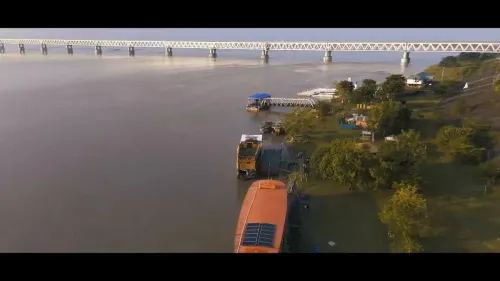
A barge carrying 540 metric tons of methanol departed from Bogibeel Terminal in Dibrugarh, Assam, on Monday, 5 October 2026, bound for Pangaon Port in Dhaka, Bangladesh — marking the first cargo shipment from upper Assam to a foreign port since India's Independence, nearly 70 years after the town's historic river ghat fell silent. The milestone voyage signals a potential revival of the Brahmaputra River as a commercial freight corridor linking India's Northeast to overseas markets.
The Historic Sailing
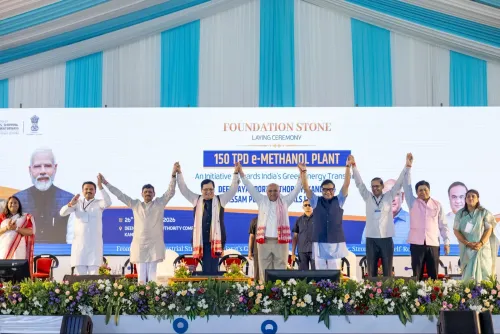
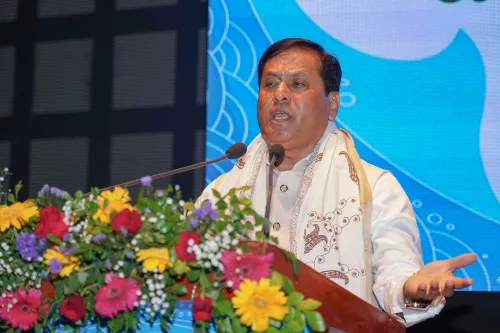
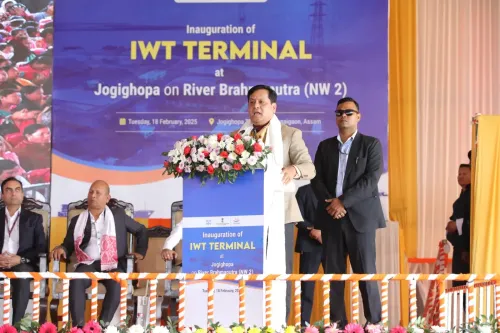
The vessel DLB Patkai, pushed by the tug Kushal Konwar, was flagged off by Union Minister of Ports, Shipping, and Waterways Sarbananda Sonowal from the Bogibeel Terminal. Assam Chief Minister Himanta Biswa Sarma joined the ceremony virtually. The methanol aboard was produced by state-owned Assam Petro-Chemicals Ltd. (APCL) at Namrup.
The vessel will travel approximately 768 kilometres down National Waterway-2 along the Brahmaputra within India to the Indo-Bangladesh border, before continuing along the Indo-Bangladesh Protocol Route (IBPR). The total distance from Bogibeel to Narayanganj in Dhaka is 1,300 kilometres.
Why This Voyage Matters
The shipment is being watched as a test of whether the Brahmaputra can function as a commercially viable international freight corridor. Regular methanol shipments to Bangladesh are planned following this inaugural run. The voyage was made possible after customs and immigration complexes were recently established at Bogibeel and Dhubri.
This comes amid a broader national push to revive inland waterways as a cost-efficient, low-emission alternative to road and rail freight. According to the Ministry of Ports, Shipping and Waterways (MoPSW), cargo on India's national waterways surged from 18 million metric tons in fiscal 2013-14 to 218 million metric tons in 2025-26.
A 70-Year Gap — The Historical Context
Dibrugarh was once among the busiest river ports in eastern India. Government steamers reached the town from Calcutta (now Kolkata) as far back as 1856. By 1913, steamers sailed up the Brahmaputra daily, carrying tea, timber, and passengers. In 1882, the Dibru-Sadiya Railway began operations from the Dibrugarh steamer ghat. The 1947 Partition severed this corridor, forcing Assam's goods to route through East Pakistan — effectively ending direct foreign river trade from upper Assam for nearly eight decades.
Sonowal invoked this history at the flag-off ceremony. 'Our grandparents grew up hearing the steamer whistle at Dibrugarh Ghat. For 70 years, that whistle fell silent, and the ships stopped coming,' he said. 'Today, a ship leaves Dibrugarh for the world once again. The river never failed us. What it lacked for decades was the will to revive it.'
What the Government Said
Chief Minister Sarma described the occasion as a proud moment for Assam. 'Assam's own product, made in Namrup, is now travelling to an international market on Assam's own river. The Northeast is no longer a frontier. It is India's gateway to the East,' he said.
Sonowal underlined the environmental case for waterway freight. 'Every ton we move on the river means less fuel burnt and fewer trucks on the highway,' he said, adding that India is working with Bangladesh, Nepal, Bhutan, and Myanmar on regional waterway connectivity.
Investment and Infrastructure Push
More than ₹6,800 crore (approximately $770 million) is being invested in waterways across the Northeast, according to the MoPSW. This includes development of National Waterway-2, a ship repair facility at Pandu, and last-mile connectivity enhancements to Pandu Port. The broader infrastructure build-out is seen as essential to sustaining regular commercial traffic on the Brahmaputra corridor beyond this first symbolic voyage.
With regional waterway agreements advancing and infrastructure spending ramping up, the Bogibeel departure could mark the beginning of a durable shift in how the Northeast connects to South and Southeast Asian markets.
Point of View
But the real question is whether this single test voyage translates into a dependable freight corridor. The Brahmaputra is a notoriously difficult river — seasonal, silt-heavy, and prone to dramatic variation — and past waterway revival announcements in the Northeast have stalled at the infrastructure stage. The surge in national waterway cargo from 18 million to 218 million metric tons over a decade is genuine progress, but the Northeast's share of that growth has been modest. Regular commercial sailings to Bangladesh will require sustained diplomatic coordination, consistent customs clearance, and private-sector confidence that the route is cost-competitive with road haulage — none of which are guaranteed by a single flag-off ceremony.
NationPress
6 Oct 2026
Frequently Asked Questions
What is the significance of the Dibrugarh cargo vessel departure on 5 October 2026?
It is the first cargo shipment from upper Assam to a foreign port since India's Independence in 1947, nearly 70 years after Dibrugarh's river ghat ceased operations following the Partition. The vessel DLB Patkai carries 540 metric tons of methanol from state-owned APCL's Namrup plant to Pangaon Port in Dhaka, Bangladesh.
What route does the vessel take from Dibrugarh to Dhaka?
The vessel travels approximately 768 kilometres along National Waterway-2 on the Brahmaputra River to the Indo-Bangladesh border, then continues along the Indo-Bangladesh Protocol Route (IBPR) to Narayanganj in Dhaka. The total distance from Bogibeel, Dibrugarh to Dhaka is 1,300 kilometres.
Why did Dibrugarh stop river trade for nearly 70 years?
The 1947 Partition severed Assam's direct river route to Calcutta (now Kolkata), as goods would have had to pass through East Pakistan. This effectively ended international river commerce from upper Assam for nearly eight decades, despite Dibrugarh having been one of eastern India's busiest river ports since the mid-19th century.
Who flagged off the vessel and what was the ceremony like?
Union Minister of Ports, Shipping, and Waterways Sarbananda Sonowal flagged off the DLB Patkai from Bogibeel Terminal in Dibrugarh. Assam Chief Minister Himanta Biswa Sarma joined the ceremony virtually. Both leaders described it as a historic moment for the Northeast.
What is the broader plan for waterway freight in India's Northeast?
The Ministry of Ports, Shipping and Waterways is investing over ₹6,800 crore in Northeast waterway infrastructure, covering National Waterway-2, a ship repair facility at Pandu, and last-mile connectivity to Pandu Port. India is also working with Bangladesh, Nepal, Bhutan, and Myanmar on regional waterway links, with regular methanol shipments to Bangladesh planned following this inaugural voyage.