CM Himanta pitches Brahmaputra as Assam's blue economy engine
Synopsis
Assam CM Himanta Biswa Sarma has published a Substack essay arguing that the Brahmaputra and Assam's river network can power a new blue economy through waterways and logistics, framing the river as the state's next economic frontier.
Key Takeaways
Assam CM Himanta Biswa Sarma published a Substack essay on October 1, 2026 titled 'The Brahmaputra Has a Business Plan.' Sarma argues the Brahmaputra and Assam's river network can anchor a 'blue economy' driven by waterways and logistics.
The pitch aligns with India's broader push on inland waterways, including National Waterway 2 along the Brahmaputra.
The northeast's high overland logistics costs make river-based freight a potentially transformative alternative.
Sarma used long-form Substack publishing to reach investors and policy audiences directly.
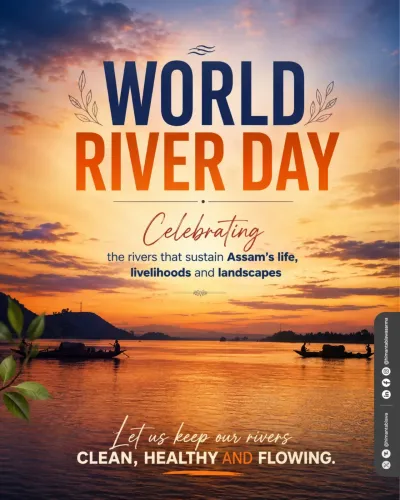
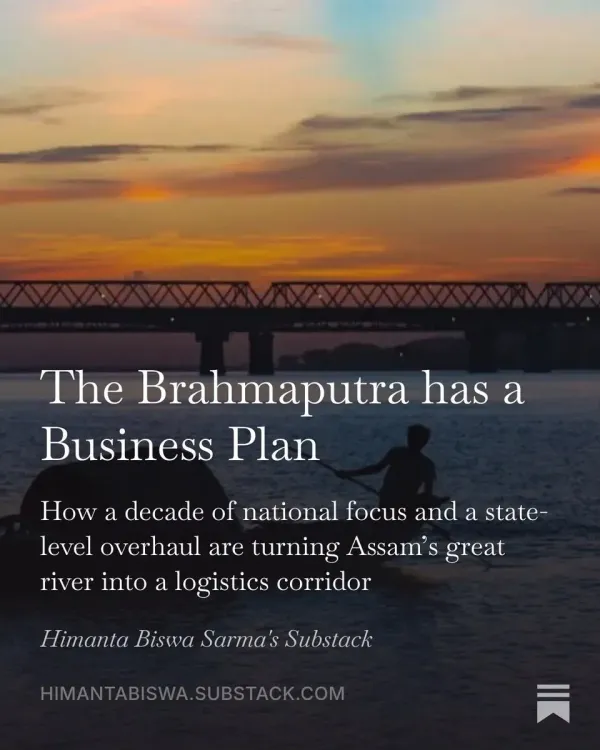
The river that has flooded, fed, and defined Assam for centuries is now being recast as a business corridor — and Assam Chief Minister Himanta Biswa Sarma wants the country to pay attention. In a Substack essay published on Thursday, October 1, 2026, Sarma argued that the Brahmaputra and Assam's broader river network hold the key to an emerging 'blue economy' built on waterways and logistics.
'The Brahmaputra has always shaped Assam,' Sarma wrote. 'The opportunity now is to let it shape our economic future too.' The post directs readers to a longer-form essay on his personal Substack, titled 'The Brahmaputra Has a Business Plan.'
Rivers as roads: the waterways-to-logistics argument
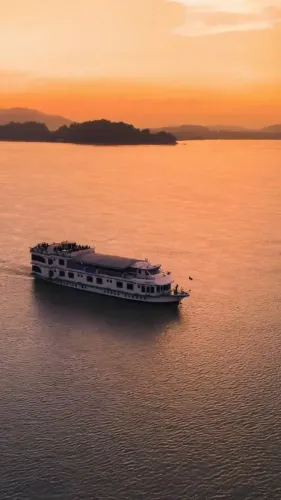
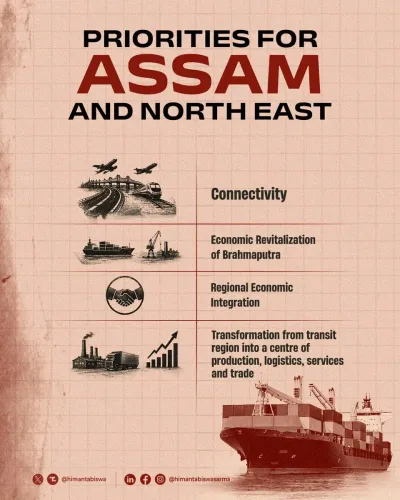
Sarma's framing centres on a straightforward proposition: inland waterways are an underutilised freight artery. The Brahmaputra, one of the world's largest river systems by discharge, cuts across the length of Assam before flowing into Bangladesh and eventually the Bay of Bengal. Its tributaries web the entire northeastern flank of India — a region that has historically struggled with high logistics costs due to its landlocked geography and dependence on a narrow land corridor.
A shift toward river-based freight and passenger movement could dramatically cut those costs while opening the state to regional trade routes linking Bangladesh, Bhutan, and beyond. It is this connectivity logic — rivers as the cheapest highways — that underpins what Sarma is calling a 'blue economy' pivot for the state.
Why Assam's river economy pitch lands now
The timing of the essay is not incidental. India's national push on inland waterways — anchored by the development of National Waterway 2, which runs along the Brahmaputra — has given states like Assam a policy window they have not always had. Sarma, who doubles as the convenor of the North-East Democratic Alliance (NEDA), has consistently sought to position the northeast as a gateway to Southeast and South Asia rather than a peripheral add-on to the Indian mainland.
Using long-form Substack publishing to lay out the argument — rather than a press conference or a government white paper — is a deliberate choice. It allows the Chief Minister to reach an English-fluent, policy-aware audience of investors, academics, and diplomats directly, bypassing the compression of a news cycle.
Whether the blue economy vision translates into port infrastructure, freight contracts, and real jobs is the question the river itself will eventually answer.
Point of View
He is explicitly targeting an investor and policy-intellectual audience, signalling ambition beyond domestic politics. The unanswered question is whether the vision comes with a capital-expenditure plan: river-economy pivots require port terminals, dredging, and regulatory alignment that no essay alone can deliver.
NationPress
1 Oct 2026
Frequently Asked Questions
What is the Brahmaputra blue economy plan Himanta Biswa Sarma is talking about?
Sarma's blue economy plan envisions using the Brahmaputra and Assam's river network as a logistics and freight corridor, reducing the state's dependence on costly overland transport and connecting it to regional trade routes through Bangladesh and beyond.
What is National Waterway 2 in Assam?
National Waterway 2 is a designated inland waterway running along the Brahmaputra river in Assam, part of India's national push to develop river-based freight and passenger transport in the northeast.
Why is inland waterway development important for Assam?
Assam and the broader northeast are largely landlocked except for a narrow land corridor, making overland logistics expensive. River-based transport on the Brahmaputra could significantly cut freight costs and improve regional connectivity.
Where can I read Himanta Biswa Sarma's Substack essay on the Brahmaputra?
The essay, titled 'The Brahmaputra Has a Business Plan,' is available on Sarma's personal Substack at himantabiswa.substack.com.
What is NEDA and what role does Himanta Biswa Sarma play in it?
The North-East Democratic Alliance (NEDA) is a BJP-led political alliance of parties across India's northeastern states. Himanta Biswa Sarma serves as its convenor, making him a key political architect of the region's governance landscape.