CM Himanta Frames Assam Bridges as Trade and Security Game-Changers
Synopsis
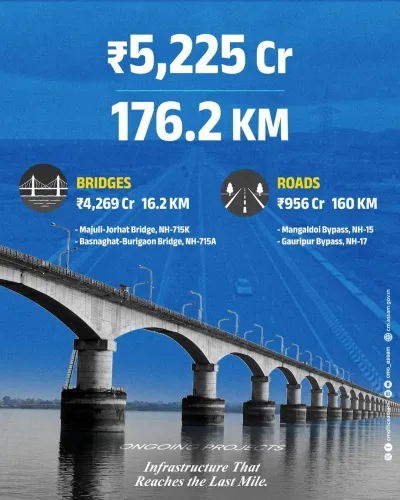
Assam Chief Minister Himanta Biswa Sarma highlighted the #BridgesOfAssam initiative on November 9, 2026, arguing the programme delivers layered dividends in trade, livelihoods and border security — not just shorter travel times across the state's vast river systems.
Key Takeaways
CM Himanta Biswa Sarma posted on November 9, 2026 that the #BridgesOfAssam initiative's impact is broader than travel-time reduction alone.
He cited three specific gains: simplified trade, new livelihood opportunities, and strengthened security logistics on India's northeastern frontiers.
Assam shares borders with China, Myanmar and Bangladesh , making bridge connectivity a direct military and strategic asset.
The Dhola-Sadiya Bridge (Bhupen Hazarika Setu) , India's longest road bridge when opened in 2017 , and the Bogibeel Bridge , inaugurated in December 2018 , laid the groundwork for the current programme.
Sarma also serves as convenor of the North-East Democratic Alliance (NEDA) , framing Assam's infrastructure gains as a regional Northeast story.
Assam's rivers have long been barriers — to commerce, to communities, to the soldiers who guard India's most sensitive frontiers. Assam Chief Minister Himanta Biswa Sarma is now making the case that the bridges going up across those waterways are quietly rewriting that equation, posting on Monday, November 9, 2026 that 'people are yet to grasp the scale of change' the #BridgesOfAssam initiative has delivered.
More than a shortcut: the three-layered argument
Sarma's framing deliberately moves the conversation beyond the standard travel-time metric. He points to three distinct dividends: simplified trade flows, new livelihood openings for communities that have historically been cut off, and reinforced logistics for security forces operating along India's strategic northeastern frontiers — borders shared with China, Myanmar, and Bangladesh. It is a triangulated pitch that speaks simultaneously to the voter, the trader, and the defence planner.
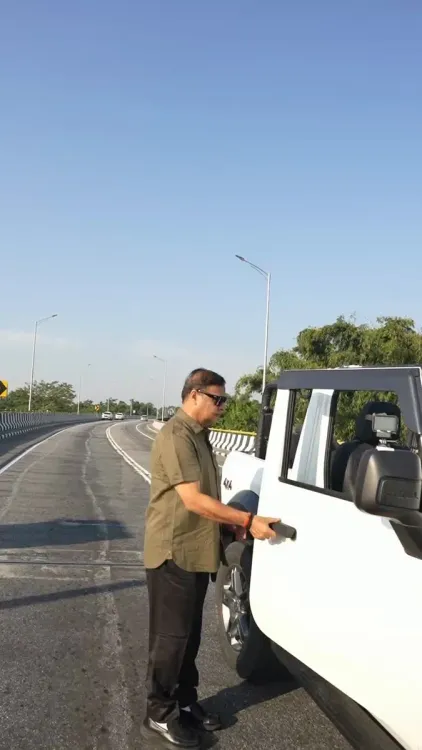
The Chief Minister underscored the point with a video, writing that the region's transformation under #BridgesOfAssam goes 'beyond the usual reduction in travel time.' That framing is deliberate — it positions the bridge programme not as routine infrastructure but as a structural reshaping of Assam's economic and strategic geography.
Bogibeel, Dhola-Sadiya and the template before this moment
The current push did not emerge in a vacuum. The Dhola-Sadiya Bridge — formally the Bhupen Hazarika Setu — opened in 2017 as India's longest road bridge at the time, connecting Assam and Arunachal Pradesh across the Lohit river. A year later, the Bogibeel Bridge over the Brahmaputra was inaugurated in December 2018, slashing travel times in upper Assam and giving the Indian Army direct road access deep into Arunachal.
Those two landmark spans established the template: large river crossings that serve civilian mobility and military mobility simultaneously. The #BridgesOfAssam programme builds on that template at scale, aiming to close the remaining connectivity gaps across Assam's extensive riverine network.
Who stands to gain — and why the Northeast watches closely
Assam's residents on the wrong side of a river have historically faced punishing detours that inflate the cost of everything from vegetables to medical care. Traders moving goods between the Northeast's landlocked states depend on road-bridge networks that the region has lacked for decades. And the Indian Army and paramilitary forces deployed near the borders with China and Myanmar require rapid-movement corridors that only permanent bridges can guarantee.
Sarma, who also serves as convenor of the North-East Democratic Alliance (NEDA), has consistently framed Assam's infrastructure story as a regional one — progress in Assam as a rising tide for all eight northeastern states.
The bridges are going up; the full economic and security dividend is still being counted — but Sarma's message on Monday is that the accounting, when it finally arrives, will surprise people.
Point of View
Livelihoods and national security in a single breath, he elevates routine infrastructure delivery into a civilisational-shift narrative — a signature of BJP's Northeast governance pitch since 2014. The invocation of 'strategic frontiers' is particularly pointed, anchoring a state-level scheme to central government priorities around border infrastructure and signalling alignment between Dispur and Delhi. For NEDA's broader constituency, framing Assam's gains as the Northeast's gains reinforces Sarma's role as the region's dominant political broker. The unanswered question is impact data: the programme's credibility will ultimately rest on verifiable trade-volume and livelihood metrics, not political framing alone.
NationPress
9 Nov 2026
Frequently Asked Questions
What is the BridgesOfAssam initiative?
BridgesOfAssam is a state-promoted infrastructure programme focused on constructing multiple bridges across Assam's extensive river systems to improve connectivity, support trade and strengthen border security in the Northeast.
What did Assam CM Himanta Biswa Sarma say about Assam bridges?
On November 9, 2026, CM Sarma said the scale of change brought by the #BridgesOfAssam initiative is yet to be fully grasped by the public, citing benefits in trade simplification, new livelihood opportunities and security logistics along India's strategic northeastern frontiers.
What are the major bridges already built in Assam?
The Dhola-Sadiya Bridge (Bhupen Hazarika Setu), opened in 2017 as India's longest road bridge at the time, and the Bogibeel Bridge over the Brahmaputra, inaugurated in December 2018, are two landmark crossings that set the template for the current programme.
Why are bridges important for security in Northeast India?
Assam and the broader Northeast share borders with China, Myanmar and Bangladesh. Permanent road bridges give the Indian Army and paramilitary forces rapid-movement corridors that are essential for logistics and troop deployment in these sensitive frontier zones.
What is NEDA and what is Himanta Biswa Sarma's role in it?
NEDA — the North-East Democratic Alliance — is a BJP-led political coalition of ruling parties across the eight northeastern states. Himanta Biswa Sarma serves as its convenor and is Assam's Chief Minister since May 2021.