India must engage Trump and Democrat-led Congress after 2026 US midterms: Expert
Synopsis
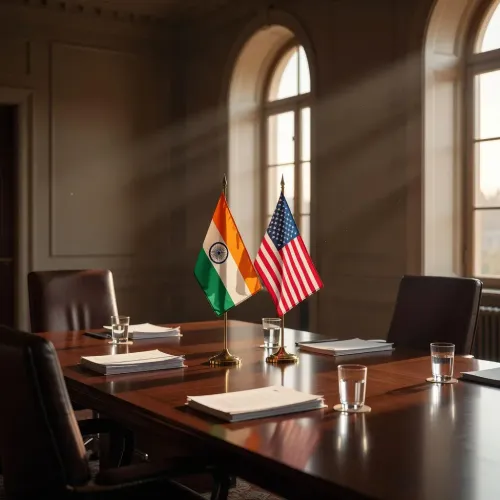
The 2026 US midterms have handed Democrats control of both chambers of Congress, creating a split-government scenario that directly complicates India's Washington playbook. Former diplomat Sanjay Kumar Verma argues New Delhi must resist the temptation to drift toward either side — and instead build durable relationships with both the Trump White House and the new Democratic congressional leadership simultaneously.
Key Takeaways
Democrats won both the House of Representatives and the Senate in the 2026 US midterm elections , creating a divided government in Washington.
Former diplomat Sanjay Kumar Verma argues India must sustain engagement with President Trump 's White House on defence, energy, technology, and supply chains.
New Delhi must simultaneously build a stronger political constituency in a Democrat-led Congress , engaging committee chairs and individual lawmakers.
Sensitive issues including H-1B immigration , trade barriers , human rights , and India-Russia ties could attract fresh congressional scrutiny.
The report recommends regular legislator exchanges, visits to India, and deeper ties with think tanks , businesses, and the Indian-American community .
New Delhi: With Democrats securing control of both the House of Representatives and the Senate in the 2026 US midterm elections, India faces an immediate diplomatic balancing act — sustaining a productive working relationship with President Donald Trump's White House while simultaneously building political capital on a Capitol Hill now controlled by the opposition, according to a new analysis.
The Core Diplomatic Challenge
Former Indian diplomat Sanjay Kumar Verma, writing in India Narrative, argues that the Democratic midterm victory will complicate Trump's final two years in office and reshapes the terrain on which India must operate. 'The Democratic victory in the 2026 US midterm elections will complicate President Donald Trump's final two years in office. For India, the challenge is to sustain a productive relationship with the White House while strengthening its political constituency in a Congress now controlled by Democrats,' Verma wrote.
He cautioned against reading the results as a wholesale repudiation of Trump's foreign policy positions, noting that the President retains 'considerable authority over diplomacy and national security' even as Democrats assume legislative control. India, he stressed, would need to work effectively with both branches of the US government.
Keeping the White House Relationship Intact
Verma argued that New Delhi should continue direct engagement with the Trump administration, pointing to substantial common ground in defence cooperation, energy security, technology, manufacturing, and the restructuring of global supply chains. Friction points — including tariffs, market access, and immigration — would require patient, behind-the-scenes negotiation rather than public confrontation.
'There is little to be gained from public confrontation, just as India should avoid giving the impression that it is distancing itself from the administration because of the Republican electoral setback,' he said. The analysis frames this approach not as political opportunism but as a practical response to the realities of the US constitutional structure, under which the executive and legislative branches can be controlled by different parties.
Building a Democratic Constituency in Congress
Verma was equally emphatic that the Democratic leadership in Congress can no longer be treated as a secondary constituency by Indian diplomacy. He called for active engagement with the incoming House and Senate leadership and with the foreign affairs, defence, commerce, and appropriations committees, as well as with influential legislators from both parties.
'Much will depend on relationships with individual lawmakers, not simply with party leadership,' he noted. Beyond diplomatic courtesies, the report recommends regular exchanges between Indian and US lawmakers, visits by American legislators to India, and sustained interaction with think tanks, academic institutions, businesses, and the Indian-American community to broaden support across the US political spectrum.
Difficult Issues Cannot Be Avoided
Verma also flagged a set of sensitive subjects — trade barriers, H-1B immigration, technology restrictions, human rights, democratic institutions, and India's relations with Russia — that could attract political scrutiny in the new Congress. He argued that India should be prepared to address these directly rather than assume the strategic partnership places them beyond examination.
'Indian positions will need to be explained clearly, and channels of communication kept open even when differences arise,' Verma stressed, adding that disagreements on individual issues need not undermine broader bilateral cooperation.
What Comes Next
The analysis suggests that India's diplomatic bandwidth will be tested in the coming months as the new Congress is seated and committee assignments are finalised. How quickly New Delhi builds working relationships with the incoming Democratic chairs of key committees could determine the ease with which India navigates trade negotiations, technology-transfer conversations, and visa policy debates through 2027 and beyond.
Point of View
Substantive engagement with rival American political camps. New Delhi has traditionally managed Washington through the executive branch, treating Congress as a secondary channel — a luxury a split-government era does not afford. The harder question Verma's analysis does not fully resolve is prioritisation: when White House and congressional preferences diverge — on, say, Russia sanctions or H-1B caps — which relationship does India protect at the other's expense? That tension, not the diplomatic calendar, will be the real test of India's Washington strategy through 2027.
NationPress
9 Nov 2026
Frequently Asked Questions
What is the key diplomatic challenge for India after the 2026 US midterm elections?
India must now manage relationships with two power centres in Washington that may be at odds with each other: President Trump's White House and a Congress controlled by Democrats. Former diplomat Sanjay Kumar Verma argues New Delhi must maintain credibility with both simultaneously rather than leaning toward either side.
Why does the Democratic win in Congress complicate things for India?
India has historically conducted most of its US engagement through the executive branch. With Democrats now controlling both the House and the Senate, key committees on foreign affairs, defence, commerce, and appropriations are under new leadership — requiring India to build fresh relationships with lawmakers it may not have previously prioritised.
What common ground does India have with the Trump administration despite the midterm setback?
According to the report, significant common ground exists in defence cooperation, energy security, technology partnerships, manufacturing, and global supply chain restructuring. Verma argues these areas provide a durable basis for continued White House engagement regardless of Congress's political composition.
Which sensitive issues could India face scrutiny on from the new Democratic-led Congress?
The report flags trade barriers, H-1B immigration restrictions, technology export controls, human rights, democratic institutions, and India's relations with Russia as subjects likely to attract attention in the new Congress. Verma stresses that India must be prepared to explain its positions clearly on each of these fronts.
How should India strengthen its ties with the US beyond government-to-government diplomacy?
Verma recommends regular exchanges between Indian and American lawmakers, visits by US legislators to India, and sustained engagement with think tanks, academic institutions, businesses, and the Indian-American community. The goal is to build broad-based support across the US political spectrum rather than relying solely on party leadership relationships.