DMK's R.S. Bharathi rules out Congress reunion, eyes early local body polls
Synopsis
DMK's R.S. Bharathi has slammed the door on any Congress reunion — and gone further, daring both Congress and BJP to test their grassroots strength in local body polls he wants held by January. His dismissal of TVK as a personality cult, not an ideological force, adds another front to Tamil Nadu's increasingly crowded political battle.
Key Takeaways
Bharathi declared the party's split with Congress 'final' on 7 June in Pudukkottai, Tamil Nadu .
Bharathi warned that DMK cadre would strongly oppose any attempt to restore ties with Congress, regardless of leadership decisions.
He took a direct swipe at Congress leader Manickam Tagore , questioning his party's own electoral standing.
Bharathi called for local body elections to be held as early as January and challenged the BJP to win even a single mayoral post.
He dismissed Vijay 's TVK as a personality-driven, social-media phenomenon unlikely to withstand the test of governance.
Bharathi also criticised rising political defections, invoking the 'Aya Ram Gaya Ram' phrase to describe opportunistic party-switching in Tamil Nadu.
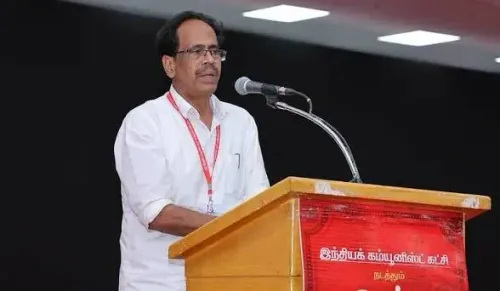
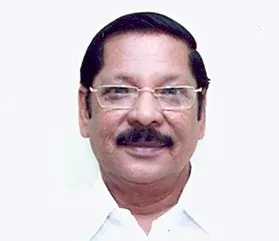
Senior Dravida Munnetra Kazhagam (DMK) leader R.S. Bharathi on Sunday, 7 June categorically shut the door on any political reunion with the Indian National Congress (INC), declaring the split between the two parties irreversible and warning that DMK's grassroots cadre would never accept Congress back into the alliance. Bharathi made the remarks while speaking to reporters in Pudukkottai, Tamil Nadu.
The Split Is Final, Says Bharathi
Bharathi was unequivocal: there is no longer any political relationship between the DMK and the Congress, and speculation about a future reunion should be put to rest. He stressed that even if party leadership were to consider such a move, rank-and-file workers on the ground would strongly resist it.
His remarks came directly in response to recent criticism levelled by Congress leaders over the DMK's alliance politics and electoral performance. Taking a pointed swipe at Congress leader Manickam Tagore, Bharathi suggested that Congress leaders ought to scrutinise their own electoral standing before passing judgement on others.
A Challenge on Local Body Elections
Bharathi, a former Rajya Sabha member and veteran DMK functionary, pivoted sharply to the upcoming local body elections, expressing strong confidence in his party's organisational machinery. He called for the polls to be held as early as January and threw down the gauntlet to political rivals — including Bharatiya Janata Party (BJP) leaders — to demonstrate their grassroots support at the ballot box.
'In local body elections, voters choose candidates based on their individual merit and public service. If our opponents are confident of their strength, let them win even a single mayoral post,' Bharathi said.
No Room for BJP Either
Reaffirming the DMK's ideological moorings, Bharathi ruled out any future alliance with the BJP as well, insisting the party would remain anchored to its Dravidian principles. This dual rejection — of both Congress and BJP as future partners — underscores the DMK's intent to consolidate its own political space ahead of the local body cycle.
On Defections and TVK's Rise
Bharathi also took aim at what he called a growing 'Aya Ram Gaya Ram' culture in Tamil Nadu — a phrase historically used to describe politicians who switch parties for personal gain. He predicted that recent defectors would ultimately return to their original political homes once the political climate shifted, arguing that opportunistic allegiance changes rarely translate into lasting electoral success.
On actor-turned-politician Vijay's Tamilaga Vettri Kazhagam (TVK), Bharathi was dismissive, characterising its recent electoral performance as a personality-driven, social-media-fuelled phenomenon rather than a genuine ideological wave. He argued that a majority of voters had not backed TVK and predicted the party would face a sterner test once the demands of governance and public accountability came into play.
With local body elections on the horizon, the DMK's posture — confident, combative, and ideologically closed to both national parties — signals a determined bid to dominate Tamil Nadu's civic political landscape on its own terms.
Point of View
And his invocation of cadre sentiment as a veto on any reconciliation is a classic internal-discipline move. What is striking is the simultaneity: ruling out Congress, ruling out BJP, and dismissing TVK in a single press interaction. That is a party signalling it intends to fight the next local body cycle on its own, without the safety net of a national alliance. Whether the cadre confidence is justified — or whether it papers over real organisational anxiety — will become clear once poll dates are announced.
NationPress
19 Sept 2026
Frequently Asked Questions
Why has DMK's R.S. Bharathi ruled out reconciliation with Congress?
Bharathi stated that the DMK and Congress have completely parted ways and that his party's grassroots cadre would never accept Congress back into the alliance. His remarks came in response to recent criticism from Congress leaders over the DMK's alliance politics and electoral performance.
What did Bharathi say about the upcoming local body elections in Tamil Nadu?
Bharathi expressed strong confidence in the DMK's organisational strength and called for local body elections to be held as early as January. He challenged rivals, including BJP leaders, to demonstrate their popularity at the grassroots level and dared them to win even a single mayoral post.
Did Bharathi also rule out an alliance with the BJP?
Yes. Bharathi reaffirmed that the DMK would not ally with the BJP either, insisting the party remains committed to its Dravidian ideological principles. The dual rejection of both Congress and BJP signals the DMK's intent to contest the local body cycle independently.
What did Bharathi say about Vijay's Tamilaga Vettri Kazhagam (TVK)?
Bharathi downplayed TVK's recent electoral success, describing it as a personality-driven and social-media-fuelled phenomenon rather than a genuine ideological movement. He argued that a majority of voters had not supported TVK and predicted the party would face a harder test once governance demands set in.
What is the 'Aya Ram Gaya Ram' reference Bharathi made?
'Aya Ram Gaya Ram' is a phrase used in Indian politics to describe politicians who frequently switch parties for personal gain or positions. Bharathi used it to criticise what he called a growing culture of political defections in Tamil Nadu, predicting that such defectors would eventually return to their original parties.