CPI rules out DMK alliance return as Tamil Nadu politics shifts post-polls
Synopsis
Tamil Nadu's Left parties are drawing a clear line. CPI State Secretary M. Veerapandian has ruled out rejoining a DMK-led electoral front, citing Congress's departure, DMK's exit from the INDIA bloc, and the TVK government's formation with 108 seats. With CPI-M making a near-identical call, the old Secular Progressive Alliance is now officially history — and Tamil Nadu's opposition arithmetic must be rebuilt from scratch.
Key Takeaways
CPI State Secretary M.
Veerapandian ruled out rejoining a DMK -led electoral alliance on Thursday in Chennai .
The declaration followed a two-day CPI State Executive Committee meeting.
Congress , IUML , and VCK — former DMK alliance partners — have joined the TVK government.
TVK won 108 seats in the Assembly elections, forming the government with outside support from the Left.
CPI-M State Secretary P.
Shanmugam had separately declared the Secular Progressive Alliance effectively defunct.
The CPI retains openness to issue-based cooperation with DMK , AIADMK , and TVK while identifying BJP and RSS as its principal ideological opponents.
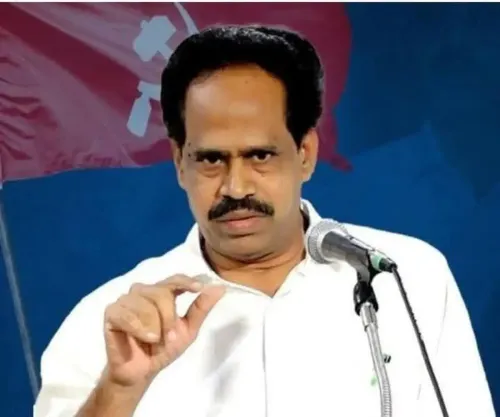
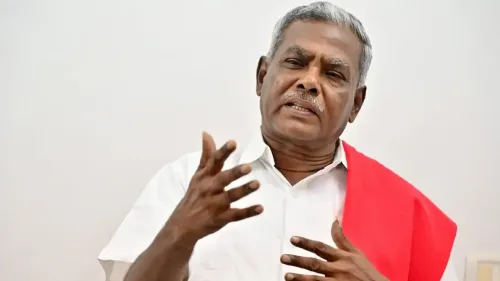
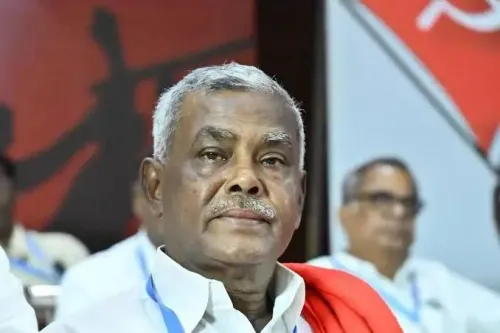
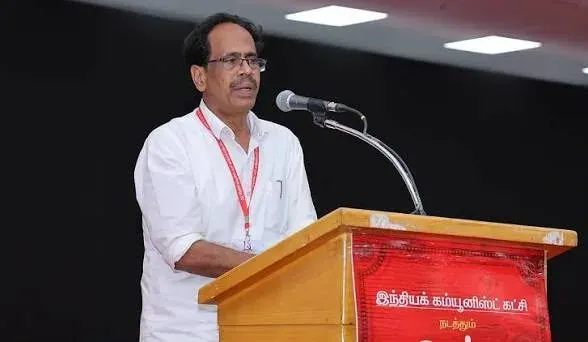
Communist Party of India (CPI) State Secretary M. Veerapandian on Thursday declared that the party cannot re-enter a DMK-led electoral alliance under current political conditions in Tamil Nadu, signalling a decisive break from an arrangement that shaped the state's opposition politics for years. The statement, made in Chennai after a two-day meeting of the CPI State Executive Committee, reflects a broader Left acknowledgement that Tamil Nadu's alliance landscape has been fundamentally redrawn following the recent Assembly elections.
What Changed After the Assembly Elections
Veerapandian pointed to a cascade of realignments that have rendered the old alliance structure unworkable. Congress, the Indian Union Muslim League (IUML), and the Viduthalai Chiruthaigal Katchi (VCK) — all formerly key constituents of the DMK-led Secular Progressive Alliance — have now joined the ruling Tamilaga Vettri Kazhagam (TVK) government. The Left parties, by contrast, are extending outside support to the administration rather than participating in it directly.
'The Congress has moved away, the DMK has announced that it will not be part of the INDIA bloc, and several other parties have joined the TVK-led government. Under these circumstances, there is no scope for the earlier alliance structure to continue functioning as a united electoral front,' Veerapandian said.
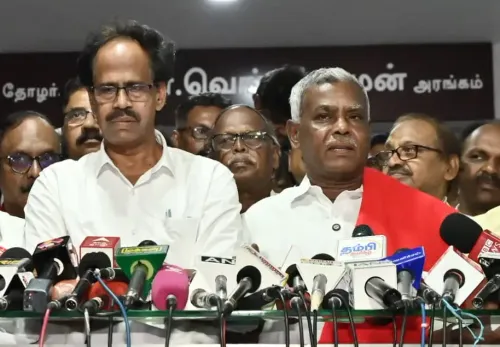
This comes close on the heels of CPI-M State Secretary P. Shanmugam's assertion that the DMK-led Secular Progressive Alliance had effectively ceased to exist — suggesting the two major Left formations are now aligned in their reading of the political moment.
CPI's Position on Tamil Nadu's Major Parties
Despite ruling out a return to the DMK fold, Veerapandian was careful to avoid casting former allies as adversaries. He stated that the CPI does not regard the DMK, AIADMK, or TVK as enemies, and remains open to issue-based cooperation on matters of public welfare, secularism, social justice, and the interests of farmers and workers. The party's principal ideological opponents, he said, remain the Bharatiya Janata Party (BJP) and the Rashtriya Swayamsevak Sangh (RSS).
Why CPI Is Supporting TVK From Outside
Veerapandian explained that the decision to extend outside support to the TVK government was rooted in democratic respect for the electoral mandate. TVK emerged as the single largest party with 108 seats, giving it the democratic right to form the government. The CPI chose to support without joining the coalition, preserving its organisational independence.
He also pushed back against suggestions that former Chief Minister M.K. Stalin had influenced the CPI's internal decisions, stressing that Communist parties operate through collective decision-making and organisational consultations — not individual direction.
What Comes Next for the CPI
While the CPI has closed the door on a DMK-led alliance for now, Veerapandian indicated the party would continue coordinating with Left and democratic forces. Decisions on future electoral contests — including by-elections, local body polls, and Assembly and Parliamentary elections — will be taken based on the political situation prevailing at the time. The party's stance, in other words, is one of principled flexibility rather than permanent realignment.
Point of View
The glue dissolved. What is notable is that both CPI and CPI-M are now publicly distancing themselves from DMK while carefully avoiding hostility, which suggests the Left is positioning for relevance under a new patron rather than genuine independence. The real question is whether outside support to TVK becomes a long-term dependency or a transitional stance — and whether the Left retains enough organisational weight to bargain meaningfully in Tamil Nadu's next electoral cycle.
NationPress
26 Oct 2026
Frequently Asked Questions
Why has the CPI ruled out rejoining the DMK-led alliance in Tamil Nadu?
The CPI says the political conditions that sustained the earlier alliance no longer exist. Congress, IUML, and VCK have moved to the TVK government, DMK has announced it will not be part of the INDIA bloc, and TVK has emerged as the dominant electoral force with 108 seats, making the old Secular Progressive Alliance structure unviable.
What is the CPI's current relationship with the TVK government in Tamil Nadu?
The CPI is extending outside support to the TVK government without formally joining the coalition. Veerapandian explained this as respecting the electoral mandate, given TVK's 108-seat majority.
Has the CPI-M also distanced itself from the DMK alliance?
Yes. CPI-M State Secretary P. Shanmugam had separately stated that the DMK-led Secular Progressive Alliance had effectively ceased to exist, aligning with the CPI's position.
Does the CPI consider the DMK an opponent after this break?
No. Veerapandian clarified that the CPI does not regard DMK, AIADMK, or TVK as enemies and remains open to cooperation on issues of public welfare, secularism, social justice, and the interests of farmers and workers. The BJP and RSS are identified as the party's principal ideological opponents.
What are the CPI's plans for future elections in Tamil Nadu?
The CPI has not announced fixed alliances for upcoming by-elections, local body polls, or future Assembly and Parliamentary elections. Veerapandian said decisions will be taken based on the political situation prevailing at the time, in coordination with Left and democratic forces.