CM Himanta charts Assam's two-pronged fight against river erosion

Synopsis
Assam Chief Minister Dr Himanta Biswa Sarma has outlined a two-pronged strategy to tackle the Brahmaputra's chronic river erosion, which displaces thousands of riverine communities and destroys agricultural land every monsoon season across the northeastern state.
Key Takeaways
CM Himanta Biswa Sarma has announced a two-pronged strategy to address Assam's chronic river erosion crisis driven by the Brahmaputra .
The Brahmaputra causes the loss of thousands of hectares of agricultural and habitable land in Assam's plains every monsoon season.
The Brahmaputra Board , established in 1980 , is the central coordinating body for flood and erosion control across the valley.
Past responses have combined structural works (embankments, dredging) with bio-engineering and community-based approaches.
Detailed components, budget provisions, and central-state coordination mechanisms for the new strategy are yet to be publicly released.
Riverine communities and Assam's farming population are the primary stakeholders whose livelihoods depend on effective implementation.
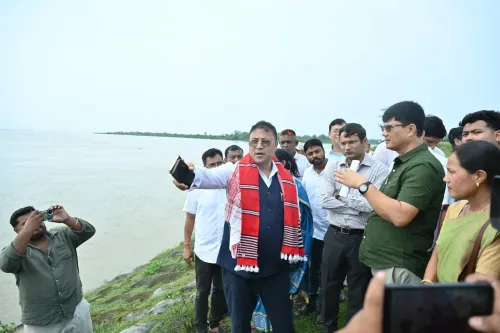
Every monsoon, the Brahmaputra swallows Assam whole — not just in floodwaters, but in land that simply disappears, farm by farm, village by village. Now, Chief Minister Dr Himanta Biswa Sarma has laid out a two-pronged strategy to push back, signalling that Assam intends to treat river erosion not as an annual inevitability but as a solvable structural problem.
The Brahmaputra's relentless bite into Assam's land
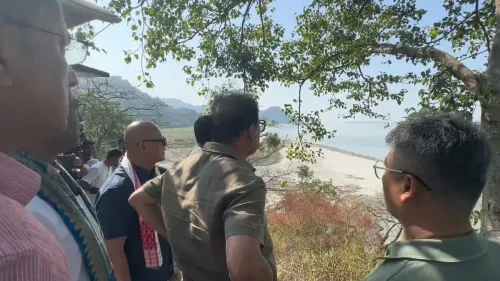
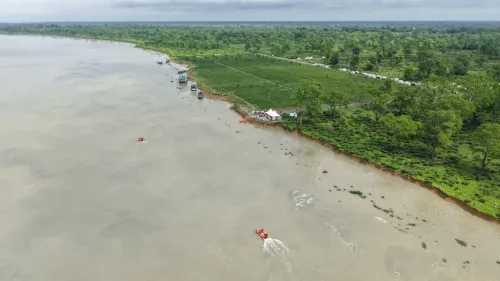
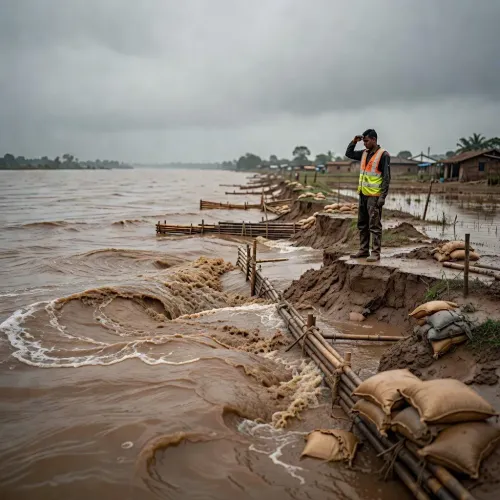
The Brahmaputra is one of the world's most geomorphologically volatile rivers. Its high sediment load, braided channels, and seasonal surge conspire to consume thousands of hectares of Assam's plains every year, displacing riverine communities and stripping farmers of productive agricultural land. The scale of loss is not incidental — it is structural, baked into the river's character as it descends from the Tibetan plateau through the Assam valley.
Successive state governments have attempted to hold the line through embankments, dredging, and bio-engineering, often in partnership with centrally assisted programmes. The Brahmaputra Board, constituted in 1980, was set up precisely to coordinate flood and erosion control across the valley — but the erosion crisis has persisted across decades and administrations.
What a 'two-pronged' approach signals
CM Sarma's framing of a 'two-pronged strategy' points to the now-established logic of combining hard structural interventions — embankments, spurs, revetments — with softer, non-structural tools such as bio-engineering, early-warning systems, and community-based land management. The specifics of the current plan have not been released in full detail, but the dual-track framing reflects a wider national rethink about purely engineering-led responses to river dynamics.
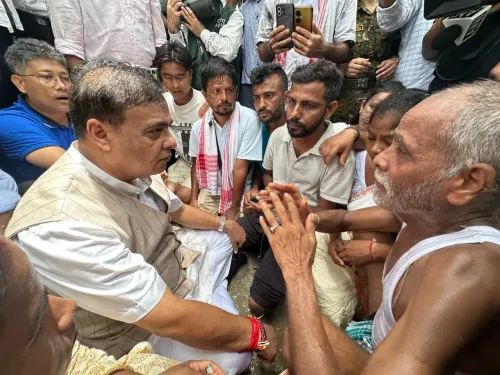
Riverine communities and Assam's farming population stand to be the most direct beneficiaries — or the first to feel the gap if implementation lags. The coordination architecture between the state government and the central Brahmaputra Board will be critical to watch as details emerge.
What comes next for the Assam erosion plan
The immediate next steps involve the public release of the strategy's specific components, associated budget provisions, and any formal coordination mechanisms with New Delhi or the Brahmaputra Board. Assam enters every post-monsoon window with a narrow operational opportunity — when river levels recede — to execute protective works before the next flood cycle begins.
Whether this two-pronged framework translates into measurable reductions in annual land loss will ultimately be the only metric that matters to the families whose fields sit at the river's edge.
Point of View
Converting a perennial disaster narrative into a managed-solution narrative ahead of the next monsoon cycle is both a governance bet and an electoral one. The real test, however, will be in the details: whether structural and non-structural tools are genuinely integrated, and whether Assam can unlock meaningful central funding through the Brahmaputra Board. If implementation matches the ambition, it sets a replicable model for other erosion-hit Himalayan-river states.
NationPress
11 Nov 2026
Frequently Asked Questions
What is Assam's two-pronged strategy against river erosion?
Chief Minister Himanta Biswa Sarma has announced a two-pronged approach to combat river erosion in Assam, combining structural interventions such as embankments and dredging with non-structural methods like bio-engineering and community-based land management. Full details and budget provisions are yet to be officially released.
Why is river erosion such a big problem in Assam?
The Brahmaputra river's high sediment load, braided channels, and seasonal monsoon surge consume thousands of hectares of Assam's agricultural land every year, displacing riverine communities and reducing farmland across the state's plains.
What is the Brahmaputra Board and what does it do?
The Brahmaputra Board was constituted in 1980 to coordinate flood and erosion control measures across the Brahmaputra valley, working in conjunction with state governments including Assam.
What has Assam done in the past to control Brahmaputra erosion?
Successive Assam governments have deployed embankments, river dredging, and bio-engineering techniques under both state budgets and centrally assisted programmes, often in coordination with the Brahmaputra Board.
Who is most affected by river erosion in Assam?
Riverine communities and farming families whose agricultural land sits along the Brahmaputra's shifting banks are the most directly affected, losing land and livelihoods each monsoon season.