Sonowal links Namrup to Kandla in Assam-Gujarat maritime push
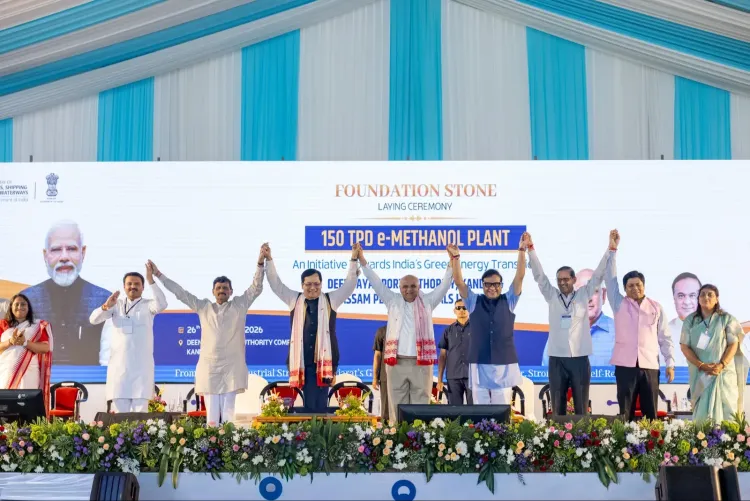
Synopsis
Union Minister Sarbananda Sonowal has highlighted a new Assam-Gujarat partnership linking Namrup's industrial base via the Brahmaputra to Kandla's Deendayal Port on the Arabian Sea, promising jobs, energy security, and cleaner shipping under India's multimodal connectivity push.
Key Takeaways
Union Minister Sarbananda Sonowal announced a partnership linking Namrup (Assam) to Kandla (Gujarat) through an inland-to-coastal waterway corridor.
The corridor connects National Waterway 2 on the Brahmaputra to Deendayal Port on the Arabian Sea.
The minister cited four outcomes: more jobs, stronger energy security, cleaner shipping, and a more competitive maritime India .
The initiative aligns with the Sagarmala Project (2015) and PM Gati Shakti National Master Plan (2021) for multimodal freight connectivity.
Exact details — MoUs, project timelines, cargo volumes — are yet to be publicly disclosed.
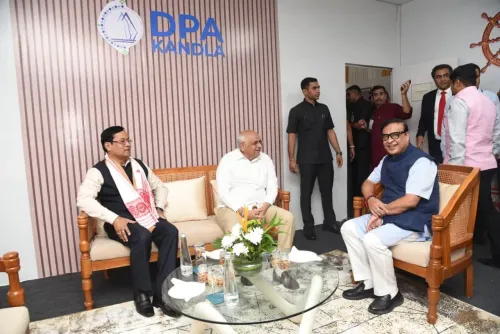
From a river town in Assam's far east to a port city on the Arabian Sea — Union Minister of Ports, Shipping and Waterways Sarbananda Sonowal has spotlighted a new inter-state partnership that stitches together the Brahmaputra's inland waterway potential with the deep-sea muscle of Kandla's Deendayal Port, framing it as a national-purpose project built on jobs, energy security, and cleaner shipping.
Namrup to Kandla: what the corridor connects
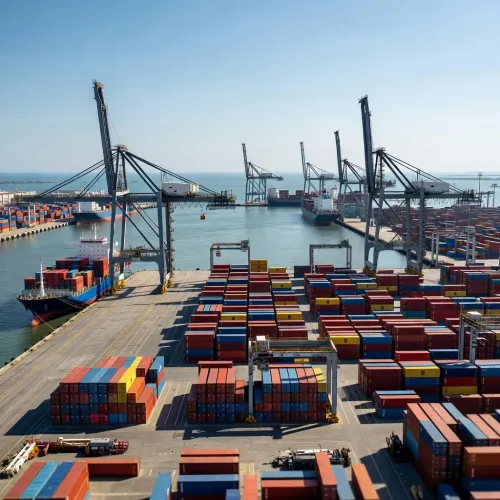
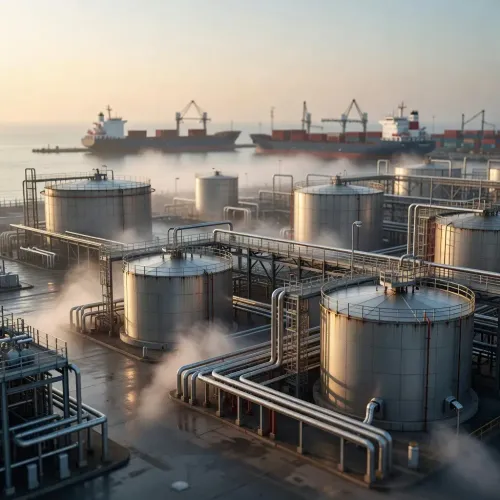
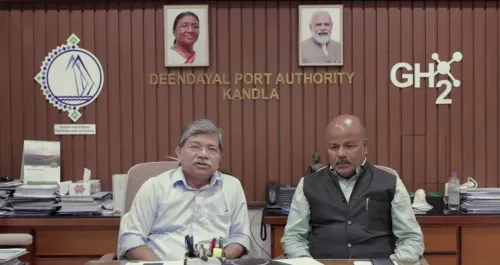
Namrup, a town in eastern Assam, is home to one of the state's oldest fertilizer complexes and sits alongside the Brahmaputra river system — declared National Waterway 2 under the National Waterways Act, 2016. Kandla, in Gujarat's Kutch district, hosts Deendayal Port, among India's highest-throughput cargo gateways on the Arabian Sea. The axis Sonowal describes is not merely symbolic: it represents a potential multimodal freight corridor that could move goods — including energy commodities — from the Northeast's interior to an international export terminal, replacing road and rail legs with cheaper, lower-emission waterway hops.
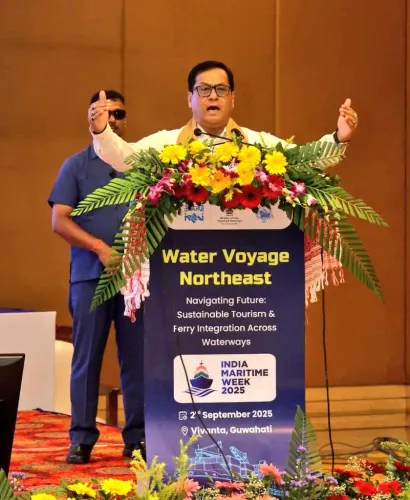
Sonowal captured the vision sharply: 'From Namrup to Kandla, from the Brahmaputra to the Arabian Sea, this partnership brings together the strengths of Assam and Gujarat for a larger national purpose.' The minister flagged four specific gains — more jobs, stronger energy security, cleaner shipping, and a more competitive maritime India — a signal that the collaboration has industrial and environmental benchmarks attached, not just a ceremonial handshake.
The policy scaffold already in place
This partnership does not emerge from a vacuum. The Sagarmala Project, launched in 2015, was designed precisely to modernise India's ports and promote coastal and inland shipping as a lower-cost, lower-emission freight alternative. The PM Gati Shakti National Master Plan, initiated in 2021, added a multimodal connectivity layer — linking roads, rail, waterways, and ports into a single logistics grid. National Waterway 2 on the Brahmaputra is a critical node in that grid, and any cargo flowing from Assam's industrial belt to Gujarat's ports would move along infrastructure these schemes are actively building.
Sonowal's own biography gives the announcement extra weight. As former Chief Minister of Assam, he knows the Northeast's freight bottlenecks from the ground up; as the minister overseeing India's entire port and waterways estate, he has the levers to act. The Namrup-Kandla framing is, in part, a minister telling two states he governed or oversees that their futures are now formally linked.
Energy security and the clean-shipping angle
The explicit mention of energy security is worth pausing on. Namrup's industrial base includes a fertilizer plant dependent on natural gas, and the Northeast holds significant hydrocarbon and hydropower resources. Moving energy inputs or outputs through an inland-to-coastal waterway chain — rather than congested highways — would reduce logistics costs and greenhouse-gas emissions per tonne-kilometre. Cleaner shipping is the second environmental flag Sonowal raises, consistent with India's broader push to shift freight away from diesel trucks and toward waterways and coastal vessels with tighter emission standards.
The jobs promise ties directly to port-led development economics: every new shipping route activates stevedoring, warehousing, cold-chain, and feeder-vessel work at both ends of the corridor. If cargo volumes materialise, both Assam and Gujarat stand to gain blue-collar employment in logistics — a politically resonant outcome for a senior BJP leader accountable to both states.
The exact contours of the partnership — whether formalised through an MoU, a dedicated freight corridor plan, or a Sagarmala sub-project — are yet to be publicly detailed. What is already clear is the ambition: turn the Brahmaputra's expanse into a working freight artery that ends not in a landlocked depot, but in the open waters of the Arabian Sea.
Point of View
Making federal infrastructure spending look like geographic destiny. It also burnishes Sonowal's dual credentials — Northeast son of the soil, national maritime architect — ahead of any political cycle. The explicit energy security and clean-shipping language signals this is being positioned as a strategic corridor, not just a logistics efficiency measure, which would attract heavier central funding and faster clearances. Watch whether a formal Sagarmala sub-project or MoU follows; that will determine whether the vision becomes a balance-sheet reality.
NationPress
26 Sept 2026
Frequently Asked Questions
What is the Namrup to Kandla maritime partnership about?
It is an inter-state collaboration linking Namrup in Assam — an industrial town on the Brahmaputra river system — with Kandla's Deendayal Port in Gujarat, aiming to create a multimodal freight corridor for energy commodities and other cargo, promising jobs and cleaner shipping.
What is National Waterway 2 and why does it matter here?
National Waterway 2 is the Brahmaputra river, declared a national waterway under the National Waterways Act, 2016. It is the primary inland shipping artery of Assam and forms the northeastern anchor of the Namrup-Kandla corridor.
What is the Sagarmala Project and how is it connected?
The Sagarmala Project , launched in 2015 , is a central government programme to modernise India's ports and promote coastal and inland waterway shipping to reduce logistics costs and emissions. The Namrup-Kandla corridor fits directly within its multimodal connectivity objectives.
What did Sonowal say about this partnership?
Sonowal stated: 'From Namrup to Kandla, from the Brahmaputra to the Arabian Sea, this partnership brings together the strengths of Assam and Gujarat for a larger national purpose,' and highlighted gains in jobs, energy security, cleaner shipping, and maritime competitiveness.
Has Sarbananda Sonowal been Chief Minister of Assam?
Yes. Sarbananda Sonowal served as Chief Minister of Assam before taking charge as Union Minister of Ports, Shipping and Waterways , making him a key figure for both Northeast India and the national maritime policy space.