Did the 'Balussery Drama' Backfire? Moideen Claims Manipulation, Joy Mathew Critiques the Script
Synopsis
The Balussery incident, meant to showcase the CPI(M)'s welfare initiatives, has raised eyebrows over its authenticity. With Moideen claiming manipulation and Joy Mathew's scathing critique, this event underscores the blurred lines between politics and performance.
Key Takeaways
Moideen's Claims: Allegations of staging during the CPI(M) march.
Criticism from Joy Mathew: Highlighted flaws in the presentation of the event.
Political Messaging: Questions raised about authenticity in political narratives.
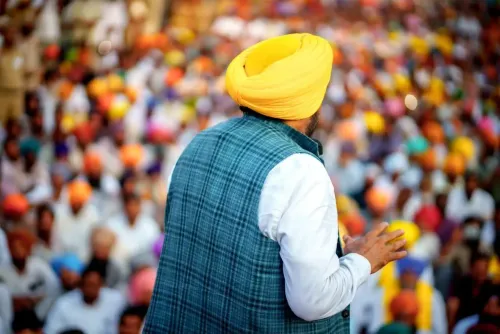
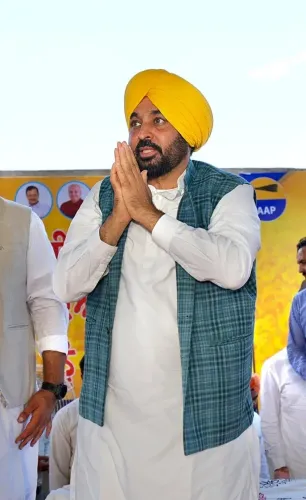
Thiruvananthapuram, Feb 16 (NationPress) What was expected to be a politically charged moment during the CPI(M)’s development march in Balussery near Kozhikode has erupted into a controversy, with allegations of staged optics and sharp satire from actor-director Joy Mathew.
The incident revolves around visuals of an elderly man, Moideen, giving Rs 2,000 to CPI(M) state secretary M. V. Govindan during the march last week in Kozhikode district.
In the viral clip, Moideen states that the money was sourced from his government pension, voicing concerns that a UDF government could halt such welfare payments. Govindan is then depicted returning the money—a gesture amplified by Left-leaning social media as proof of grassroots goodwill and backing for pension schemes under the LDF administration.
However, the narrative quickly began to unravel.
Moideen later asserted that he did not willingly approach the stage. He claimed that certain individuals escorted him, instructed him to hand over the cash, and recorded the act. Furthermore, he alleged he was informed beforehand that “Govindan Master” would return the money.
While the CPI(M) has not acknowledged any staging, the opposition swiftly characterized the episode as orchestrated political theatre.
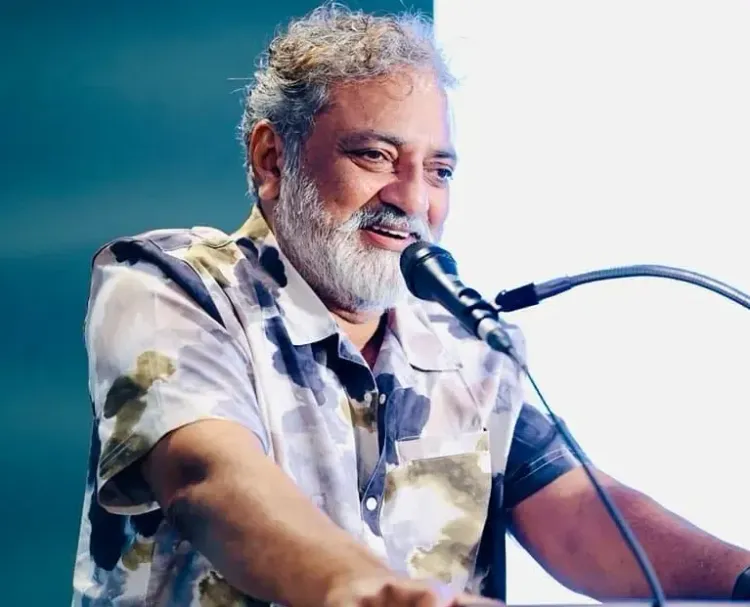
Into this contentious environment stepped Malayalam actor-director Joy Mathew with a sharp social media commentary, ridiculing the incident as poorly executed drama. He quipped that had trained theatre professionals from institutions like the Sangeet Natak Akademi or a School of Drama directed it, the “pension play” might have even been eligible for international festivals.
With theatrical precision, Mathew critiqued the “production”—saying the script lacked emotional resonance, the elderly protagonist’s attire seemed unconvincing, and the supporting cast faltered. In a mock gesture, he awarded a “special prize for natural acting” to Govindan.
He even proposed a more dramatic conclusion: a red flag raised high, a grandchild stepping forth, a stirring revolutionary chorus, and a freeze-frame finale.
Behind the humor lies a sharper political critique.
A reel intended to bolster the Left’s welfare credentials has instead ignited skepticism about authenticity in political messaging. In an age where optics spread faster than clarifications, the Balussery incident highlights a familiar risk: when politics becomes theatrical, the audience may begin to analyze the script.
Point of View
It's essential to recognize the Balussery incident not merely as a political misstep but as a reflection of how political narratives can be shaped and scrutinized. The incident invites a deeper conversation about authenticity in political messaging, particularly in an era dominated by social media scrutiny.
NationPress
1 Oct 2026
Frequently Asked Questions
What sparked the controversy during the CPI(M) march?
The controversy arose when elderly man Moideen claimed he was manipulated into handing over his pension money during the CPI(M) march, leading to accusations of staged optics.
Who criticized the incident and what did they say?
Actor-director Joy Mathew criticized the incident, labeling it as poorly executed drama and suggesting it lacked emotional depth.