What Contributes to Such a Mindset? VHP Reacts to Anti-National Song in Palghar
Click to start listening
Synopsis
The recent arrest of an individual for playing an anti-national song near a temple in Palghar has sparked significant concern. VHP's Vinod Bansal questions the origins of such divisive mindsets, calling for deeper investigations and stricter actions against those involved. The incident raises alarms about national unity and the circulation of provocative content in sensitive areas.
Key Takeaways
- VHP raises concerns about divisive mindsets.
- Police action taken against the individual playing the song.
- Call for deeper investigations into those radicalizing individuals.
- Importance of national unity emphasized by Bansal.
- Need for vigilance to maintain communal harmony.
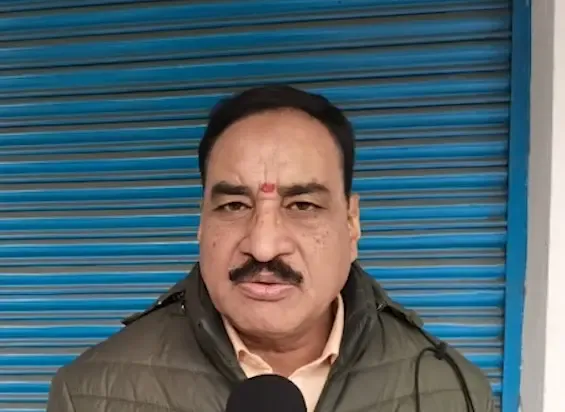
New Delhi, Jan 2 (NationPress) In light of the uproar surrounding the slogan 'Kashmir will become Pakistan', Vishva Hindu Parishad (VHP) National Spokesperson Vinod Bansal remarked on Friday that it is challenging to comprehend how such a mindset emerges.
This statement followed the arrest of a 25-year-old man by the Maharashtra Police for allegedly blasting the contentious song 'Kashmir Banega Pakistan' at a high volume near a temple in the Chinchoti locality of Palghar district, sparking outrage among the local populace.
In a conversation with IANS, Vinod Bansal stated, “It is difficult to fathom how this mindset develops — individuals who consume resources in India yet laud Pakistan. What fosters this mentality? Who cultivates it, who safeguards such individuals, and who is tainting their perspectives? This situation warrants an in-depth investigation.”
He further emphasized that the issue should extend beyond merely arresting one individual. “This matter goes beyond actions against a single person. Everyone associated with him and those who contributed to his radicalization must also be identified and addressed,” he added.
Labeling it a grave concern, Bansal insisted that the government must enact stringent measures.
“Those who conspire and sympathize with such actions should also face arrest. Incidents like these threaten national unity and must not be taken lightly,” he told IANS.
According to the FIR lodged at Naigaon Police Station, Sub-Inspector Pankaj Kilje discovered the anti-national song emanating loudly from Ruhann Hair Cutting Salon in Karamdpada, directly opposite the Durga Mata Mandir, while on patrol around 1:30 p.m.
The song, streamed via Bluetooth from a mobile phone to the salon's loudspeaker, was audible on the street and perceived as a significant threat to India's sovereignty, unity, and public tranquility, with the potential to incite enmity and communal discord.
Upon entering the salon, SI Kilje encountered two individuals: Guljari Raju Sharma (51), a local resident and salon employee, and Abdul Rahman Sadruddin Shah (25), originally from Gauri Sirajpur village in Lalganj, Azamgarh, Uttar Pradesh. Investigations unveiled that Shah was streaming the song from the YouTube app on his phone.
Angered locals detained Shah and handed him over to the authorities. The content of the song was subsequently verified on his device by law enforcement.
The incident generated considerable tension among residents in the bustling Chinchoti neighborhood, given its closeness to the Durga Mata Mandir.
After verification, police filed a First Information Report (FIR) against Shah under BNS Section 197(1)(d) for actions detrimental to national integration. Shah was arrested immediately, while no charges were brought against Sharma, the salon employee.
Authorities have declared that investigations are ongoing to uncover the complete circumstances surrounding the incident. They reiterated that actions threatening national unity or inciting public disorder would not be tolerated.
This case underscores growing apprehensions regarding the dissemination of provocative content in public spaces and the necessity for vigilance to preserve communal harmony, particularly in sensitive areas.
Point of View
It is imperative to address the growing concerns surrounding the dissemination of provocative content in public spaces. The recent incident in Palghar highlights the urgent need for coherence and unity within the nation. It is crucial that all stakeholders, including law enforcement and community leaders, work collaboratively to ensure that such divisive actions do not threaten the fabric of our society. The government must take a firm stance to uphold national unity and protect communal harmony.
NationPress
03/01/2026
Frequently Asked Questions
What happened in Palghar?
A 25-year-old man was arrested for playing the provocative song 'Kashmir Banega Pakistan' near a temple, causing outrage among locals.
Who is Vinod Bansal?
Vinod Bansal is the National Spokesperson for the Vishva Hindu Parishad (VHP) who commented on the incident.
What did Vinod Bansal say about the mindset behind such actions?
Bansal expressed difficulty in understanding how such a mindset develops, questioning who nurtures these sentiments.
What actions are being taken regarding the incident?
Authorities are investigating the circumstances surrounding the incident, and a First Information Report (FIR) has been filed against the accused.
Why is this incident significant?
This case raises concerns about national unity and the circulation of provocative content, highlighting the need for vigilance in maintaining communal harmony.