DMK boycott exposes INDIA bloc disunity, says Giriraj Singh
Synopsis
The DMK's formal boycott of the INDIA bloc's 8 June meeting has handed the BJP a ready-made narrative: the Opposition is united only in name. With Giriraj Singh calling it a 'betrayal' and Bihar's Z+ security row adding fuel, the cracks in India's principal Opposition alliance are now impossible to paper over.
Key Takeaways
Union Minister Giriraj Singh on 6 June called the DMK 's boycott proof of the INDIA bloc 's lack of unity.
Singh alleged Rahul Gandhi is 'the biggest threat to the INDIA bloc' and accused Congress of betraying the DMK.
The DMK announced on Thursday it would boycott the bloc's meeting at the Constitution Club, New Delhi on 8 June .
The Bihar government withdrew Z+ security cover from former CMs Lalu Prasad Yadav and Rabri Devi ; Rabri Devi sent back all security personnel in protest.
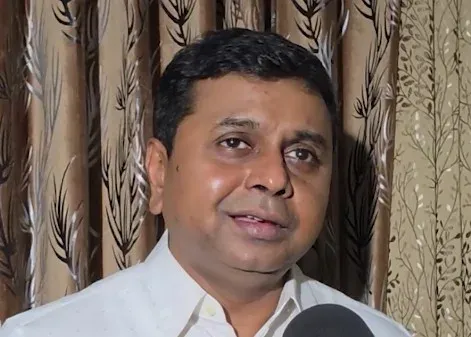
RJD spokesperson Shakti Singh Yadav called the security withdrawal 'politics of vendetta' targeting Opposition leaders.
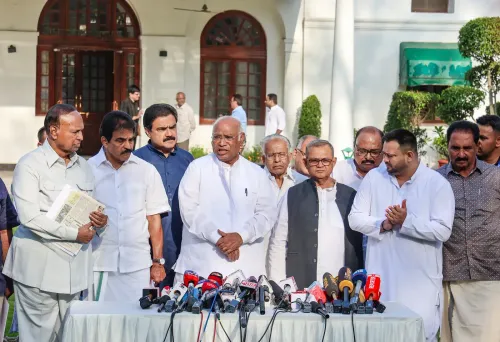
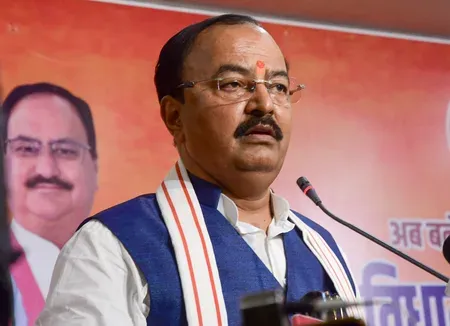
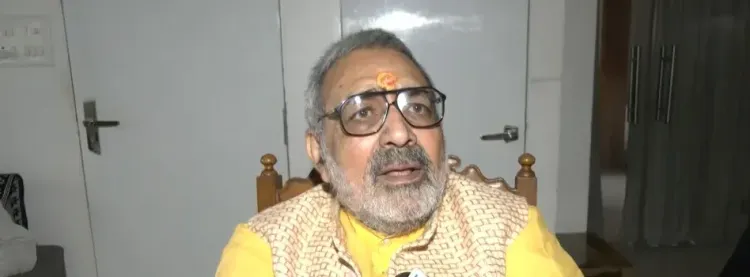
Union Minister Giriraj Singh on Saturday, 6 June said the Dravida Munnetra Kazhagam (DMK)'s decision to boycott the upcoming INDIA bloc meeting is proof that the Opposition alliance is fractured and driven purely by political self-interest. Singh's remarks came a day after the DMK formally announced it would skip the bloc's meeting scheduled at the Constitution Club in New Delhi on 8 June.
Giriraj Singh's Charge: Betrayal at the Heart of the Alliance
Addressing reporters in Patna, Singh did not mince words. 'This is a game. There is no unity among them. What Congress has done with the DMK can only be described as betrayal, a breach of trust. They fought elections together, Rahul Gandhi campaigned alongside the DMK, and they sought power together. Therefore, this can only be called betrayal. When someone feels betrayed, such a meeting loses its significance,' he said.
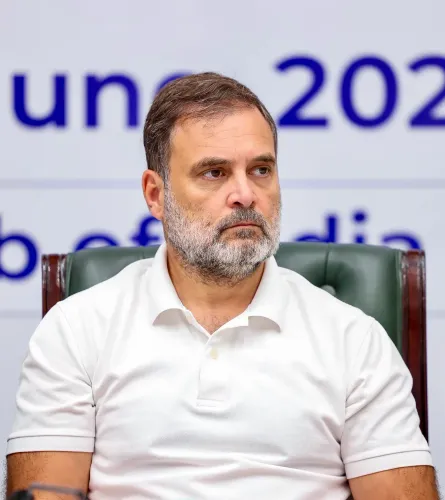
Singh went further, alleging that the entire coalition is held together by narrow self-interest. 'The entire INDIA bloc is together for its own selfish interests and nothing more. Rahul Gandhi is the biggest threat to the INDIA bloc,' he added. The remarks represent the Bharatiya Janata Party (BJP)'s sharpest public commentary yet on the widening rift within the Opposition grouping.
DMK's Boycott: What Triggered It
The DMK, which governs Tamil Nadu under Chief Minister M.K. Stalin, announced on Thursday that it would officially boycott the 8 June INDIA bloc meeting. While the party has not elaborated publicly on the specific grievances, the move signals a significant deterioration in its relationship with the Indian National Congress (Congress), the alliance's principal organising force. This is notably the first formal boycott by a major regional partner since the bloc was constituted ahead of the 2024 Lok Sabha elections.
Bihar Security Row: Z+ Cover Withdrawn from Lalu, Rabri Devi
Singh also weighed in on a separate but politically charged controversy in Bihar — the withdrawal of Z+ security cover from former Chief Ministers Lalu Prasad Yadav and Rabri Devi by the Chief Minister Samrat Choudhary government. 'Do Lalu Yadav and Rabri Devi face any threat? No. There are established government rules regarding security cover. If a person falls under those criteria, security is provided. However, if the government determines that they do not meet the required standards, then how can such security be granted?' he said.
Singh stressed that protocol, not politics, governs such decisions. 'There are specific rules for Z and Z+ security categories, and the law applies equally to everyone. Are RJD leaders fighting for a status symbol? If so, they should tell the Chief Minister that Z+ security is merely a status symbol,' he added.
Rabri Devi Sends Back Security Personnel in Protest
The political temperature in Bihar rose sharply after Rabri Devi, expressing her displeasure, directed that all security personnel assigned to both her and Lalu Prasad Yadav be withdrawn from their residence at 10 Circular Road in Patna. According to party sources, the move was a deliberate act of protest against the government's decision.
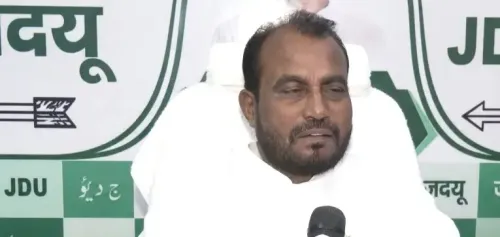
Shakti Singh Yadav, Chief Spokesperson of the Rashtriya Janata Dal (RJD), accused the BJP-led Bihar government of targeting Opposition leaders for political reasons. He alleged the withdrawal was intended to humiliate the RJD leadership and described it as 'the politics of vendetta.' The standoff adds another layer of friction to an already strained relationship between the ruling National Democratic Alliance (NDA) in Bihar and the Opposition.
What This Means for the Opposition
The twin developments — DMK's boycott of the INDIA bloc meeting and the security row in Bihar — underscore the mounting centrifugal pressures on India's Opposition. The INDIA bloc, formed with considerable fanfare in 2023, has struggled to maintain internal cohesion on seat-sharing and policy alignment. With a major regional ally now formally abstaining from a key meeting, the alliance's ability to project a united front ahead of state elections looks increasingly uncertain.
Point of View
Even if the motive is partisan. The alliance was always a coalition of competing ambitions, and Congress's inability to manage its regional partners is now a structural liability. The Bihar security row, meanwhile, is a reminder that NDA-governed states have found a low-cost way to keep Opposition leaders on the defensive: administrative decisions that are procedurally defensible but politically targeted. The real question is whether the INDIA bloc can reconstitute itself around a shared programmatic agenda before the next electoral cycle, or whether it remains a marriage of convenience that dissolves under the first serious pressure.
NationPress
23 Oct 2026
Frequently Asked Questions
Why has the DMK boycotted the INDIA bloc meeting?
The DMK announced on Thursday that it would boycott the INDIA bloc meeting scheduled for 8 June at the Constitution Club in New Delhi, signalling a serious deterioration in its relationship with Congress. The party has not publicly detailed its specific grievances, but BJP leaders have characterised the move as fallout from a breach of trust between the two alliance partners.
What did Giriraj Singh say about the INDIA bloc?
Union Minister Giriraj Singh said the INDIA bloc lacks genuine unity and is driven solely by political self-interest. He called Congress's conduct toward the DMK a 'betrayal' and claimed Rahul Gandhi is 'the biggest threat to the INDIA bloc.'
Why was Z+ security withdrawn from Lalu Prasad Yadav and Rabri Devi?
The Bihar government under Chief Minister Samrat Choudhary withdrew Z+ security cover from former Chief Ministers Lalu Prasad Yadav and Rabri Devi, citing established government protocols on security entitlement. Giriraj Singh defended the move, saying security is granted only when a threat assessment justifies it.
How did Rabri Devi respond to the security withdrawal?
Rabri Devi sent back all security personnel deployed at her residence at 10 Circular Road in Patna as a mark of protest against the government's decision, according to party sources. The RJD described the withdrawal as 'politics of vendetta.'
What is the significance of the DMK boycott for the INDIA bloc?
It is the first formal boycott by a major regional partner since the INDIA bloc was constituted ahead of the 2024 Lok Sabha elections. The move exposes the alliance's inability to manage internal disputes and weakens its capacity to project a unified Opposition front ahead of upcoming state elections.