DMK Mobilizes Against Delimitation Bill, Warns of Political Repercussions in Tamil Nadu
Synopsis
The DMK has raised an alarm over the Centre's delimitation bill, calling it a critical moment for Tamil Nadu's political landscape. They warn of dire consequences if the legislation proceeds without consensus, highlighting the potential risks to the state's representation in Parliament.
Key Takeaways
DMK's strong opposition to delimitation bill highlights regional concerns.
Warning of significant political repercussions if the bill is passed.
Historical precedents cited to support their stance on federal balance.
Call for constructive dialogue with the Union government.
Ongoing protests signify the importance of Tamil Nadu's representation in Parliament.
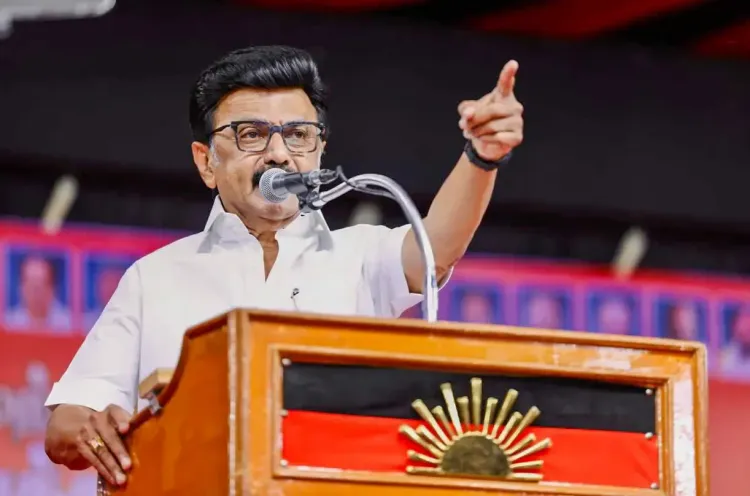
Chennai, April 17 (NationPress) The Dravida Munnetra Kazhagam (DMK) has launched a vigorous political campaign against the Centre’s proposed delimitation exercise, describing it as a crucial juncture in Tamil Nadu’s political narrative. The party has cautioned of severe repercussions if the legislation advances through Parliament.
Taking a leading role in the opposition, the DMK asserted that the results of their ongoing protests will be pivotal in shaping the future of Tamil Nadu’s political representation.
The party emphasized that, in the face of increasing pressure, it will not endorse any initiatives that might dilute the state’s influence in the Parliament.
The DMK expressed profound skepticism regarding recent verbal commitments from Prime Minister Narendra Modi and Union Home Minister Amit Shah, who assured in Parliament that Tamil Nadu's representation would remain intact. The DMK argued that the Bill’s provisions contradict these assurances.
Critiquing the legislation, the DMK highlighted that the extensive powers granted to the Delimitation Commission could facilitate arbitrary alterations in state representation. The party labeled the Bill as a calculated and misleading maneuver that threatens to compromise federal principles and disproportionately impact southern states.
The DMK stated, “The Union government’s reassurances are at odds with the Bill’s framework, which suggests a different agenda.” They cautioned that the Bill's provisions open avenues for political manipulation.
Insisting on the immediate retraction of the Bill, the DMK warned the Centre against attempting to pass it solely based on its parliamentary majority. They cautioned that any attempt to “force through” the legislation without broader consensus would provoke a significant political backlash in Tamil Nadu.
Referring to historical precedents, DMK leaders reminded that former Prime Ministers Jawaharlal Nehru, Indira Gandhi, and Atal Bihari Vajpayee had maintained federal equilibrium by freezing delimitation through constitutional amendments.
Accusing the current administration of undermining state rights, the DMK continues to advocate for the restoration of constitutional protections that guarantee equitable representation. The party has urged the Union government to heed Tamil Nadu's concerns and engage in constructive dialogue, as the issue is expected to remain a significant political flashpoint in the near future.
Point of View
This situation underscores the ongoing tension between state and central governments in India. The DMK's strong stance against the delimitation bill highlights the complexities of political representation and federalism in the country, especially in regional contexts like Tamil Nadu.
NationPress
17 Sept 2026
Frequently Asked Questions
What is the delimitation bill?
The delimitation bill is a legislative proposal aimed at redefining electoral boundaries, which the DMK fears may dilute Tamil Nadu's representation in Parliament.
Why is the DMK opposing the delimitation bill?
The DMK opposes the bill due to concerns that it could undermine Tamil Nadu's political representation and allow for arbitrary changes in electoral boundaries.
What are the potential consequences of the bill?
If passed, the bill could lead to significant political backlash in Tamil Nadu and alter the balance of representation in Parliament.
Who are the key political figures involved?
The key political figures include Prime Minister Narendra Modi and Union Home Minister Amit Shah, who have made assurances regarding Tamil Nadu's representation.
What historical precedents does the DMK reference?
The DMK refers to past Prime Ministers who took measures to safeguard federal balance, specifically by freezing delimitation through constitutional amendments.