DMK president Stalin: no cut in Tamil Nadu's 7.18% LS share
Synopsis
DMK president M. K. Stalin said Tamil Nadu's 7.18% Lok Sabha share must not fall if constituencies increase, and that the 1971 freeze on state-wise representation should last another 25 years. He tied the stand to Assembly and Joint Action Committee resolutions and ruled out any compromise.
Key Takeaways
Stalin on 27 November 2026 restated two hard demands on parliamentary delimitation.
If Lok Sabha seats increase, he said Tamil Nadu's existing 7.18% share must not be reduced under any circumstances.
He demanded that the 1971-based proportion of seats among states stay frozen for another 25 years.
The 42nd Constitutional Amendment (1976) and the 84th Amendment (2001) froze seat readjustment until 2026.
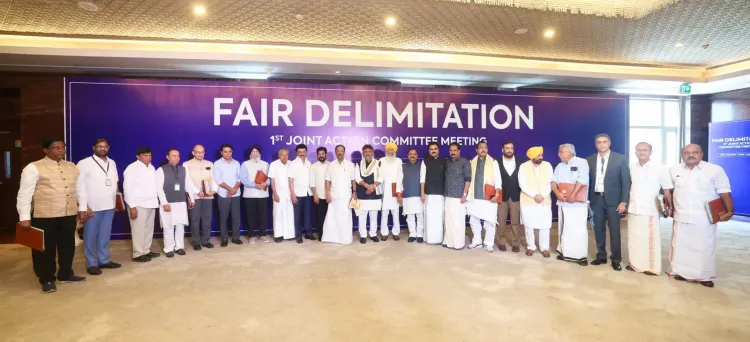
Stalin said the first all-India meeting for fair delimitation was held in Chennai and that the DMK will not compromise.
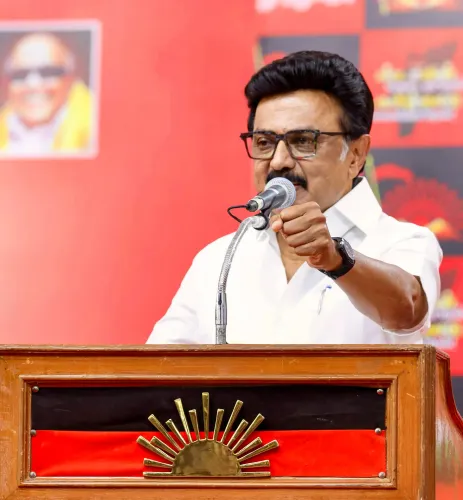
DMK president M. K. Stalin on Friday, 27 November 2026 put a number on the fight over India's next parliamentary map: Tamil Nadu's 7.18% share of Lok Sabha seats, he said, must not shrink under any expansion of the House. The former chief minister added that the freeze built on the 1971 Census has to hold for another 25 years — and that the Dravida Munnetra Kazhagam will not bargain it away.
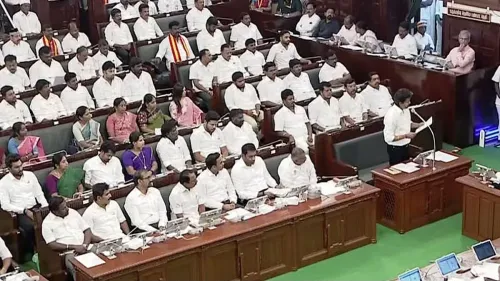
In a bilingual post on X, Stalin said the DMK was the first party in India to warn of the dangers of delimitation, and that the first gathering of leaders from across the country to demand நியாயமான மறுவரையறை (fair delimitation) was held in Chennai. He anchored that stand in a resolution of the Tamil Nadu Legislative Assembly and in resolutions of the Joint Action Committee for Fair Delimitation.
Two demands Stalin says are not for bargaining
The first demand is a floor. If the number of parliamentary constituencies is increased, he said, 'under no circumstances should Tamil Nadu's existing 7.18% share of seats in the lower house be reduced.' The second is about time: the existing proportion of seats among states, fixed on 1971 population figures and frozen earlier, 'must remain frozen for another 25 years.'
He repeated the line in Tamil and English. 'There is no change in our position, and there is no question of any compromise,' he wrote. Speculation, he said, would not move the party, nor would the complaints of those he described as having abandoned principle for office. 'The DMK will never compromise on Tamil Nadu's interests. Nor will it depart from its principles.'
The 1971 freeze that still shapes the Lok Sabha
India's present seat map is not a snapshot of today's population. The 42nd Constitutional Amendment of 1976 froze the readjustment of Lok Sabha seats on the 1971 Census until 2000. The 84th Constitutional Amendment of 2001 then pushed that freeze out to 2026.
The design was deliberate. States that brought fertility down would not immediately lose weight in the lower house to states whose populations kept growing faster. Tamil Nadu now holds 7.18% of Lok Sabha seats. Once the freeze lifts, a fresh exercise using newer headcount data would likely shift relative strength toward the north and away from the south.
Southern share and the post-2026 clock
Regional parties in the south have treated this as federalism, not mere arithmetic. Higher population growth in several northern states would, on a pure count, translate into more seats. Southern states that invested earlier in family planning would see their share of the House shrink even if the overall number of constituencies rises.
That is why Stalin's first demand is a percentage lock, not a seat total: even if the Lok Sabha expands, Tamil Nadu's share must not dip below 7.18%. The second would extend the 1971-based freeze by another quarter century, past the 2026 deadline already written into the Constitution. Watch the next census timetable, and whether a delimitation commission is named after that year. Further Assembly or Joint Action Committee resolutions would keep the southern brief in public view.
The freeze that protected southern weight for five decades is approaching its statutory end. Stalin has put Tamil Nadu's 7.18% on the table as a line, not a starting bid.
Frequently Asked Questions
What did MK Stalin say about delimitation?
DMK president M. K. Stalin said that if Lok Sabha seats are increased, Tamil Nadu's 7.18% share must not be reduced, and that the 1971-based freeze on inter-state seat proportions should continue for another 25 years, with no compromise.
Why is Tamil Nadu opposing a fresh delimitation of Lok Sabha seats?
A delimitation based on newer population data could cut the relative share of southern states that lowered fertility earlier. Tamil Nadu currently has 7.18% of Lok Sabha seats, a share Stalin says must not fall.
What is the 1971 Census freeze on Lok Sabha seats?
The 42nd Constitutional Amendment of 1976 froze readjustment of parliamentary seats on 1971 population figures until 2000. The 84th Amendment of 2001 extended that freeze until 2026 so states with slower population growth would not lose representation.
What share of Lok Sabha seats does Tamil Nadu hold?
Stalin stated Tamil Nadu's existing share as 7.18% of seats in the lower house and demanded that this percentage not be reduced even if the total number of constituencies rises.
What is the Joint Action Committee for Fair Delimitation?
It is a grouping of leaders that met, first in Chennai according to Stalin, to demand that delimitation not reduce southern states' existing share of parliamentary seats. He said the DMK's two demands follow that committee's resolutions and a Tamil Nadu Assembly resolution.