Dr. Jitendra Singh Hails Jammu Paddy Procurement Target Hike
Synopsis
Union Minister Dr. Jitendra Singh announces a sharp hike in Jammu Division's paddy procurement target — from 36,000 MT to 60,000 MT for Kharif Marketing Season 2026–27 — citing improved market access and the Modi Government's farmers' welfare agenda.
Key Takeaways
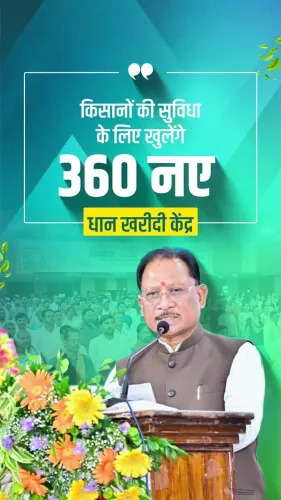
Jammu Division's paddy procurement target for Kharif Marketing Season 2026–27 has been raised from 36,000 MT to 60,000 MT — a 67% increase.
Kathua district farmers are specifically cited as welcoming the revision, reflecting the district's active paddy-growing community.
The move operates within India's Minimum Support Price (MSP) procurement regime, giving farmers a guaranteed buyer at floor prices.
The revision aligns with the post- 2019 Reorganisation Act integration of J&K's farm economy with national procurement norms.
Actual procurement volumes achieved in the ongoing season will determine the on-ground impact for farmers.
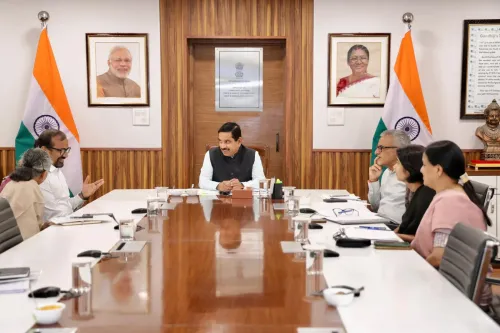
Jitendra Singh , who represents Udhampur constituency covering parts of Jammu, framed the move as reflecting the Modi Government's commitment to farmers' welfare .
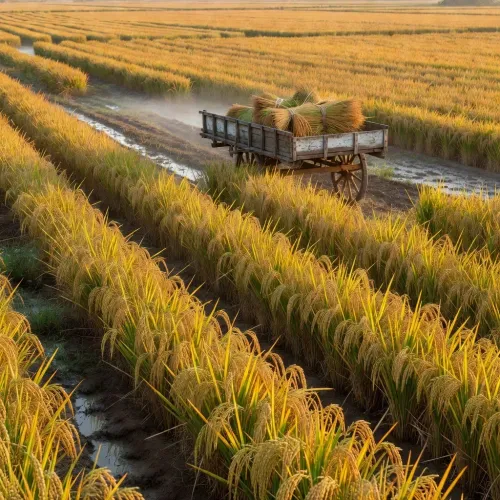
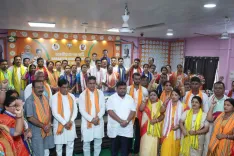
A significant push for paddy growers in Jammu Division — the region's procurement target has been revised sharply upward, from 36,000 metric tonnes to 60,000 metric tonnes for Kharif Marketing Season 2026–27. Union Science and Technology Minister Dr. Jitendra Singh announced the development on 5 November 2026, spotlighting Kathua district as among the areas where farmers have welcomed the move.
A 67% jump in procurement floor for Jammu's paddy belt
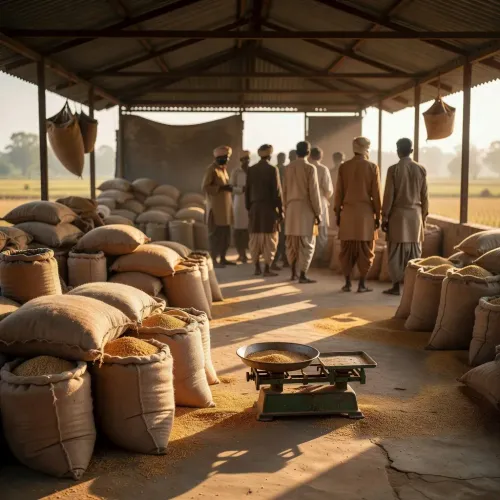
The revision represents a 67 per cent increase in the officially sanctioned procurement ceiling for the division — a number that matters enormously to farmers whose paddy would otherwise have to compete in open markets at suppressed prices. Under India's Minimum Support Price regime, procurement targets set by the central and union territory authorities determine how much grain agencies are obligated to lift, directly affecting the floor under farm incomes.
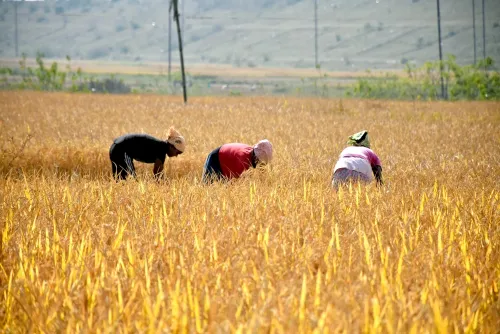
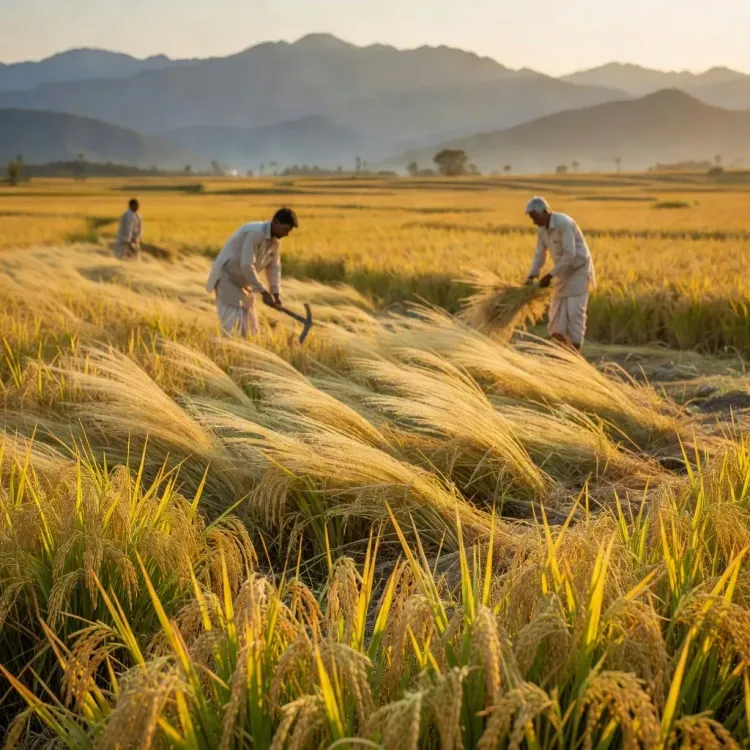
Kathua, a district that straddles the Jammu plains and the lower Shivalik foothills, has an active paddy-growing community whose produce feeds into the broader Jammu Division supply chain. A higher procurement ceiling means more of that harvest has a guaranteed buyer at the MSP rate rather than being left to the vagaries of private trade.
Post-2019 integration and what it means for J&K's farm economy
The revision sits inside a larger policy arc. Following the Jammu and Kashmir Reorganisation Act of 2019, central agricultural procurement mechanisms — including MSP-linked buying operations — were extended more directly to the union territory. Each subsequent Kharif season has seen incremental adjustments to align J&K's procurement architecture with national norms, and this upward revision to Jammu Division's target follows that pattern.
The minister framed the decision explicitly as reflecting the Modi Government's commitment to farmers' welfare — language consistent with the Centre's broader messaging around rural income support across states and union territories. Whether the revised ceiling translates into actual procurement volumes at that level will be the real test; the Kharif Marketing Season 2026–27 is now underway, and procurement agencies on the ground will need the logistics — storage, transport, manpower — to match the ambition on paper.
What Kathua's farmers are watching next
For growers in the Jammu Division, the ask is straightforward: that procurement agencies actually lift grain up to the new ceiling, and that payment timelines remain short. Procurement targets are a promise; actual offtake is the proof. Similar upward revisions have been announced in other parts of the country in recent Kharif seasons, and the pattern holds — the announcement unlocks administrative authority to procure more, but ground-level execution determines whether farmers feel the difference in their pockets.
If the 2026–27 season achieves procurement close to the 60,000 MT mark, it would represent one of the largest single-season grain-lifting operations in Jammu Division's recent history — and a data point the government will almost certainly carry into the next electoral cycle in Jammu and Kashmir.
Point of View
But its credibility rests entirely on whether agencies on the ground can execute at the revised scale. Dr. Jitendra Singh's choice to amplify the announcement on social media — anchored to Kathua, his political home district — signals that the government is treating farm-sector optics in J&K as strategically important heading into the next election cycle. The broader pattern of Kharif-season procurement revisions across India suggests this is routine planning, but in J&K it carries additional weight as a marker of post-reorganisation normalisation.
NationPress
5 Nov 2026
Frequently Asked Questions
What is the new paddy procurement target for Jammu Division in 2026-27?
The paddy procurement target for Jammu Division has been revised upward to 60,000 metric tonnes for Kharif Marketing Season 2026–27, up from the previous 36,000 MT .
Which district is Dr. Jitendra Singh referring to when he mentions farmers welcoming the decision?
Dr. Jitendra Singh specifically highlighted Kathua district in Jammu Division as an area where farmers have welcomed the revised procurement target.
What does a higher paddy procurement target mean for farmers?
A higher procurement target means government agencies are authorised to purchase more paddy at the Minimum Support Price (MSP) , giving more farmers a guaranteed buyer and reducing dependence on private markets where prices can be lower.
How does the 2019 reorganisation of J&K affect farm procurement there?
Following the Jammu and Kashmir Reorganisation Act of 2019 , central procurement mechanisms including MSP-linked buying were extended more directly to J&K as a union territory, progressively aligning its agricultural support with national norms.
Who is Dr. Jitendra Singh?
Dr. Jitendra Singh is the Union Minister of State (Independent Charge) for Science and Technology and Earth Sciences, and also MoS in the Prime Minister's Office and in the Ministry of Personnel. He represents the Udhampur constituency in Jammu and Kashmir.