CM Dhami flags off 59 BS-VI buses for Uttarakhand's fleet
Synopsis
Uttarakhand CM Pushkar Singh Dhami flagged off 59 new BS-06 compliant buses on 5 November 2026, bolstering the UTC fleet and extending cleaner, more accessible public transport to remote Himalayan districts.
Key Takeaways
59 new buses meeting BS-06 (Euro 6) emission standards inducted into the Uttarakhand Transport Corporation fleet on 5 November 2026 .
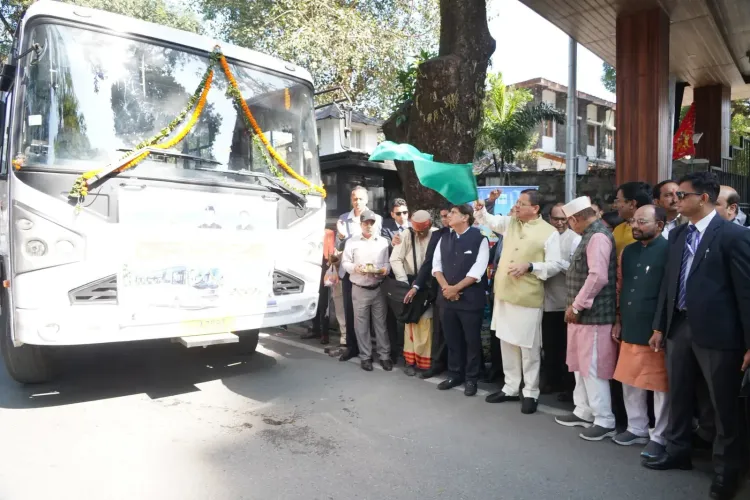
CM Pushkar Singh Dhami flagged off the buses from his official residence in Dehradun .
The move is designed to improve public transport frequency and coverage in remote and hilly areas of Uttarakhand.
BS-VI norms have been mandatory across India since April 2020 , targeting sharp reductions in particulate and nitrogen-oxide emissions.
Cabinet Ministers Pradeep Batra and Khajan Dass , and MLA Bhupal Tamta , attended the ceremony.
The state government has signalled continued investment in modern, environment-friendly public transport infrastructure.
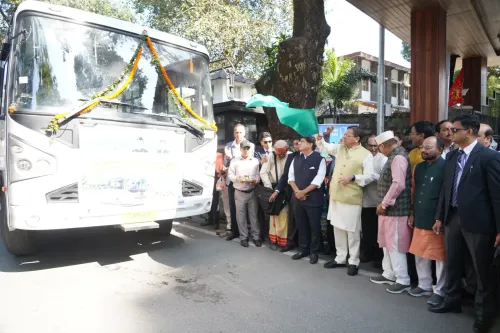
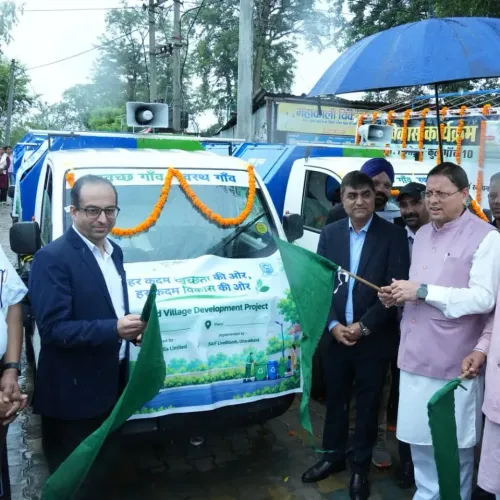
Fifty-nine new buses — built to BS-06 (Euro 6) emission standards — rolled out of the state capital on Thursday, 5 November 2026, as Uttarakhand Chief Minister Pushkar Singh Dhami flagged them off from his official residence, strengthening the Uttarakhand Transport Corporation (UTC) fleet and extending cleaner public transit deeper into the state's mountain heartland.
Flagging off the buses, CM Dhami said the new additions would make public transport 'safer, smoother, accessible and convenient' — surakshit, sugam, sulabh evam suvidhajanак — for ordinary citizens across the state. He added that residents of remote and hilly areas would derive special benefit as connectivity expands to regions that have historically been difficult to reach.
What BS-06 means for Uttarakhand's mountain roads
India mandated BS-VI emission norms nationwide from April 2020, aligning the country's vehicular standards with the European Euro 6 framework — among the strictest in the world. The norms dramatically cut permissible levels of particulate matter and nitrogen oxides, pollutants particularly harmful in enclosed mountain valleys where exhaust lingers. For a state like Uttarakhand, where seasonal tourist traffic and thin-aired high-altitude corridors amplify pollution risk, upgrading the public bus fleet is not just an administrative tick-box — it is an air-quality intervention.
State governments across India have been progressively retiring older, dirtier bus fleets and replacing them with BS-VI-compliant vehicles as part of the broader national clean-air push. Uttarakhand, with its mix of urban corridors and remote Himalayan districts, has been among the hilly states prioritising this transition.
Reaching the last-mile village
The expansion of the UTC fleet carries a specific promise for communities tucked into the higher ranges. Many villages in Uttarakhand's hill districts remain dependent on infrequent or ageing bus services, with residents — often women, students, and daily-wage workers — forced to walk long distances to the nearest motorable road. Adding 59 new buses to the operational fleet means the corporation can extend routes or improve frequency on existing thin-coverage corridors.
The flagging-off ceremony was attended by Cabinet Ministers Pradeep Batra and Khajan Dass, along with MLA Bhupal Tamta and other dignitaries, signalling broad government ownership of the initiative.
Modernisation on a longer runway
CM Dhami described the state government as 'continuously striving' to make public transport modern, environment-friendly, and citizen-centric. The language points to a policy arc that goes beyond today's bus induction: Uttarakhand has been watching the Centre's push for electric buses under national urban mobility schemes, and analysts tracking the state's transport modernisation will now watch whether the next fleet addition accelerates the shift toward zero-emission vehicles.
For now, 59 cleaner, newer buses are on the road. For a Himalayan state whose roads wind through fragile ecosystems and whose villages sit hours from the nearest town, that is a concrete step — not a ceremonial gesture.
Point of View
The Dhami government is mapping infrastructure delivery onto a geography where public transport is not a convenience but a lifeline. The event also reflects a wider pattern among Indian state governments of using BS-VI fleet upgrades as visible proof of clean-air commitment, even as the deeper shift to electric public transit remains a work in progress. How quickly Uttarakhand moves from BS-VI to zero-emission buses on its mountain routes will be the sharper test of its modernisation ambition.
NationPress
5 Nov 2026
Frequently Asked Questions
How many new buses were added to the Uttarakhand Transport Corporation fleet in November 2026?
59 new buses were added to the UTC fleet on 5 November 2026 , flagged off by Chief Minister Pushkar Singh Dhami from his official residence.
What are BS-06 emission standards for buses in India?
BS-06 (also written BS-VI) are India's vehicle emission norms equivalent to the European Euro 6 standard, made mandatory nationwide from April 2020 . They set strict limits on particulate matter and nitrogen oxide emissions from vehicles.
Which areas of Uttarakhand will benefit from the new UTC buses?
CM Dhami specifically highlighted remote and hilly areas of Uttarakhand, where the new buses are expected to expand route coverage and improve frequency of public transport for local residents.
Who attended the UTC bus flagging-off ceremony with CM Dhami?
Cabinet Ministers Pradeep Batra and Khajan Dass , along with MLA Bhupal Tamta and other dignitaries, were present at the ceremony.
Is Uttarakhand planning electric buses for public transport?
CM Dhami has described the government as continuously working toward modern and environment-friendly transport. The shift to electric buses is a broader trend to watch, though the current induction focuses on BS-06 diesel/CNG buses .