Dr. Jitendra Singh Hails Rs 9,800 Cr J&K Tunnel Nod
Synopsis
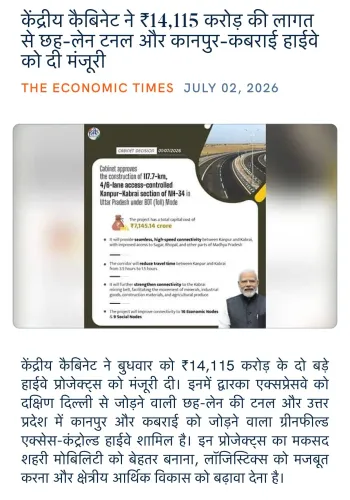
The Cabinet has approved the Rs 9,800 crore Sudhmahadev–Dranga and Singhpora–Vailoo Tunnel Projects on NH-244 in Jammu and Kashmir, a move Union Minister Dr. Jitendra Singh says will deliver all-weather connectivity to the Chenab region and transform transport infrastructure across Doda, Kishtwar, Ramban and Udhampur.
Key Takeaways
The Cabinet approved the Rs 9,800 crore Sudhmahadev–Dranga and Singhpora–Vailoo Tunnel Projects on NH-244 in Jammu and Kashmir.
The tunnels will provide all-weather connectivity between Jammu and the Kashmir Valley, bypassing landslide- and snowfall-prone road stretches.
Key beneficiary districts include Doda, Kishtwar, Ramban and Udhampur in the Chenab region.
The projects are expected to boost tourism, trade, employment and defence mobility across the Union Territory.
The approval follows a broader post-2019 push under Bharatmala Pariyojana to build all-weather Himalayan corridors.
Next steps include land acquisition, environmental clearances and tendering by the Ministry of Road Transport and Highways .
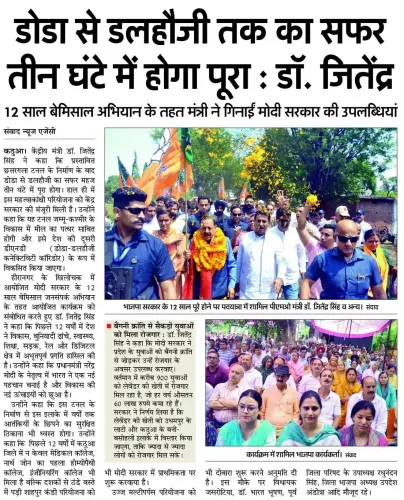
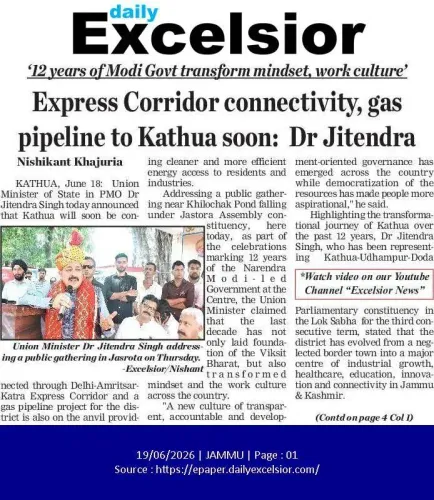
Two tunnels. One Cabinet decision. A transformation decades in the making for the mountains of Jammu and Kashmir. Union Science and Technology Minister Dr. Jitendra Singh — who also represents the Udhampur Lok Sabha constituency — on Saturday, 1 August 2026, welcomed the Cabinet's approval of the Rs 9,800 crore Sudhmahadev–Dranga and Singhpora–Vailoo Tunnel Projects on National Highway 244, calling it 'a defining milestone in the transformation of Jammu and Kashmir's transport infrastructure.'
What the Rs 9,800 Crore Cabinet Nod Covers
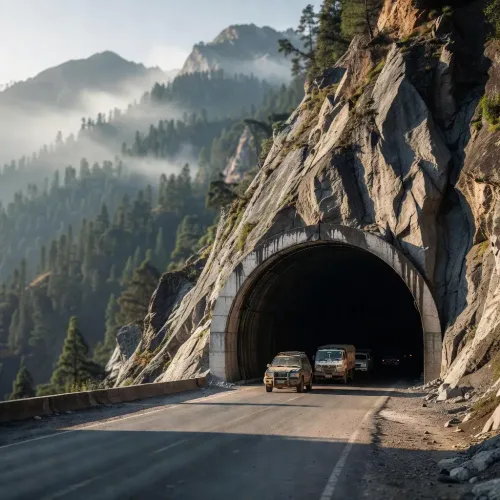
The Cabinet green-light covers two strategically positioned tunnel projects on NH-244, a highway corridor that threads through the Chenab belt — one of the most weather-disrupted stretches of road in the Union Territory. The Sudhmahadev–Dranga and Singhpora–Vailoo tunnels are designed to bypass road sections chronically vulnerable to landslides, heavy snowfall, and seasonal closures that can cut off entire districts for days at a time.
Dr. Singh credited Prime Minister Narendra Modi for the 'visionary decision' and also thanked Union Road Transport and Highways Minister Nitin Gadkari for 'facilitating' the projects through his ministry.
Chenab Region at the Heart of It
The districts that stand to gain most directly are Doda, Kishtwar, Ramban and Udhampur — the Chenab region, which has historically been the hardest to reach when weather turns hostile. For residents here, an all-weather road link to the Kashmir Valley and to Jammu is not a convenience; it is a lifeline for essential supplies, medical access, and economic participation.
Dr. Singh listed the expected outcomes: reduced travel time, enhanced road safety, improved disaster resilience, stronger defence and strategic mobility, and uninterrupted movement of people and goods year-round. Beyond the logistics, he pointed to downstream gains in tourism, trade, employment and social development across the Union Territory.
Where This Fits in J&K's Connectivity Push
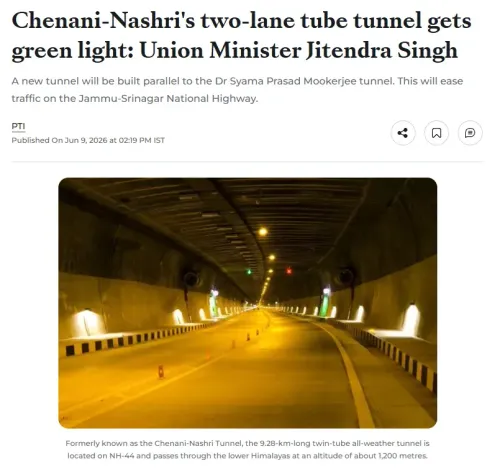
This approval follows a sustained pattern of all-weather infrastructure investment in Jammu and Kashmir that gathered pace after the reorganisation of the region as a Union Territory in 2019. The model — bore through the mountain rather than battle the weather on exposed passes — was validated by the Chenani-Nashri Tunnel on NH-44, inaugurated in 2017, which dramatically cut travel time on the Jammu–Srinagar axis. Projects like the Zoji La Tunnel extended that logic toward Ladakh. The Sudhmahadev–Dranga and Singhpora–Vailoo projects now push the same connectivity guarantee deeper into the Chenab hinterland.
Under the Bharatmala Pariyojana, the central government has systematically targeted Himalayan frontier corridors that serve a dual purpose: civilian mobility and defence logistics. The NH-244 tunnels sit squarely within that strategic calculus.
What Comes Next on NH-244
With Cabinet approval secured, the next critical phases will be land acquisition, environmental clearances, and the tendering process managed by the Ministry of Road Transport and Highways. Construction timelines and phased funding allocations in subsequent Union Budgets will determine how quickly the Chenab region's isolation becomes a chapter in the past — not a present reality.
For the people of Doda, Kishtwar and Ramban, the Cabinet's stamp is the beginning, not the end. The mountain still has to be moved.
Point of View
Simultaneously serving civilian needs and defence logistics. For Dr. Jitendra Singh, who holds both a Union Cabinet portfolio and the Udhampur seat, the announcement is politically significant — it places a tangible Rs 9,800 crore deliverable in his constituency ahead of the policy calendar. The Chenab region's chronic connectivity deficit has long been a grievance that cuts across political lines, and tunnelling through it rather than managing it seasonally represents a structural shift in approach. Whether execution matches the ambition will depend on how swiftly land acquisition and tendering move — the gap between Cabinet approval and ground-breaking has historically been the project graveyard in J&K.
NationPress
1 Aug 2026
Frequently Asked Questions
What are the Sudhmahadev–Dranga and Singhpora–Vailoo Tunnel Projects?
These are two tunnel projects approved by the Union Cabinet on NH-244 in Jammu and Kashmir, together valued at Rs 9,800 crore, designed to provide all-weather road connectivity through the Chenab region by bypassing stretches prone to landslides and snowfall.
Which districts will benefit from the NH-244 tunnel projects in J&K?
The primary beneficiary districts are Doda, Kishtwar, Ramban and Udhampur, which form the Chenab belt — historically the most weather-disrupted zone on the Jammu–Kashmir Valley road network.
What is NH-244 and why is it important for Jammu and Kashmir?
NH-244 is a national highway in Jammu and Kashmir that connects Udhampur, the Chenab region and surrounding areas. It is a critical but weather-vulnerable corridor, and the new tunnels aim to make it passable year-round.
How do these tunnels fit into the Bharatmala Pariyojana?
The Sudhmahadev–Dranga and Singhpora–Vailoo tunnels are part of the broader Bharatmala Pariyojana push to build all-weather Himalayan highway corridors that serve both civilian mobility and strategic defence logistics in Jammu and Kashmir.
What are the next steps after Cabinet approval for the NH-244 tunnels?
Following Cabinet approval, the Ministry of Road Transport and Highways must complete land acquisition, obtain environmental clearances, and float tenders before construction can begin. Budget allocations in subsequent Union Budgets will also shape the project timeline.