Dr. Jitendra Singh Inaugurates Seismic Observatory in Kishtwar
Synopsis
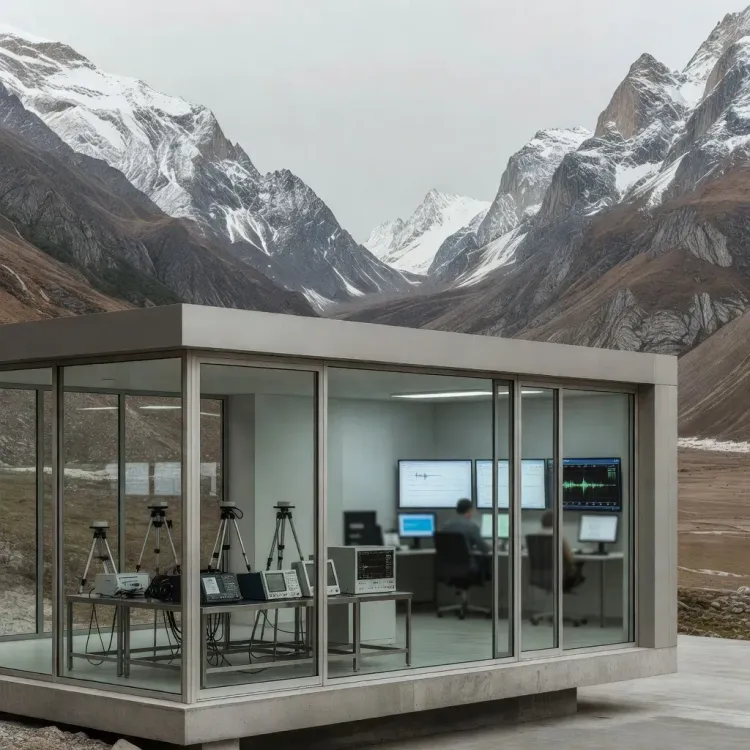
Union Minister Dr. Jitendra Singh inaugurated the Seismological Observatory in Kishtwar, J&K on 2 November 2026, established by the National Centre for Seismology. Located in the seismically active Himalayan zone, it will enhance real-time earthquake detection, seismic research, and disaster preparedness for the region.
Key Takeaways
Jitendra Singh inaugurated the Seismological Observatory, Kishtwar on 2 November 2026 .
The observatory is established by the National Centre for Seismology (NCS) under the Ministry of Earth Sciences .
Kishtwar lies in the seismically active Himalayan arc along the Indian-Eurasian tectonic plate boundary.
The facility will strengthen earthquake monitoring, seismic research and disaster preparedness in Jammu and Kashmir .
The inauguration was attended by Leader of Opposition Sunil Sharma , MLA Shagun Parihar , Secretary Dr.
Srinivasa Kumar , and NCS Director Dr.
The NCS, founded in 2012 , has been expanding Himalayan seismic coverage following the 2004 tsunami and 2013 Uttarakhand floods.
India just added a critical new eye to its earthquake-watching network — right in the heart of one of its most tectonically restless zones. Union Science and Technology Minister Dr. Jitendra Singh on Monday, 2 November 2026, inaugurated the Seismological Observatory, Kishtwar, established by the National Centre for Seismology (NCS) under the Ministry of Earth Sciences, at the District Employment and Counselling Centre (DE&CC), Kishtwar, Jammu and Kashmir.
The inauguration brought together Leader of Opposition and MLA Sunil Sharma, MLA Shagun Parihar of the Kishtwar Assembly Constituency, Secretary, Ministry of Earth Sciences, Dr. Srinivasa Kumar, Director NCS Dr. G. Suresh, DC Pankaj Sharma, SSP Sunny Gupta, and senior officials — a rare gathering of political, administrative and scientific leadership in the Union Territory, all anchored around a single purpose: knowing the next earthquake before it strikes.
Why Kishtwar, Why Now
Kishtwar sits squarely inside the seismically active Himalayan arc, where the Indian tectonic plate grinds relentlessly into the Eurasian plate — one of the most energetic geological collisions on the planet. The district has historically recorded significant seismic events, making it a glaring gap in any serious monitoring grid. The new observatory directly addresses that gap, strengthening real-time earthquake detection, seismic research, and disaster preparedness for the wider Jammu and Kashmir region.
The NCS Network and Its Himalayan Push
The National Centre for Seismology, set up in 2012 under the Ministry of Earth Sciences, is the nodal agency for India's national seismological network. Its mandate: consolidate and modernise seismic monitoring across the subcontinent. The Kishtwar station extends a decade-long effort to plug coverage voids along the Himalayan front — an effort that gained urgency after the 2004 Indian Ocean tsunami and the 2013 Uttarakhand floods exposed the cost of inadequate early-warning infrastructure.
Data flowing from Kishtwar will feed into the national seismic grid, improving both real-time event detection and the long-term seismic hazard maps that inform how buildings, bridges, and dams are designed and certified across the region.
What the Observatory Means for J&K's Disaster Readiness
For residents of Kishtwar and surrounding districts — communities that know earthquakes not as abstractions but as lived events — better monitoring translates directly into faster alerts, smarter land-use planning, and ultimately fewer casualties. Disaster management agencies in Jammu and Kashmir now gain a local data node that can cut the detection-to-alert latency that costs lives in the critical seconds after a tremor begins.
The observatory also anchors the scientific infrastructure needed for long-term seismic research: cataloguing fault behaviour, building historical seismicity records, and training the next generation of earth scientists in a region that demands them.
India's seismic safety story is being written one observatory at a time — and today, Kishtwar got its chapter.
Point of View
Who holds the Earth Sciences portfolio alongside Science and Technology, it is a visible demonstration that scientific infrastructure investment is reaching border districts, not just metropolitan hubs. The bipartisan optics — with BJP Leader of Opposition Sunil Sharma sharing the dais — also signal that seismic safety is being positioned above J&K's fractious political lines. Watch for further NCS station announcements in the UT as the network seeks full Himalayan arc coverage.
NationPress
2 Nov 2026
Frequently Asked Questions
What is the Seismological Observatory inaugurated in Kishtwar?
It is a new earthquake-monitoring facility established by the National Centre for Seismology under India's Ministry of Earth Sciences, inaugurated at the District Employment and Counselling Centre in Kishtwar, Jammu and Kashmir on 2 November 2026.
Why was the seismological observatory set up in Kishtwar specifically?
Kishtwar is located in the seismically active Himalayan zone along the Indian-Eurasian plate boundary, making it a critical location for real-time earthquake detection and seismic research in Jammu and Kashmir.
What is the National Centre for Seismology (NCS)?
The NCS is a government agency under the Ministry of Earth Sciences, established in 2012, responsible for operating India's national seismological network, monitoring earthquakes, and conducting seismic hazard research.
Who inaugurated the Kishtwar Seismological Observatory?
Union Minister of State (Independent Charge) for Science and Technology and Earth Sciences, Dr. Jitendra Singh, inaugurated the observatory alongside J&K Leader of Opposition Sunil Sharma, MLA Shagun Parihar, and senior scientific and administrative officials.
How will the new observatory help with disaster preparedness in Jammu and Kashmir?
The observatory will feed real-time seismic data into India's national monitoring grid, enabling faster earthquake alerts, improved long-term seismic hazard assessments, and better-informed disaster management planning for the region.