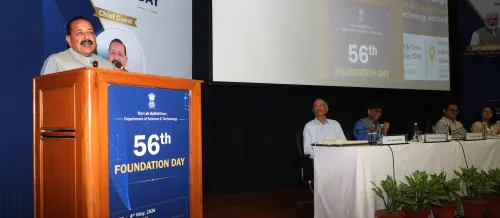
Dr. Jitendra Singh: India, ICTP launch Co-operation Fund

Synopsis
India and the International Centre for Theoretical Physics have signed a Letter of Intent launching the India-ICTP Co-operation Fund, formalising decades of scientific partnership to boost Indian researcher mobility and global scientific engagement under the Viksit Bharat 2047 vision.
Key Takeaways
India and ICTP Trieste have initiated the India-ICTP Co-operation Fund to institutionalise researcher mobility and collaborative activities.
A Letter of Intent was signed between India's Department of Science and Technology (DST) and ICTP .
The LoI was exchanged from the Indian side by Dr.
Praveenkumar Somasundaram , Head of the International Cooperation Division and National Supercomputing Mission at DST.
The fund aligns with PM Narendra Modi's Viksit Bharat 2047 vision for India's global scientific footprint.
ICTP, founded in 1964 in Trieste by Nobel laureate Abdus Salam, serves as a leading global hub for theoretical physics and mathematics, particularly for scientists from developing nations.
Operational details including funding quantum and proposal timelines are yet to be announced.
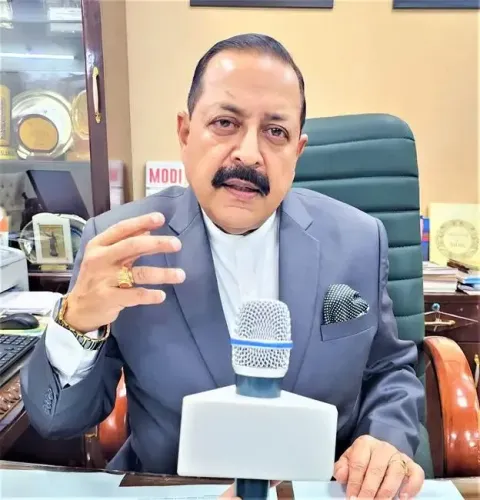
Decades of quiet scientific exchange between India and one of the world's most prestigious physics institutions just got a formal backbone. Union Science and Technology Minister Dr. Jitendra Singh announced on Sunday, 15 November 2026 that India and the International Centre for Theoretical Physics (ICTP) have initiated the 'India-ICTP Co-operation Fund' — a dedicated mechanism to institutionalise researcher mobility and collaborative activities between Indian institutions and the Trieste-based centre.
From decades of association to a formal funding architecture
The ICTP, founded in 1964 in Trieste, Italy, by Nobel laureate Abdus Salam under the auspices of UNESCO and the International Atomic Energy Agency, has long served as a critical bridge for scientists from the developing world to access frontier theoretical research. India's engagement with the centre stretches back decades — through associateships, workshops, federation programmes and academic exchanges involving multiple Indian institutions.
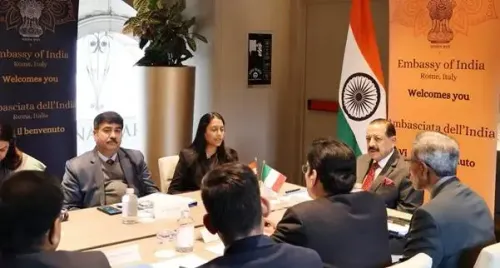
What changed this week is architecture. A Letter of Intent (LoI) was signed between India's Department of Science and Technology (DST) and ICTP, giving the partnership a structured, funded identity for the first time. The LoI was exchanged from the Indian side by Dr. Praveenkumar Somasundaram, Senior Scientist and Head of the International Cooperation Division and National Supercomputing Mission at DST.
What the India-ICTP Co-operation Fund is designed to do
The fund's stated aim is to strengthen the 'engagement and mobility' of Indian researchers with ICTP — meaning more scientists can participate in workshops, collaborative projects and advanced training programmes at Trieste without navigating case-by-case funding arrangements. The move is framed explicitly within Prime Minister Narendra Modi's vision for Viksit Bharat 2047, the government's blueprint for transforming India into a developed nation by the centenary of its independence — with a knowledge economy and a larger share of global basic research output as central pillars.
Operational details — including the fund's quantum, the first call for proposals and eligibility criteria — have not yet been made public, but the LoI establishes the political and institutional commitment from which those guidelines will follow.
India's science-diplomacy push and what ICTP represents
This agreement fits a broader pattern: India has been systematically converting long-standing informal science relationships into treaty-level or institutional arrangements, particularly in fields where basic research infrastructure is expensive and globally distributed. Theoretical physics and mathematics — ICTP's core domains — are precisely the areas where access to international networks and visiting programmes can be transformative for mid-career researchers from institutions outside the country's top metropolitan centres.
For the DST, institutionalising this partnership also signals that India is no longer content to participate in global science as a beneficiary; it is contributing co-operation funds, signalling the transition to a co-investing partner in multilateral scientific institutions.
The next concrete milestone to watch: the operational guidelines and first proposal call under the new fund — the moment the LoI converts from intent into opportunity for Indian physicists and mathematicians across the country.
Point of View
A posture consistent with the government's science-diplomacy push under the Viksit Bharat 2047 framework. For DST, formalising this relationship through a funded LoI rather than ad hoc arrangements signals institutional maturity and signals that India's basic-research ambitions are being backed with structured resources. The agreement also gives Dr. Jitendra Singh's ministry a tangible deliverable in the physics and mathematics community ahead of a year when India's science budget and researcher-mobility policies face growing scrutiny. Whether the fund's operational scale matches its diplomatic ambition will ultimately determine how transformative this step proves.
NationPress
15 Nov 2026
Frequently Asked Questions
What is the India-ICTP Co-operation Fund?
The India-ICTP Co-operation Fund is a newly initiated mechanism to institutionalise and financially support the engagement and mobility of Indian researchers with the International Centre for Theoretical Physics (ICTP) in Trieste, Italy, formalising decades of existing scientific collaboration.
What is the ICTP and why does it matter for India?
ICTP, the International Centre for Theoretical Physics, was founded in 1964 in Trieste, Italy, by Nobel laureate Abdus Salam under UNESCO and IAEA auspices. It is a leading global hub for theoretical physics, mathematics and capacity-building, particularly for scientists from developing countries, making it a key partner for India's research community.
Who signed the Letter of Intent between India and ICTP?
The Letter of Intent was signed between India's Department of Science and Technology (DST) and ICTP. From the Indian side, it was exchanged by Dr. Praveenkumar Somasundaram, Senior Scientist and Head of the International Cooperation Division and National Supercomputing Mission at DST.
How does the India-ICTP fund connect to Viksit Bharat 2047?
The fund is explicitly framed within PM Narendra Modi's Viksit Bharat 2047 vision, which seeks to position India as a developed nation and global knowledge economy by 2047. Strengthening international scientific partnerships and researcher mobility is a core component of that goal.
What comes next after the Letter of Intent with ICTP?
The next steps include the release of operational guidelines, funding quantum details and the first call for proposals under the India-ICTP Co-operation Fund. These will determine the practical scope of the partnership for Indian physicists, mathematicians and related researchers.