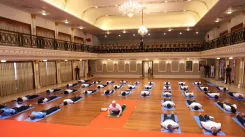
Dr. Jitendra Singh joins Yoga Day event at Jammu college
Synopsis
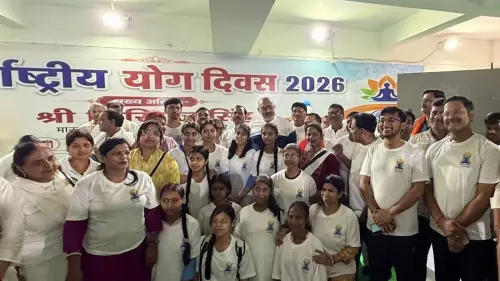
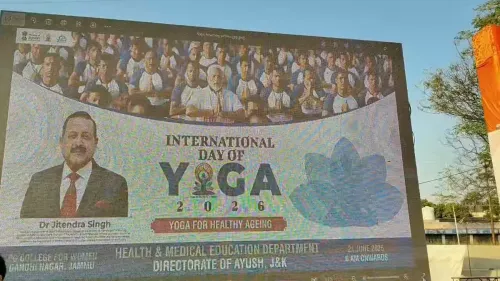
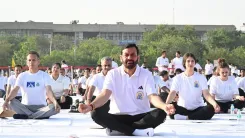
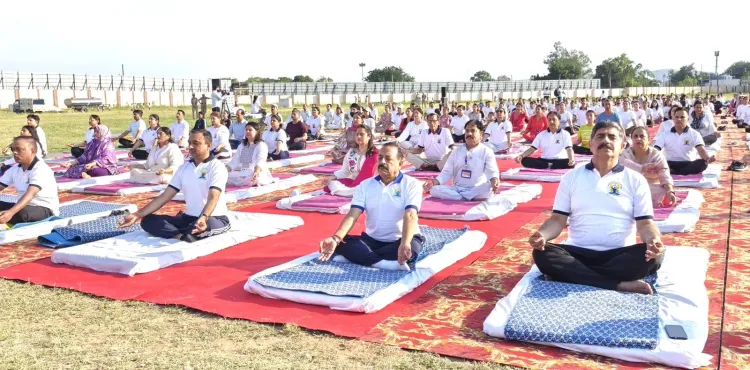
Union Minister Dr. Jitendra Singh attended an International Yoga Day 2026 programme at Government Women's College, Gandhi Nagar, Jammu, on 21 June, sharing photographs of enthusiastic community participation and calling for continued embrace of Yoga for wellness.
Key Takeaways
Union Minister of State Dr.
Jitendra Singh participated in an International Yoga Day 2026 programme at Government Women's College, Gandhi Nagar, Jammu on 21 June 2026 .
The event drew enthusiastic participation from students and women at the Jammu institution.
International Yoga Day has been observed on 21 June every year since 2015 , following a UN General Assembly resolution proposed by India in 2014 .
The Ministry of AYUSH coordinates nationwide Yoga Day events integrating traditional practices into public health outreach.
Ministerial participation at local educational venues reflects a policy push to decentralise Yoga Day observances and embed wellness in community governance.
India frames annual Yoga Day mobilisation as both a domestic preventive health initiative and an instrument of cultural soft power.
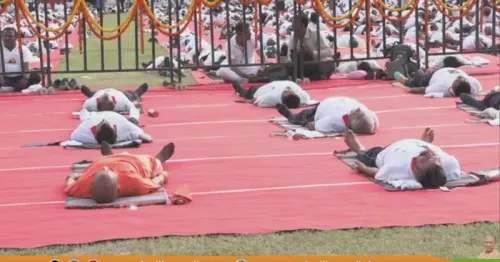
Union Minister of State (Independent Charge) for Science and Technology Dr. Jitendra Singh shared glimpses from an International Yoga Day programme held at Government Women's College, Gandhi Nagar, Jammu, on Sunday, 21 June 2026, marking the global observance with enthusiastic community participation.
Context
The event at Government Women's College, Gandhi Nagar brought together students and women participants in a collective Yoga session to mark International Yoga Day 2026. Dr. Singh, sharing photographs from the occasion, described the turnout as reflecting 'the growing spirit of wellness and mindfulness inspired by Yoga.' He called on citizens to 'continue to embrace this ancient practice for a healthier and balanced life.'
The college, situated in the Gandhi Nagar locality of Jammu, served as one of many institutional venues across the country where government-coordinated Yoga Day programmes were conducted simultaneously.
Policy Backdrop
The observance of 21 June as International Yoga Day traces its origin to a proposal made by Prime Minister Narendra Modi at the United Nations in 2014. The UN General Assembly adopted the resolution the same year, making it one of the fastest UN resolutions to achieve universal consensus. The first mass observance was held in 2015.
Since then, the Ministry of AYUSH has anchored nationwide coordination of Yoga Day events, integrating traditional wellness practices into public health outreach across educational institutions, government offices, and public spaces. Ministerial participation at grassroots venues — such as a women's college in Jammu — reflects a deliberate effort to decentralise the observance and embed it within routine governance and community life.
Stakeholders and Impact
The primary beneficiaries of such institutional Yoga Day programmes are students and local communities, particularly women in this instance, who gain structured exposure to preventive health practices. Government Women's College, Gandhi Nagar represents the kind of educational institution that successive administrations have sought to draw into the broader AYUSH-led wellness ecosystem.
Beyond domestic health policy, India's annual Yoga Day mobilisation carries significant soft-power value. The practice is consistently framed as a gift of Indian civilisation to the world, and large-scale participation events — from district colleges to landmark public venues — reinforce that diplomatic narrative.
What's Next
With IYD 2026 now concluded, attention will shift to parliamentary and budgetary deliberations on expanding Yoga and wellness modules within higher-education curricula. The government's broader AYUSH agenda is expected to remain a policy priority, with potential announcements on integration of Yoga into formal education frameworks likely in the months ahead. Preparations and thematic framing for International Yoga Day 2027 will also be closely watched as an indicator of the programme's evolving scale and institutional ambition.
Point of View
Grassroots venue rather than a high-profile mass event, the minister signals an effort to normalise Yoga within everyday governance structures. The Jammu setting also carries political resonance, underlining the Centre's continued civic engagement in the Jammu and Kashmir region. The post fits a well-established pattern of ministerial social-media amplification that extends the reach of government-led wellness messaging well beyond the event itself.
NationPress
21 Jun 2026
Frequently Asked Questions
When is International Yoga Day celebrated?
International Yoga Day is celebrated every year on 21 June , a date declared by the UN General Assembly in 2014 following a proposal by India.
Who proposed International Yoga Day at the United Nations?
Prime Minister Narendra Modi proposed the observance of International Yoga Day at the United Nations in 2014 , and the resolution was adopted the same year with near-universal consensus.
What is Government Women's College Gandhi Nagar Jammu?
Government Women's College, Gandhi Nagar is a women's higher-education institution located in the Gandhi Nagar locality of Jammu , Jammu and Kashmir, which hosted the 2026 Yoga Day programme attended by Dr. Jitendra Singh.
What is Dr. Jitendra Singh's role in the government?
Dr. Jitendra Singh serves as Union Minister of State (Independent Charge) for Science and Technology and Earth Sciences, and also holds the position of Minister of State in the Prime Minister's Office and for Personnel.
Which ministry coordinates Yoga Day events in India?
The Ministry of AYUSH is the nodal ministry responsible for coordinating nationwide International Yoga Day events across educational institutions, government offices, and public spaces in India.