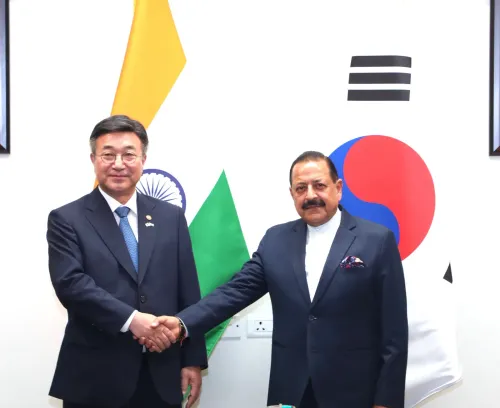
Dr. Jitendra Singh meets Egypt delegation at NCGG smart governance programme
Synopsis
Union Minister Dr. Jitendra Singh met a delegation of Egyptian Deputy Governors and civil servants attending an NCGG Special Capacity-Building Programme on Smart Governance in New Delhi, highlighting India's growing use of governance training as a tool of development diplomacy with African partners.
Key Takeaways
Jitendra Singh interacted with Egyptian Deputy Governors and civil servants in New Delhi on 20 November 2026 .
The delegation is attending a Special Capacity-Building Programme on Smart Governance organised by the National Centre for Good Governance (NCGG) .
NCGG operates under the Department of Personnel and Training , which falls within Dr.
Singh's ministerial remit.
India has hosted civil servants from African and Asian nations for NCGG governance programmes since the early 2010s , as part of South-South cooperation.
The Egyptian cohort includes Deputy Governors , indicating senior sub-national representation from Cairo.
Potential follow-up MoUs or expanded training cohorts between NCGG and Egyptian administrative institutions are a development to watch.
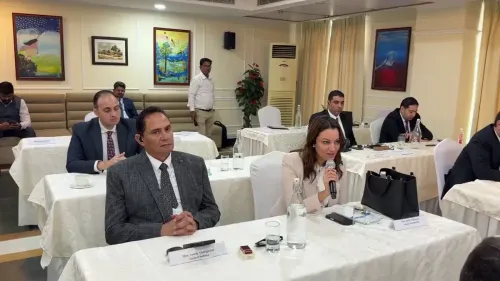
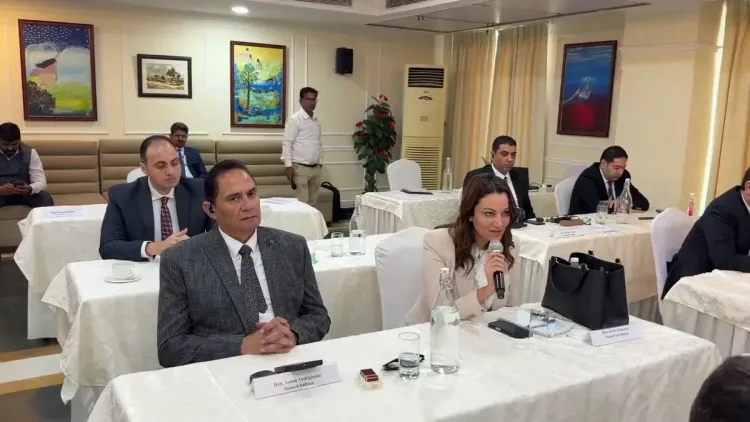
India's development diplomacy got a candid room on Friday, 20 November 2026, when Union Minister of State Dr. Jitendra Singh sat down with a delegation of Egyptian Deputy Governors and civil servants in New Delhi — officials mid-way through a Special Capacity-Building Programme on Smart Governance organised by the National Centre for Good Governance (NCGG). The minister described the exchange as 'lively', with delegation members being 'quite forthright in sharing their experiences and offering their inputs.'
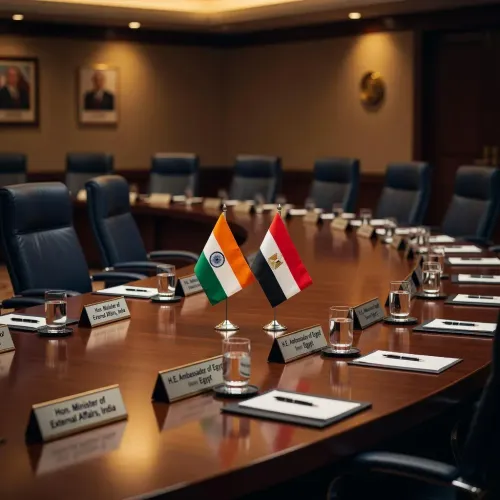
Egypt's civil servants at the NCGG smart governance table
The NCGG, an institution under the Department of Personnel and Training, has steadily built a reputation as India's primary vehicle for exporting governance expertise to partner nations. The programme hosting the Egyptian cohort focuses on Smart Governance — a broad framework that spans digital public administration, e-service delivery, and institutional reform, drawing directly from India's own Digital India experience. That Egypt's delegates included Deputy Governors — senior sub-national executives — signals the seriousness with which Cairo is approaching the exchange.
India-Egypt capacity building as development diplomacy
India has quietly run similar programmes for civil servants from across Africa and Asia since the early 2010s, using the NCGG as the operational hub for what policy circles describe as South-South cooperation. For African partners in particular, these short-term governance training cohorts serve a dual purpose: they deliver practical administrative skills while reinforcing bilateral goodwill well outside the headlines of formal summits. Egypt, a North African anchor state with longstanding economic, diplomatic and defence ties to India, is a natural fit for this model.
Dr. Singh's portfolio spanning the Prime Minister's Office and Department of Personnel makes him a natural interlocutor for such engagements — the NCGG sits squarely within his administrative remit, giving the meeting institutional weight beyond a courtesy call.
What a 'lively' exchange signals
The minister's choice of the word 'lively' — and his emphasis on delegation members volunteering their own inputs — points to a programme built on dialogue rather than lecture. That reciprocal dynamic matters: India's governance-training diplomacy works best when partner nations leave with templates they can adapt, not just replicate. Whether the interaction seeds a follow-up agreement — an expanded training cohort, a formal MoU between NCGG and an Egyptian administrative body — will be worth watching in the months ahead.
India has built one of the world's most ambitious digital-governance stacks. Egypt wants a faster route to smart administration. The NCGG may be exactly where that transaction gets formalised.
Point of View
Moving beyond junior bureaucrats to officials who can drive institutional change. For the Modi government, the NCGG has become a soft-power instrument that operates quietly but consistently, reinforcing bilateral ties with minimal political overhead. Dr. Singh's direct engagement adds ministerial visibility to what might otherwise be a routine training programme, signalling that New Delhi sees the Egypt relationship as worth cultivating at a senior level. The reciprocal dynamic the minister described — delegates actively sharing their own experiences — suggests India is positioning itself as a peer-learner, not just a knowledge donor, a framing that plays far better across the Global South.
NationPress
20 Nov 2026
Frequently Asked Questions
What is the NCGG capacity-building programme for Egypt about?
The National Centre for Good Governance (NCGG) is running a Special Capacity-Building Programme on Smart Governance for a delegation of Egyptian Deputy Governors and civil servants in New Delhi. The programme covers digital public administration, e-service delivery, and institutional reform drawing on India's governance experience.
Who is Dr. Jitendra Singh and why did he meet the Egyptian delegation?
Dr. Jitendra Singh is the Union Minister of State (Independent Charge) for Science and Technology and Earth Sciences, and also holds charge of the Prime Minister's Office and Department of Personnel. The NCGG falls under the Department of Personnel and Training, making him the natural ministerial interlocutor for this engagement.
What is the National Centre for Good Governance (NCGG)?
NCGG is an institution under India's Department of Personnel and Training that conducts capacity-building programmes in governance for both domestic officials and civil servants from partner nations, particularly in Africa and Asia, as part of India's South-South cooperation commitments.
How does India use governance training programmes as diplomacy with African countries?
Since the early 2010s, India has used NCGG-organised short-term training programmes to build goodwill and bilateral relationships with African and Asian nations. These programmes focus on digital governance, public administration reforms, and e-services, mirroring India's own Digital India priorities.
What could follow from the India-Egypt NCGG smart governance meeting?
Possible outcomes include expanded training cohorts for Egyptian civil servants or a formal Memorandum of Understanding between NCGG and Egyptian administrative institutions, though no specific agreements have been confirmed from this interaction.