Dr. Jitendra Singh on India's evolving health vision at Wellness Summit

Synopsis
Union Minister Dr. Jitendra Singh, speaking at the Health & Wellness Summit 2026, redefined health as encompassing well-being, environment, and work-life balance, and outlined the Modi government's three-pronged approach: affordable treatment access via Ayushman Bharat, preventive care, and AYUSH integration.
Key Takeaways
Jitendra Singh addressed the Health & Wellness Summit 2026 on September 25, 2026 , organised by The Open Magazine .
He redefined health as encompassing physical and mental well-being , environment, work-life balance, and ease of living — not merely absence of disease.
India's rising life expectancy has created a dual disease burden, with NCDs co-existing alongside communicable diseases.
The Modi government's approach combines affordable treatment access , preventive care, and formal integration of AYUSH systems with Western medicine.
Ayushman Bharat , launched in 2018 , provides up to Rs 5 lakh annual health cover per family for secondary and tertiary care.
The National Health Policy 2017 and the Ministry of AYUSH (established 2014) form the policy backbone of this holistic shift.
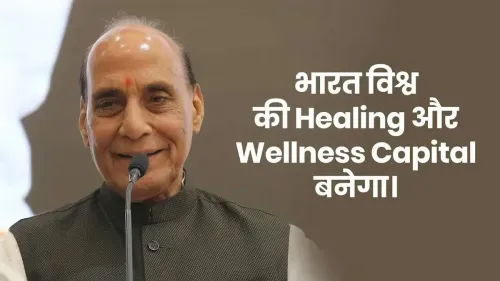
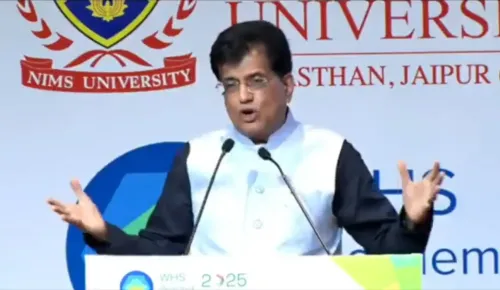
Wellness is not the mere absence of disease — and that reframing, articulated on Friday, September 25, 2026, may be the most consequential sentence Union Science and Technology Minister Dr. Jitendra Singh delivered at the Health & Wellness Summit 2026 organised by The Open Magazine. Speaking to an audience tracking the future of Indian healthcare, the minister laid out a sweeping redefinition: health now encompasses physical and mental well-being, the environment people live and work in, work-life balance, and overall ease of living.
India's longevity dividend — and the disease burden it brings
The minister anchored his argument in a demographic reality that is reshaping clinics and policy desks alike. India's substantial rise in life expectancy has shifted the disease profile of the nation. Where once communicable diseases dominated the burden, non-communicable diseases (NCDs) — think diabetes, cardiovascular conditions, and cancers — now co-exist alongside them, creating a dual burden that no single policy lever can resolve. The challenge, as Dr. Singh framed it, is not just treating more people but treating a wider and more complex spectrum of illness.
A three-pillar shift: access, prevention, and AYUSH integration
The Narendra Modi government, the minister argued, has responded with a three-pronged approach. First, easier and more affordable access to treatment — anchored by the Ayushman Bharat Pradhan Mantri Jan Arogya Yojana, launched in 2018, which provides up to Rs 5 lakh in annual health cover per family for secondary and tertiary care. Second, a pivot toward preventive interventions rather than purely curative ones — a philosophy also embedded in the National Health Policy 2017, which formally elevated wellness and prevention as national priorities.
Third — and perhaps the most structural shift — is the formal integration of AYUSH systems (Ayurveda, Yoga, Unani, Siddha, and Homeopathy) with Western medicine. The Ministry of AYUSH, established in 2014, gave traditional systems institutional heft. Dr. Singh's framing at the summit underscores that this integration is now policy doctrine, not peripheral sentiment.
What the 'holistic' turn means in practice
The minister's remarks signal a deliberate widening of how the state defines and measures health outcomes. Moving beyond hospital bed counts and disease-treatment metrics, the framework now folds in environmental quality, workplace conditions, and mental health — domains that intersect with science, earth sciences, and urban planning ministries, not just health. For a minister who also holds the Science & Technology and Earth Sciences portfolios, that convergence is not incidental.
The broader arc points toward wellness centres at primary health levels, AYUSH integration into public facilities, and continued expansion of the Ayushman Bharat umbrella — even as the dual disease burden demands sustained investment in both communicable-disease control and NCD management.
India's health ambition has outgrown the clinic. The question now is whether the institutions can keep pace with the vision.
Point of View
Positioning the Modi government's record — Ayushman Bharat, AYUSH institutionalisation, and the 2017 National Health Policy — as a coherent arc rather than isolated interventions. The framing of NCDs alongside communicable diseases is significant: it pre-empts criticism that India's public health focus remains narrowly infectious-disease-centric. By invoking work-life balance and the environment, the minister also extends health policy's footprint into domains that touch his own Science & Technology and Earth Sciences portfolios, signalling possible inter-ministerial convergence in the government's next moves.
NationPress
26 Sept 2026
Frequently Asked Questions
What did Dr. Jitendra Singh say at the Health & Wellness Summit 2026?
Dr. Jitendra Singh said health is no longer limited to being free from disease — it now encompasses physical and mental well-being, the environment, work-life balance, and overall ease of living. He also outlined the Modi government's approach combining affordable treatment, preventive care, and AYUSH integration.
What is Ayushman Bharat and how much coverage does it provide?
Ayushman Bharat Pradhan Mantri Jan Arogya Yojana, launched in 2018, provides up to Rs 5 lakh in annual health insurance coverage per family for secondary and tertiary hospital care, making it one of the world's largest government-funded health schemes.
What is AYUSH and why is it being integrated with modern medicine in India?
AYUSH stands for Ayurveda, Yoga, Unani, Siddha, and Homeopathy — India's traditional medicine systems. The Ministry of AYUSH was established in 2014 to give these systems institutional status alongside Western medicine, as part of a holistic, preventive approach to national health.
What is India's dual disease burden?
India's dual disease burden refers to the co-existence of communicable diseases (like tuberculosis and malaria) and non-communicable diseases (like diabetes and heart disease). Rising life expectancy has increased NCDs while older infectious diseases persist, stretching the health system in multiple directions.
What is India's National Health Policy 2017?
The National Health Policy 2017 formally shifted India's health framework toward preventive care, wellness, and the integration of AYUSH systems with allopathic medicine, moving beyond a purely treatment-centred model.