Dr. Jitendra Singh Salutes Birsa Munda on Janjatiya Gaurav Diwas
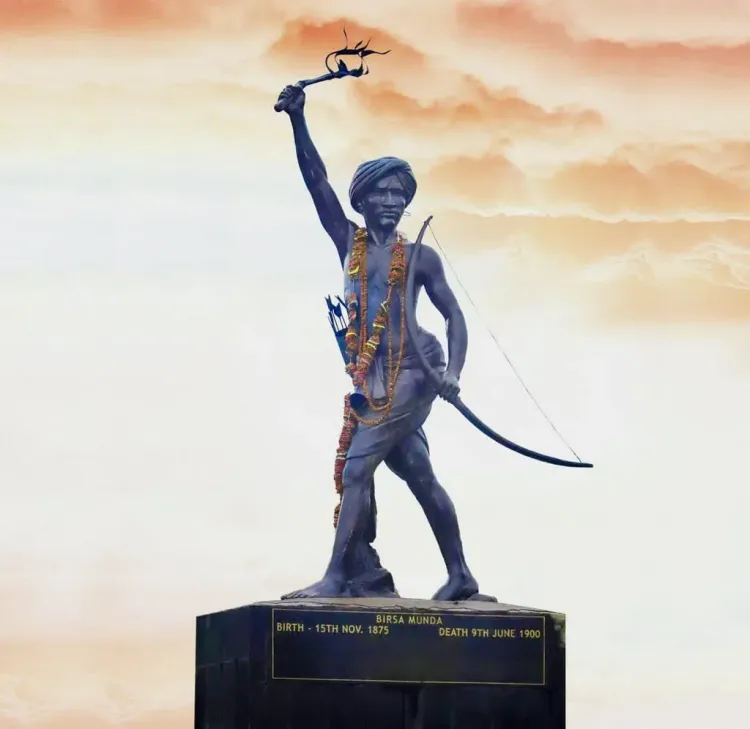
Synopsis
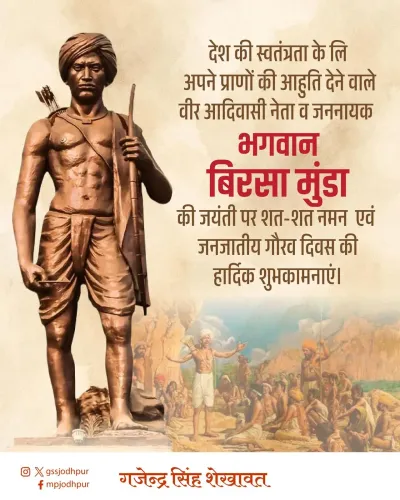
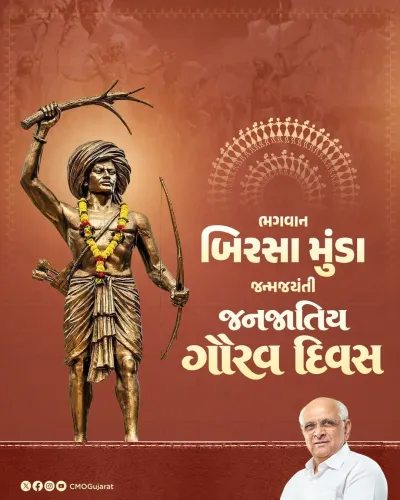
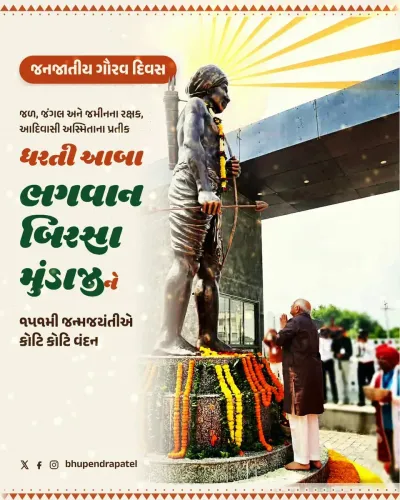
Union Minister Dr. Jitendra Singh honoured Bhagwan Birsa Munda on his birth anniversary, observed as Janjatiya Gaurav Diwas on 15 November — a national day instituted in 2021 to commemorate tribal contributions to India's freedom struggle.
Key Takeaways
Janjatiya Gaurav Diwas falls annually on 15 November , the birth anniversary of tribal freedom fighter Bhagwan Birsa Munda .
The Government of India formally declared the observance in 2021 to honour Scheduled Tribe leaders in the independence movement.
Birsa Munda led the Ulgulan rebellion against British rule in the forests of present-day Jharkhand in the late 1890s.
He died in 1900 at the age of 25 and is revered as Dharti Aaba — Father of the Earth — by tribal communities.
His portrait hangs in the Central Hall of Parliament , reflecting his stature in India's national memory.
Jitendra Singh joined nationwide commemorations with a tribute on 15 November 2026 .
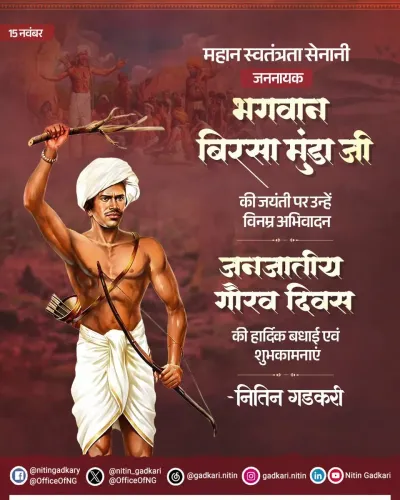
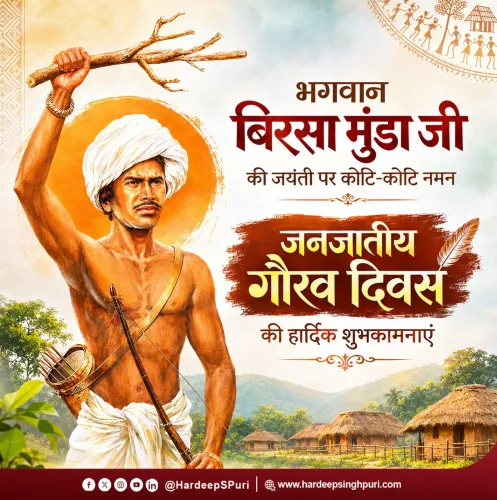
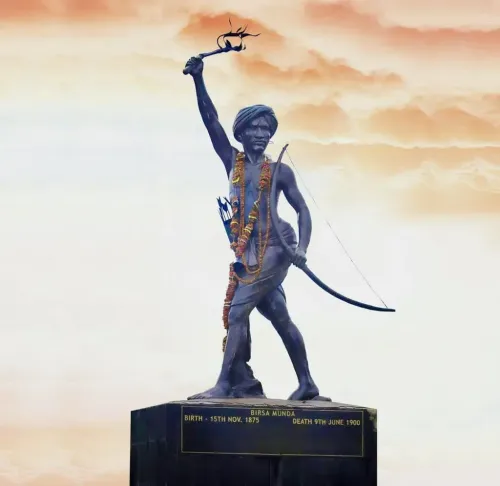
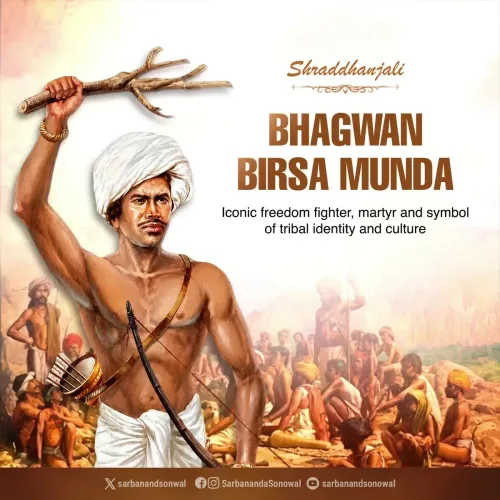
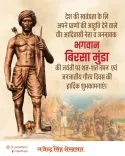
A nation pauses to remember the man who made the British Empire tremble in the forests of Chotanagpur. On Sunday, 15 November 2026, Union Science and Technology Minister Dr. Jitendra Singh joined the country in honouring Bhagwan Birsa Munda on his birth anniversary, marked nationally as Janjatiya Gaurav Diwas — the Day of Tribal Pride.
Who Was Bhagwan Birsa Munda — and Why the Title 'Bhagwan'?
Birsa Munda was born on 15 November 1875 in present-day Jharkhand, into the Munda tribal community. By his mid-twenties he had organised one of the most audacious uprisings of the colonial era: the Ulgulan — 'The Great Tumult' — a guerrilla rebellion that challenged British land-grab policies and the zamindari system stripping tribal communities of their ancestral forests. The colonial administration imprisoned him in Ranchi, where he died in 1900 at just 25 years of age. His people called him Dharti Aaba — Father of the Earth — and elevated him to near-divine status, the prefix 'Bhagwan' (God) a measure of that reverence.
How 15 November Became a National Day of Tribal Pride
The Government of India declared 15 November as Janjatiya Gaurav Diwas in 2021, institutionalising what tribal communities had long observed informally. The move was explicitly framed as correcting a historical omission — restoring the contributions of Scheduled Tribe leaders to the mainstream narrative of India's independence movement, alongside figures from the dominant political canon.
The observance has since anchored an annual cycle of state-level programmes, cultural events, and policy announcements directed at tribal welfare — a calendar moment that links historical memory to present-day governance priorities.
Central Government's Consistent Messaging on Tribal Heritage
Dr. Singh's tribute is part of a broader, coordinated effort by the central government to place tribal freedom fighters at the centre of India's national story. Ministers, chief ministers, and the Prime Minister's Office routinely mark Janjatiya Gaurav Diwas with public statements, inaugurations of tribal museums, and welfare scheme announcements — signalling that the day carries both symbolic and administrative weight.
Birsa Munda's portrait now hangs in the Central Hall of Parliament, a placement that underscores the political salience his legacy carries for the ruling establishment and for the country's approximately 700 Scheduled Tribe communities.
The young rebel who defied an empire at twenty-five now commands a national holiday. That, in itself, is a measure of how far his story has travelled — from the forests of Chotanagpur to the conscience of a republic.
Point of View
The day serves a dual purpose: cultural recognition for communities that felt erased from the independence narrative, and a political bridge to India's vast tribal electorate. Senior ministers amplifying the occasion on social media signals that the government views tribal heritage not as a niche concern but as a pillar of its broader nationalist framework. The institutionalisation of the day in 2021 also invites scrutiny of whether symbolic recognition translates into substantive gains for Scheduled Tribe communities.
NationPress
15 Nov 2026
Frequently Asked Questions
What is Janjatiya Gaurav Diwas and when is it celebrated?
Janjatiya Gaurav Diwas is a national day of tribal pride observed on 15 November every year, coinciding with the birth anniversary of tribal freedom fighter Bhagwan Birsa Munda . The Government of India instituted it in 2021 to honour the contributions of Scheduled Tribe leaders to India's independence movement.
Who was Bhagwan Birsa Munda?
Bhagwan Birsa Munda was a tribal freedom fighter from the Munda community in present-day Jharkhand , born on 15 November 1875 . He led the Ulgulan (Great Tumult) rebellion against British land policies in the late 1890s and died in British custody in 1900 , aged just 25. He is revered as Dharti Aaba — Father of the Earth.
When did the government declare 15 November as Janjatiya Gaurav Diwas?
The Government of India declared 15 November as Janjatiya Gaurav Diwas in 2021 , formally recognising Birsa Munda's birth anniversary as a national day of tribal commemoration.
What was the Ulgulan rebellion?
The Ulgulan — meaning 'The Great Tumult' — was an armed uprising led by Birsa Munda in the late 1890s in the forests of Chotanagpur (present-day Jharkhand). It challenged British land-grab policies and the zamindari system that stripped tribal communities of their ancestral forest rights.
What did Dr. Jitendra Singh say about Birsa Munda on Janjatiya Gaurav Diwas 2026?
Union Minister Dr. Jitendra Singh posted on X that 'the nation salutes the Legendary Freedom Fighter Bhagwan Birsa Munda on his Birth Anniversary today which is being celebrated as Janjatiya Gaurav Diwas,' joining countrywide commemorations on 15 November 2026 .