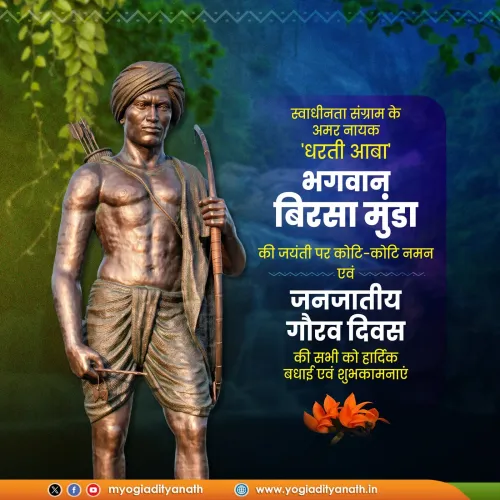
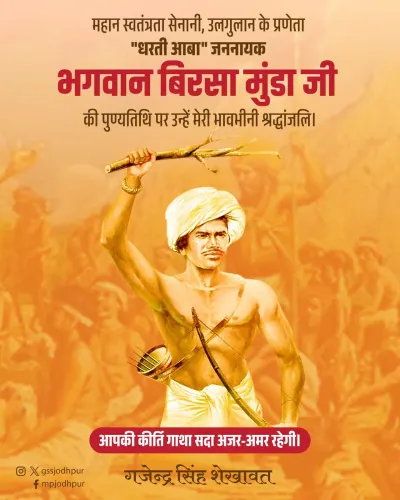
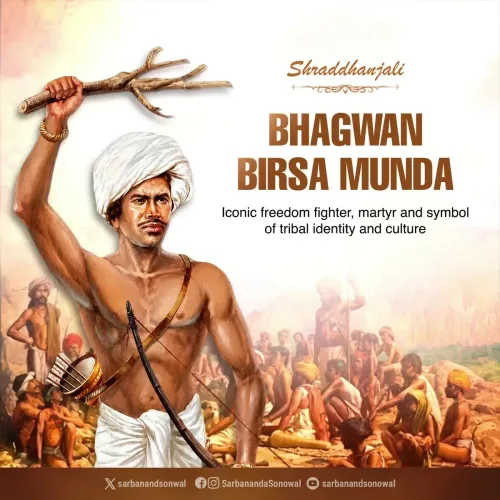
Shekhawat pays tribute to Birsa Munda on Janjatiya Gaurav Diwas
Synopsis
Union Culture and Tourism Minister Gajendra Singh Shekhawat marked Janjatiya Gaurav Diwas on 15 November 2026 with a heartfelt tribute to Bhagwan Birsa Munda, the 19th-century Munda tribal leader who led the Ulgulan rebellion against British rule and died in colonial custody in 1900.
Key Takeaways
Gajendra Singh Shekhawat , Union Minister of Culture and Tourism, posted a tribute to Bhagwan Birsa Munda on 15 November 2026 .
Janjatiya Gaurav Diwas (National Tribal Pride Day) is observed annually on 15 November , Birsa Munda's birth anniversary.
The observance was formally instituted by the Government of India in 2021 to honour tribal freedom fighters.
Birsa Munda led the Ulgulan rebellion against British land alienation in the Chotanagpur region and died in Ranchi jail in 1900 .
The day is part of a broader cultural policy effort to integrate Adivasi contributions into India's mainstream independence narrative.
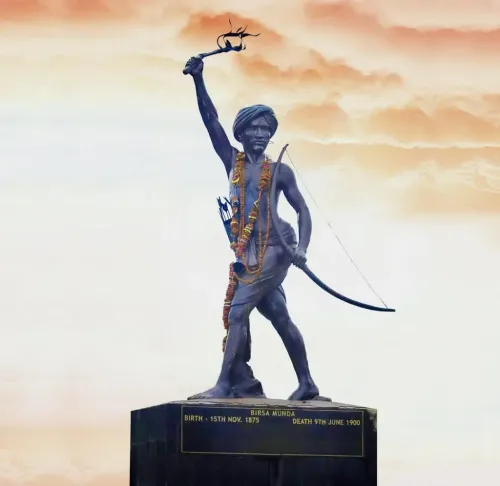
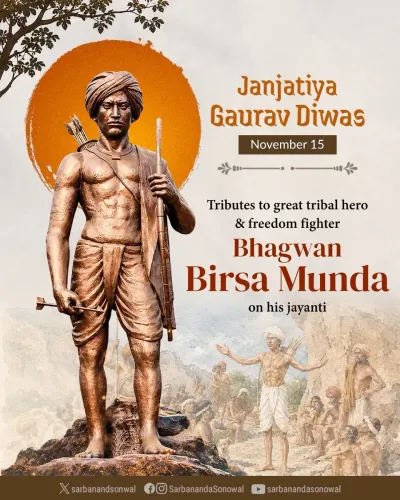
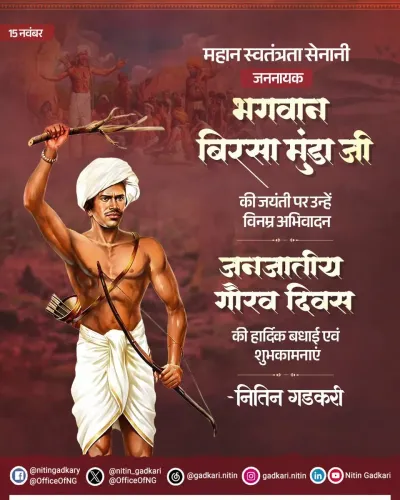
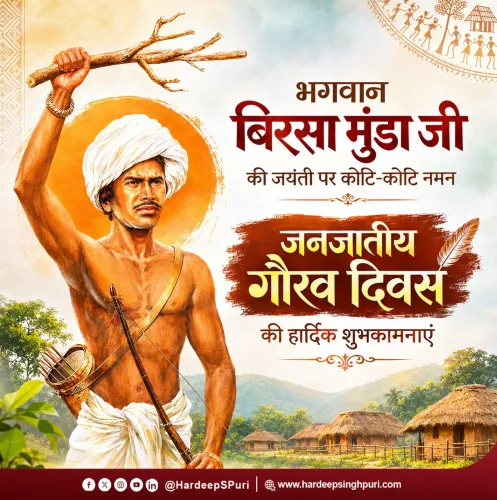
On the birth anniversary of Bhagwan Birsa Munda — the tribal leader who shook British authority in the Chotanagpur plateau before dying in a colonial jail at just 25 — Union Culture and Tourism Minister Gajendra Singh Shekhawat on Sunday, 15 November 2026 offered a solemn tribute and extended greetings on the occasion of Janjatiya Gaurav Diwas.
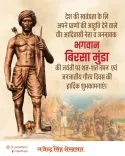
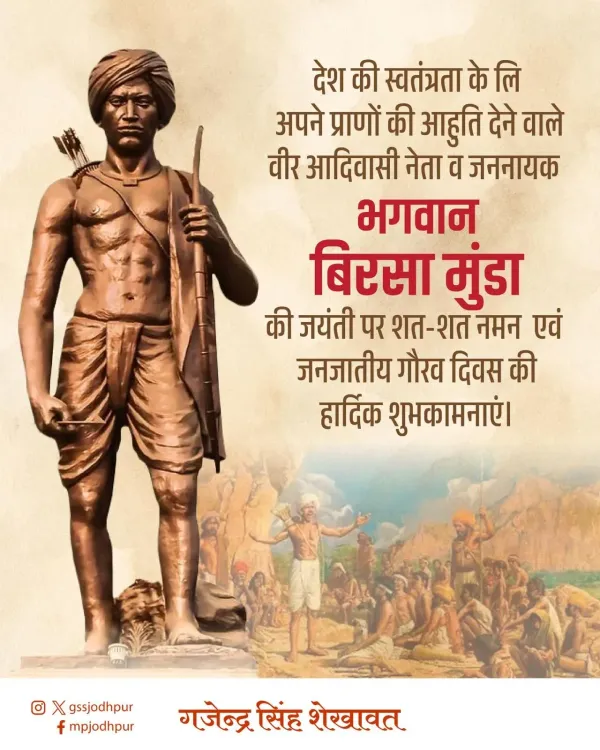
Posting in Hindi on X, the Minister wrote: 'देश की स्वतंत्रता के लिए अपने प्राणों की आहुति देने वाले वीर आदिवासी नेता व जननायक भगवान बिरसा मुंडा की जयंती पर शत-शत नमन एवं जनजातीय गौरव दिवस की हार्दिक शुभकामनाएं।' — 'A hundred salutes to the brave Adivasi leader and people's champion Bhagwan Birsa Munda, who sacrificed his life for the country's independence, on his birth anniversary; and heartfelt greetings on Janjatiya Gaurav Diwas.'Who was Birsa Munda — and why 15 November matters
Birsa Munda was born on 15 November 1875 in the Chotanagpur region of present-day Jharkhand. A leader of the Munda tribal community, he launched the Ulgulan ('The Great Tumult') — an armed rebellion against British land alienation policies that stripped Adivasi communities of ancestral forests and farmlands. Arrested by colonial authorities, he died in Ranchi jail in June 1900, leaving behind a legacy that tribal communities across central and eastern India have revered for over a century. His followers called him Dharti Aaba — 'Father of the Earth.'From local memory to national observance: the making of Janjatiya Gaurav Diwas
In 2021, the Government of India formally declared 15 November as Janjatiya Gaurav Diwas — National Tribal Pride Day — to honour Birsa Munda and the broader community of Adivasi freedom fighters whose contributions had long remained at the margins of the mainstream independence narrative. The date now anchors an annual national observance that spans state-level commemorations, cultural programmes, and welfare announcements tied to tribal communities.
Shekhawat's tribute, coming from the Minister who holds the Culture portfolio, underscores how the observance has become woven into the government's cultural calendar — an institutional moment for remembering a figure whose rebellion predated the mainstream nationalist movement by decades.
Birsa Munda's place in India's freedom story
The elevation of Birsa Munda within the national canon reflects a wider effort to broaden the historical narrative of India's independence struggle beyond the figures who dominate textbooks. Tribal uprisings against colonial rule — from the Santhal Hul of 1855 to the Ulgulan of 1899–1900 — predated many later movements and drew on a distinct grammar of resistance rooted in land, forest rights, and community identity. Janjatiya Gaurav Diwas is, in part, an acknowledgement of that long-unacknowledged chapter.
For Adivasi communities across Jharkhand, Odisha, Chhattisgarh, and beyond, today is not a government notification. It is a living commemoration.Point of View
Allowing the central government to position tribal heritage at the centre of the national independence narrative — a reframing that carries both historical and electoral weight in Adivasi-majority constituencies. Shekhawat's tribute from the Culture Ministry signals institutional ownership of the observance, reinforcing its permanence in the state calendar. The annual commemoration is part of a longer arc in which successive governments have sought to mainstream previously marginalised chapters of the anti-colonial struggle. Whether this symbolic recognition translates into durable policy gains for Adivasi communities remains the central question that the day itself poses every year.
NationPress
15 Nov 2026
Frequently Asked Questions
What is Janjatiya Gaurav Diwas and when is it observed?
Janjatiya Gaurav Diwas, or National Tribal Pride Day, is observed every year on 15 November — the birth anniversary of tribal leader Bhagwan Birsa Munda. The Government of India formally instituted the observance in 2021 to honour Adivasi freedom fighters.
Who was Bhagwan Birsa Munda?
Bhagwan Birsa Munda was a 19th-century tribal leader from the Chotanagpur region (present-day Jharkhand) who led the Ulgulan rebellion against British land alienation policies. He died in Ranchi jail in 1900 and is revered by Adivasi communities as Dharti Aaba , meaning 'Father of the Earth.'
What did Gajendra Singh Shekhawat say on Janjatiya Gaurav Diwas 2026?
Union Culture and Tourism Minister Gajendra Singh Shekhawat posted a tribute in Hindi on X, offering 'a hundred salutes' to Birsa Munda for sacrificing his life for India's independence and extending heartfelt greetings on Janjatiya Gaurav Diwas .
When was Janjatiya Gaurav Diwas first declared?
The Government of India declared 15 November as Janjatiya Gaurav Diwas in 2021 , formally recognising the contributions of tribal communities and their leaders to India's freedom struggle.
What was the Ulgulan rebellion?
The Ulgulan , meaning 'The Great Tumult,' was an armed uprising led by Birsa Munda between 1899 and 1900 against British policies that dispossessed Adivasi communities of their ancestral forests and farmlands in the Chotanagpur plateau.