India's drone sector revenue jumps from ₹60 crore to ₹4,000 crore in 4 years, says Drone Federation chief
Synopsis
From near-zero to ₹4,000 crore in four years — India's drone sector has emerged as one of Make in India's most concrete success stories. Drone Federation chief Smit Shah credits a three-pronged policy bet: liberalised rules, PLI incentives, and an outright import ban. With a ₹20,000 crore target in sight and proven military applications in Operation Sindoor, the sector's trajectory is hard to dismiss.
Key Takeaways
India's drone sector revenue grew from ₹60 crore in 2021 to ₹4,000 crore in 2025 , a 66-fold increase in four years.
Smit Shah , President of the Drone Federation of India , credited the Drone Rules 2021 , the PLI scheme , and a ban on foreign drone imports as the three key drivers.
The sector demonstrated military-grade capabilities during Operation Sindoor , according to Shah.
Make in India, launched on 25 September 2014 , completed 12 years on the day of Shah's remarks.
The drone industry is projected to grow to a ₹19,000–₹20,000 crore industry in the coming years.
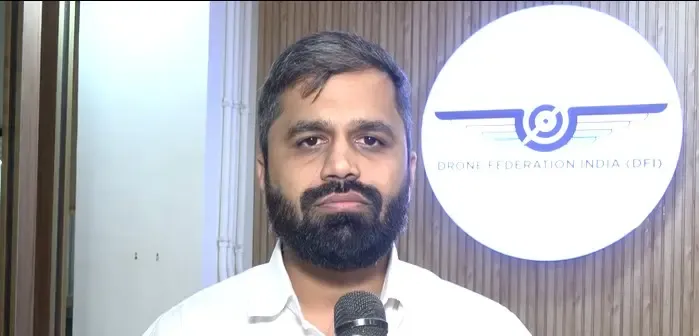
India's drone industry has recorded a 66-fold surge in revenue — from ₹60 crore in 2021 to ₹4,000 crore in 2025 — driven by the government's indigenisation push under the Drone Rules 2021 and the Production-Linked Incentive (PLI) scheme, according to Smit Shah, President of the Drone Federation of India. Shah made the remarks on 25 September 2026, as Make in India completed 12 years since its launch on 25 September 2014.
Key Policy Drivers Behind the Growth
Shah credited three structural shifts for the sector's transformation: the liberalisation of drone regulation through the Drone Rules 2021, financial incentives via the PLI scheme, and a ban on imports of foreign drones that channelled demand toward domestic manufacturers. 'The biggest game changer was the combination of the Drone Policy of 2021, the PLI scheme and the import ban, all centred around the Make in India vision,' Shah said.
This policy combination, he argued, created a self-reinforcing ecosystem — reduced compliance burden attracted investment, PLI subsidised scale-up, and the import ban guaranteed market access for Indian producers. The result, he noted, is a sector that barely existed as a commercial force a decade ago.
Make in India's Role: 'The Entire Ecosystem Exists Because of It'
Addressing the 12th anniversary of Make in India, Shah thanked Prime Minister Narendra Modi for introducing the vision. 'Because of initiatives like Make in India, the entire drone ecosystem of the country today exists,' he said. The initiative, launched on 25 September 2014, was designed to attract investment, foster innovation, and position India as a global hub for manufacturing, design, and technology.
Shah pointed specifically to the initiative's 'Vocal for Local' framing as having shifted both government procurement preferences and private-sector confidence toward Indian-made drone platforms.
Drone Sector's Role in Operation Sindoor
Shah noted that the drone industry had 'robustly proven its capabilities' not only in the civilian space but also in the military domain, citing performance during Operation Sindoor as evidence. He did not elaborate on specific operational details, but the reference signals that domestic drone manufacturers have gained traction in defence procurement — a market that had historically favoured foreign suppliers.
What the Sector Could Look Like by 2030
Shah projected that the sector is on course to become a ₹19,000 crore to ₹20,000 crore industry in the coming years, representing a further four-to-five-fold expansion from current levels. This growth, he suggested, will be underpinned by expanding civilian applications — including agriculture, logistics, surveillance, and infrastructure inspection — alongside continued defence demand.
Notably, this trajectory places India among a small group of countries actively building an end-to-end domestic drone supply chain, at a time when the global drone market is increasingly shaped by geopolitical considerations around Chinese-manufactured hardware. With the policy architecture now in place, execution and talent pipeline will be the next tests for the sector's ambitions.
Point of View
Subsidise scale, lock out imports. The question is whether this model is replicable or whether drones benefited from a unique confluence of security anxiety and low baseline. The ₹20,000 crore projection also deserves scrutiny: it assumes sustained defence procurement, expanding civilian use, and continued import restrictions — any one of which could shift with policy or diplomatic pressure. The Operation Sindoor reference is significant but vague; independent assessment of how domestic drones actually performed would strengthen the sector's credibility case far more than industry self-reporting.
NationPress
25 Sept 2026
Frequently Asked Questions
How much has India's drone sector revenue grown under Make in India?
India's drone sector revenue has grown from ₹60 crore in 2021 to ₹4,000 crore in 2025, a 66-fold increase in four years. Drone Federation of India President Smit Shah attributed the growth to the Drone Rules 2021, the PLI scheme, and a ban on imported foreign drones.
What is the Drone PLI scheme and how has it helped Indian manufacturers?
The Production-Linked Incentive scheme for drones provides financial incentives tied to domestic production milestones, encouraging Indian companies to scale up manufacturing. Combined with liberalised drone regulations and an import ban, it helped channel both government and private demand toward Indian-made platforms.
What role did Indian drones play in Operation Sindoor?
Drone Federation of India President Smit Shah stated that the drone industry 'robustly proven its capabilities' in the military domain during Operation Sindoor, though he did not provide specific operational details. The reference indicates that domestic drone manufacturers have made inroads into defence procurement.
What is the projected size of India's drone industry?
According to Smit Shah, the drone sector is projected to become a ₹19,000 crore to ₹20,000 crore industry in the coming years, up from ₹4,000 crore in 2025. Growth is expected to be driven by civilian applications such as agriculture, logistics, and surveillance, as well as continued defence demand.
When was Make in India launched and what does it cover?
Make in India was launched on 25 September 2014 by Prime Minister Narendra Modi and completed 12 years in 2026. It was designed to attract investment, foster innovation, and position India as a global hub for manufacturing, design, and technology across sectors including drones, electronics, and defence.