Will 2026 Set New Records with ‘Make in India’ and PLI Schemes?
Synopsis
India's electronics and semiconductor industry is on the brink of unprecedented growth as 2026 approaches. With the 'Make in India' initiative and PLI schemes firmly in place, the nation is set to become a leader in global electronics manufacturing. Explore the remarkable advancements and future prospects shaping the landscape of Indian manufacturing.
Key Takeaways
India's electronics production has skyrocketed from Rs 1.9 lakh crore to Rs 11.3 lakh crore.
Mobile phone manufacturing units have increased from 2 to 300.
PLI schemes are critical for driving local manufacturing and exports.
EMC 2.0 initiatives will create significant job opportunities.
India is emerging as a net exporter in key manufacturing sectors.
New Delhi, Dec 26 (NationPress) The trajectory of India’s electronics and semiconductor sector has transitioned from mere intentions to tangible actions, achieving remarkable milestones this year. With the 'Make in India' and production-linked incentive (PLI) schemes firmly established, 2026 is poised to set unprecedented records, positioning India as a competitive and reliable hub for electronics manufacturing globally.
As per government statistics, electronics production has surged significantly from approximately Rs 1.9 lakh crore in 2014-15 to about Rs 11.3 lakh crore in 2024-25. Concurrently, electronics exports have escalated from Rs 38,000 crore to over Rs 3.27 lakh crore during the same timeframe.
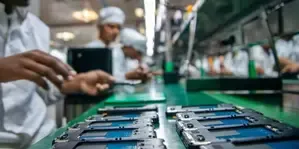
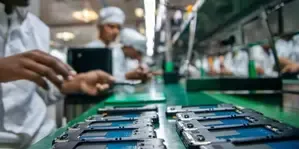
In 2014-15, India had a modest count of just two mobile phone manufacturing facilities, which has expanded to nearly 300 units today. Mobile phone production has soared from Rs 18,000 crore to Rs 5.45 lakh crore, while exports have jumped from Rs 1,500 crore to nearly Rs 2 lakh crore.
Additionally, the Modified Electronics Manufacturing Clusters (EMC 2.0), spread across 10 states with projected investments of Rs 1,46,846 crore, are anticipated to create around 1.80 lakh jobs.
Over the last decade, India’s manufacturing landscape, particularly in electronics and mobile phones, has seen substantial growth, establishing the country as a net exporter in several critical sectors.
Pankaj Mohindroo, Chairman of ICEA, stated that this year has marked a pivotal moment for 'Make in India', with the PLI framework solidifying India’s status as a competitive and trustworthy electronics manufacturing location.
“The PLI scheme has expedited scale, enhanced localization, boosted exports, and integrated India into global value chains. As we approach 2026, maintaining policy consistency, expediting approvals, and emphasizing component ecosystems will be vital for transitioning India from volume-led manufacturing to high-value, innovation-driven production,” he remarked.
Ashok Chandak, President of the India Electronics and Semiconductors Association (IESA) and SEMI India, emphasized that India’s electronics growth narrative is no longer episodic, but rather structural.
He noted that policymakers, both global and Indian industry leaders, along with ecosystem stakeholders, are now unified in their efforts to build resilient, sustainable, and globally competitive value chains.
“As discussions in 2025 revealed—covering policies and incentives, electronics value addition, skill development, academic collaborations, and industry partnerships—the upcoming phase must prioritize execution, collaborative R&D, and technology transfer. The increased utilization of domestically produced semiconductors and components will be crucial for deeper value addition and the long-term success of India’s electronics sector,” Chandak added.
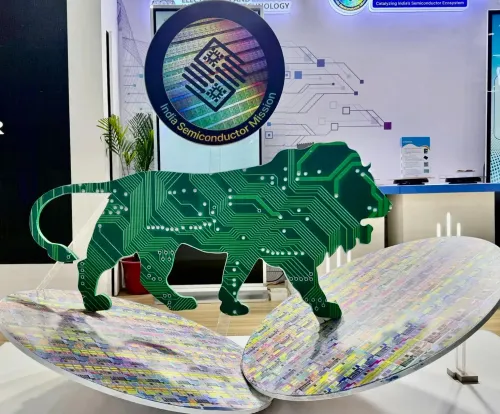
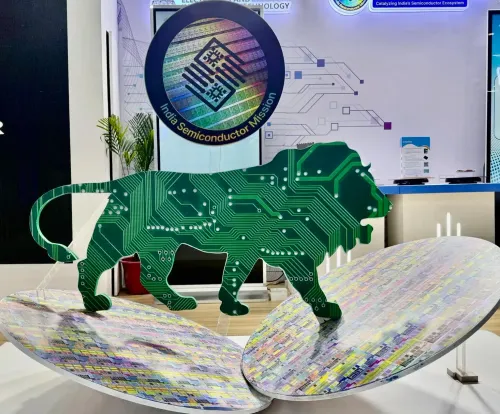
India’s semiconductor journey has also transitioned from concept to implementation, indicating a significant structural shift.
Policymakers, global and Indian industry leaders, and ecosystem stakeholders are in alignment on establishing resilient and competitive semiconductor value chains.
Key priorities discussed in 2025 include semiconductor policies and incentives, human capital development, fabs, advanced packaging, and OSAT, highlighting the necessity for collaborative R&D, technology transfer, and clearly defined scaling pathways.
Under the Semicon India Programme, approval has been granted for 10 units with investments totaling Rs 1.6 lakh crore, covering silicon fabs, silicon carbide fabs, advanced packaging, and memory packaging.
“In the next three years, disciplined execution and localization across design, manufacturing, and advanced packaging will be crucial to produce chips for high-demand electronic products consumed locally,” Chandak emphasized.
The government has also launched a PLI scheme for large-scale electronics manufacturing, specifically targeting mobile phones and select components, which has attracted investments of Rs 14,065 crore as of October 2025.
To boost IT hardware manufacturing, the government has initiated a PLI scheme aimed at producing laptops, tablets, servers, and ultra-small form factor (USFF) devices, drawing investments of Rs 846 crore until October 2025.
Point of View
It is vital to recognize the monumental shifts occurring in India's electronics and semiconductor sectors. The country's strategic initiatives like 'Make in India' and PLI schemes are not just policies; they are transformative movements that are aligning India with global manufacturing trends. This alignment signifies a commitment to innovation, sustainability, and economic growth that will benefit not just India, but the global economy as well.
NationPress
19 Sept 2026
Frequently Asked Questions
What is the significance of the 'Make in India' initiative?
The 'Make in India' initiative aims to boost domestic manufacturing, attract foreign investments, and create jobs, positioning India as a global manufacturing hub.
How has electronics production changed in India?
Electronics production in India has surged from Rs 1.9 lakh crore in 2014-15 to approximately Rs 11.3 lakh crore in 2024-25, showcasing significant growth.
What role do PLI schemes play in India's manufacturing?
Production-linked incentive schemes incentivize manufacturing by offering financial rewards based on production levels, promoting local manufacturing and exports.
How many mobile phone manufacturing units are in India now?
India has approximately 300 mobile phone manufacturing units, a substantial increase from just two in 2014-15.
What are Modified Electronics Manufacturing Clusters (EMC 2.0)?
EMC 2.0 is a government initiative located in 10 states, aimed at boosting electronics manufacturing with an investment of Rs 1,46,846 crore and creating around 1.80 lakh jobs.