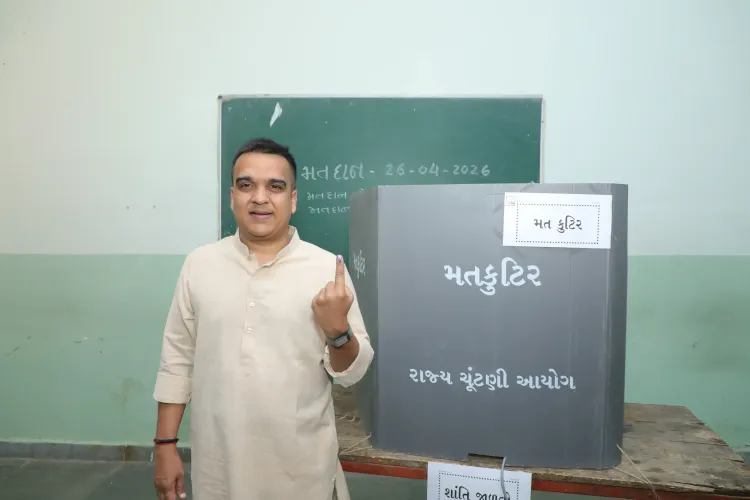
Gujarat Local Body Polls: Dy CM Sanghavi Votes, Urges Gen Z to Participate
Synopsis
Gujarat Deputy CM Harsh Sanghavi voted in Surat and made a rare direct appeal to Gen Z first-time voters as the state's massive local body elections unfolded across municipal corporations and panchayats. With 38 lakh voters in Ahmedabad alone and 600 Swaminarayan saints voting in Kheda, the polls are a landmark test of grassroots democracy — and BJP's grip on Gujarat.
Key Takeaways
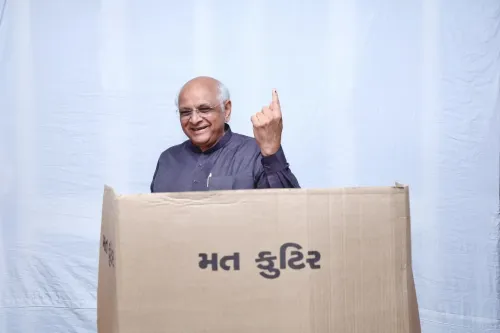
Gujarat Deputy CM Harsh Sanghavi cast his vote in Surat on April 27, 2025 during the state's local body elections.
Sanghavi made a targeted appeal to Gen Z and first-time voters , urging them to participate in the democratic process to improve their standard of living.
Ahmedabad alone saw elections for 190 municipal seats with over 38 lakh registered voters participating.
Over 600 saints from the Vadtal Swaminarayan Temple in Kheda district exercised their franchise, marking a rare instance of mass religious community voting.
Bhavnagar district held voting across 398 seats and 1,984 booths with more than 17.31 lakh registered voters .
Vote counting is scheduled for April 28, 2025 , with results expected to reflect public sentiment on local governance across Gujarat.
Gujarat Deputy Chief Minister Harsh Sanghavi cast his ballot in Surat on Sunday, April 27, 2025, as the state's sweeping local body elections unfolded across municipal corporations, municipalities, district panchayats, and taluka panchayats. The polls represent one of the most expansive exercises in grassroots democracy in Gujarat's recent history, with millions of voters deciding the fate of civic governance across the state. Sanghavi used the occasion to make a pointed appeal to Gen Z and first-time voters to actively shape their local future.
Sanghavi's Message to First-Time Voters
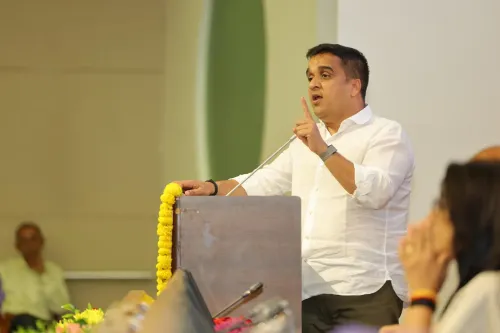
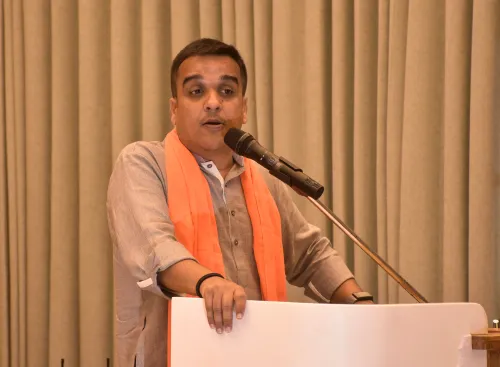
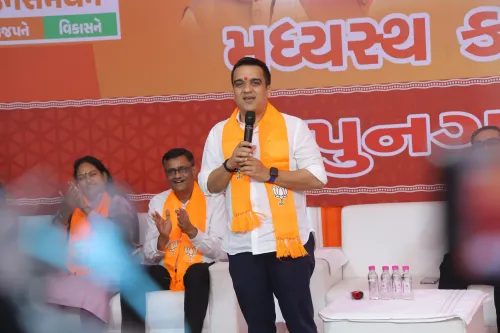
After casting his vote, Dy CM Sanghavi addressed young citizens directly, saying, "My young friends, my Gen Z friends, I extend my greetings to all of you. Many of you are voting for the first time in the local body elections. I hope there will be even greater improvements in your standard of living." The appeal was significant — Gen Z voters, those born between the late 1990s and early 2010s, are increasingly becoming a decisive electoral bloc in urban India.
Sanghavi further framed the elections within a larger political narrative, stating: "Today, I, my family, the people of my city, and the people of my state have all come together to further strengthen the development-oriented politics and journey led by PM Narendra Modi. This is the time when all the citizens of Gujarat are united and ready to write a new chapter in history." The statement underscores the BJP's strategy of linking local civic polls to its national development brand.
Scale of the Gujarat Local Body Elections 2025
The scale of these elections is staggering. In Ahmedabad alone, voters were deciding 190 municipal seats with over 38 lakh registered voters participating. Residents voiced a clear understanding of why local elections matter, with one Ahmedabad citizen stating, "In a democracy, this is the most fundamental thing. People come and go from here, but local services are handled at this level. Everyone should be aware."
In Jamnagar, polling covered the district panchayat, taluka panchayats, and Sikka municipality, while the Jamnagar Municipal Corporation saw 4,42,829 voters casting ballots across 414 polling stations using 474 Electronic Voting Machines (EVMs). Meanwhile, Bhavnagar district recorded voting across 398 local body seats spread over 1,984 polling booths, with over 17.31 lakh registered voters in the mix. Other districts including Morbi and Tapi also reported active polling.
Unique Participation: Swaminarayan Saints Vote in Kheda
One of the more striking visuals of the day came from Kheda district, where more than 600 saints from the Vadtal Swaminarayan Temple, along with temple staff and representatives, exercised their franchise. The participation of religious figures at this scale is a rare and notable feature of these polls, reflecting broad civic engagement cutting across all sections of society.
Administrative Arrangements and Counting Date
The State Election Commission of Gujarat deployed extensive logistical and security arrangements to ensure smooth, incident-free polling across all centres. Voting continued until evening hours across every district. The counting of votes is scheduled for April 28, 2025, and results are expected to clarify the political balance of power at the grassroots level across the state.
Why These Elections Matter Beyond the Ballot Box
Local body elections in Gujarat carry outsized political significance. Gujarat has long been the BJP's home turf and a laboratory for its governance model — strong performance here reinforces the party's claim of delivering development at every tier of government. Critics, however, argue that while state-level infrastructure investment has been robust, issues like water supply, waste management, and urban congestion in cities like Surat and Ahmedabad remain unresolved at the municipal level.
This is also the first major electoral test in Gujarat since the 2024 Lok Sabha elections, making the results a barometer of public sentiment heading into future state-level contests. The emphasis on Gen Z voter engagement by leaders like Sanghavi signals that political parties are acutely aware of demographic shifts — India's youngest voters are increasingly skeptical of political promises and demand tangible local outcomes.
With vote counting set for April 28, all eyes will be on whether the BJP consolidates its dominance at the grassroots or whether opposition parties manage to make inroads in key urban wards and panchayat seats.
Point of View
Schools, and water supply. The spectacle of 600 Swaminarayan saints voting in Kheda makes for compelling imagery, but the harder question is whether municipal governance in Gujarat's booming cities has kept pace with its infrastructure ambitions. With counting on April 28, these results will tell us whether the BJP's grassroots machinery remains as formidable as its state-level electoral record suggests.
NationPress
24 Sept 2026
Frequently Asked Questions
When are the Gujarat local body election results 2025?
The Gujarat local body election results will be declared on April 28, 2025 . Polling was held on April 27 across municipal corporations, municipalities, district panchayats, and taluka panchayats statewide.
Who is Harsh Sanghavi and why did he appeal to Gen Z voters?
Harsh Sanghavi is the Deputy Chief Minister of Gujarat and represents the Surat constituency. He appealed to Gen Z and first-time voters after casting his ballot, urging youth to actively participate in local body elections as a means to improve their standard of living.
How many seats and voters are involved in the Gujarat local body elections 2025?
The elections cover seats across municipal corporations, municipalities, district panchayats, and taluka panchayats. Ahmedabad alone has 190 municipal seats and over 38 lakh registered voters , while Bhavnagar district has 398 local body seats across 1,984 polling booths with over 17.31 lakh voters.
What happened at the Vadtal Swaminarayan Temple during the Gujarat elections?
Over 600 saints from the Vadtal Swaminarayan Temple in Kheda district , along with temple staff and representatives, cast their votes during the Gujarat local body elections on April 27, 2025. This was a notable display of broad civic participation across all sections of society.
Which districts are voting in the Gujarat local body elections 2025?
Voting took place across multiple districts including Ahmedabad, Surat, Jamnagar, Bhavnagar, Morbi, Tapi, and Kheda . In Jamnagar, polls covered the district panchayat, taluka panchayats, Sikka municipality, and the Jamnagar Municipal Corporation with 4,42,829 registered voters.