Voter registration not tied to electoral roll revision, EC officials clarify
Synopsis
The Election Commission has clarified that voter registration is a continuous, year-round right — not dependent on scheduled roll revisions. With the annual Special Summary Revision reportedly stalled since the 2024 Lok Sabha elections and reports of internal differences at the ECI, this clarification carries more than procedural weight ahead of upcoming state polls.
Key Takeaways
The Election Commission of India (ECI) clarified that eligible citizens can register as voters at any time, without waiting for a scheduled electoral roll revision.
The right is grounded in the Amendment to Section 14 of the Representation of the People Act, 1950 , read with Section 19 .
The qualifying dates for voter registration are the first day of January, April, July, and October each year.
Both the Special Summary Revision (SSR) and Special Intensive Revision (SIR) are optional under Section 21(3) — there is no legal mandate to hold them together.
India had 21.7 crore young voters (aged 18–29) as of 1 January 2025 , according to officials.
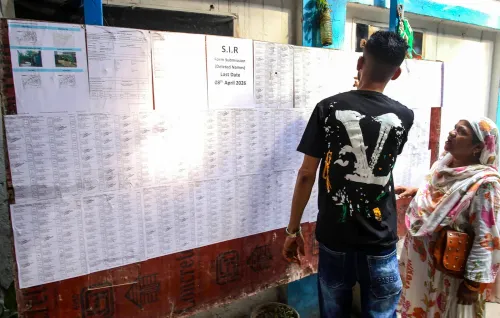
The Election Commission of India (ECI) has clarified that any individual whose name is absent from the voter list, or who has turned 18 years of age on the qualifying date — the first day of January, April, July, or October — can register as a voter at any time, without waiting for a scheduled revision of electoral rolls. The clarification was issued by poll body officials amid growing concerns about delays in the annual electoral roll update process.
What the Rules Say
To register as a voter with the ECI, an applicant must be an Indian citizen, have attained the age of 18 years on the applicable qualifying date, be ordinarily resident in the polling area of the constituency where enrolment is sought, and must not be disqualified under applicable provisions.
Officials cited the Amendment to Section 14 of the Representation of the People Act, 1950, read with Section 19 of the same Act, as the legal basis for continuous voter enrolment. Under these provisions, eligible citizens may register at any point in the year, independent of any formal revision cycle.
Context: Concerns Over Delayed Roll Revision
The clarification comes in response to reports that the annual Special Summary Revision (SSR) of electoral rolls has not resumed since the 2024 Lok Sabha elections. Critics had raised concerns that this delay could prevent newly eligible young voters from being included on the rolls in time. The issue has also surfaced alongside reports of differences within the Election Commission itself, adding a political dimension to what is otherwise a procedural matter.
Officials, however, pushed back on this characterisation, stating that both the SSR and the Special Intensive Revision (SIR) are conducted under Section 21(3) of the Representation of the People Act, 1950, and are optional — not legally mandatory. There is no statutory requirement to conduct both simultaneously, they emphasised.
Young Voter Participation on the Rise
Poll officials also pointed to the commission's sustained outreach efforts targeting voters in the 18–29 age group, underlining the ECI's commitment to expanding youth participation in the democratic process. According to data cited by officials, India had 21.7 crore young voters as of 1 January 2025 — a figure they say reflects a wider trend of growing electoral engagement among younger citizens.
What This Means for Prospective Voters
The practical implication of the ECI's clarification is straightforward: eligible citizens do not need to wait for a special revision window to get themselves enrolled. Applications can be submitted on a continuous basis throughout the year. This is particularly relevant for first-time voters who turn 18 between formal revision cycles and may have been unaware of their right to register immediately upon reaching the qualifying age.
As India heads toward a cycle of state assembly elections in the coming months, the timely inclusion of new voters on the rolls is likely to remain a closely watched issue.
Point of View
But the timing is telling. Issuing a procedural reminder about continuous enrolment — while reports of an internal rift and a stalled SSR cycle circulate — suggests the commission is managing a perception problem as much as a policy one. The deeper question is whether the absence of the SSR since the 2024 general elections reflects a structural delay or a deliberate deferral, and what accountability mechanism exists to compel its resumption. With state elections on the horizon, the gap between the right to register and the practical outreach needed to inform first-generation voters of that right remains the commission's real test.
NationPress
24 Sept 2026
Frequently Asked Questions
Can I register as a voter without waiting for an electoral roll revision?
Yes. The Election Commission of India has clarified that any eligible citizen can register as a voter at any time of year, without waiting for a scheduled Special Summary Revision or any other formal roll-update exercise. The right is enshrined in Section 14 of the Representation of the People Act, 1950, as amended.
What are the qualifying dates for voter registration in India?
The qualifying dates are the first day of January, April, July, and October. A citizen who turns 18 on any of these dates becomes immediately eligible to apply for enrolment as a voter.
Why was there concern about delays in the electoral roll revision?
Reports indicated that the annual Special Summary Revision (SSR) of electoral rolls had not resumed since the 2024 Lok Sabha elections, raising fears that newly eligible young voters might miss inclusion. The ECI responded by clarifying that SSR is optional under the law and that continuous enrolment is always available.
Are the SSR and SIR legally mandatory?
No. Officials stated that both the Special Summary Revision (SSR) and the Special Intensive Revision (SIR) are conducted under Section 21(3) of the Representation of the People Act, 1950, and are optional. There is no statutory requirement to conduct them jointly or at fixed intervals.
How many young voters does India currently have?
According to data cited by ECI officials, India had 21.7 crore voters in the 18–29 age group as of 1 January 2025. Officials described this as evidence of growing electoral engagement among younger generations.