ECI announces SSR timeline: Final electoral rolls by January 21, 2027
Synopsis
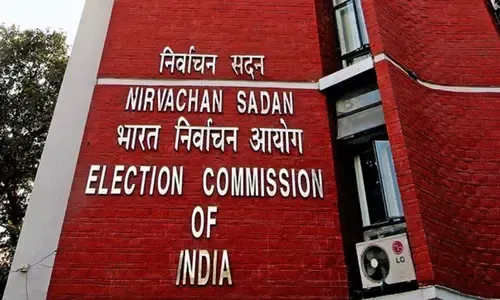
The Election Commission of India has set a firm end-date — 21 January 2027 — for finalising electoral rolls through the Special Summary Revision, targeting first-time and 'left out' voters. Ten major states including Delhi and Maharashtra are excluded from the current cycle, signalling a staggered rollout that will shape voter lists ahead of upcoming state and national polls.
Key Takeaways
The Election Commission of India announced the Special Summary Revision (SSR) schedule on 5 November 2026 .
Integrated draft electoral rolls will be published by 30 November 2026 ; final rolls by 21 January 2027 .
Claims and objections can be filed from 30 November to 12 December 2026 , with disposal by 16 January 2027 .
10 states and UTs — including Delhi, Maharashtra, Karnataka, and Telangana — are excluded from this cycle; their schedules will be announced separately.
Himachal Pradesh, Jammu & Kashmir , and Ladakh are deferred due to cold weather conditions.
The ECI had first directed a special enrolment drive on 29 September 2026 covering at least 20 states and UTs .
The Election Commission of India (ECI) on Thursday, 5 November 2026, unveiled a detailed schedule for the Special Summary Revision (SSR) of electoral rolls, targeting the enrolment of 'left out' voters and first-time eligible electors. The final publication of electoral rolls has been fixed for 21 January 2027, with integrated draft rolls due by 30 November 2026.
Key Dates and Timeline
According to the ECI's release, polling station rationalisation and rearrangement must be completed by 20 November 2026. The integrated draft electoral rolls will be published on 30 November 2026, opening a window for citizens to file claims and objections. The claims and objections period runs from 30 November to 12 December 2026, with disposal of all submissions to be completed by 16 January 2027. The final, cleaned rolls will be formally published on 21 January 2027.
Which States Are Covered — and Who Is Excluded for Now
The SSR will be conducted in states and union territories (UTs) where the Summary Intensive Revision (SIR) has either recently concluded or is currently in its third phase. The poll body has clarified that this will not be a simultaneous nationwide exercise. Andhra Pradesh, Haryana, Jharkhand, Karnataka, Maharashtra, Meghalaya, Nagaland, the National Capital Territory of Delhi, Tripura, and Telangana have been explicitly excluded from the current schedule — their SSR dates will be announced separately. Additionally, Himachal Pradesh, Jammu & Kashmir, and Ladakh have been deferred due to prevailing cold weather conditions in these hilly regions.
What Officials and BLOs Must Do
The ECI has issued detailed operational guidelines for Booth Level Officers (BLOs), District Registration Officers (DROs), Electoral Registration Officers (EROs), and other polling staff. Chief Electoral Officers (CEOs) of the concerned states have been directed to issue press notes throughout the process, including photographs of EROs handing over weekly lists of claims and objections to political parties. 'The CEO will inform the public about the final publication and summary of electors' details and guide them about the process of appeal,' the ECI stated.
Background: Why This Revision Is Being Held
The ECI had, on 29 September 2026, issued instructions for a special enrolment drive across at least 20 states and UTs, specifically targeting young voters and first-time eligible electors who had been missed in earlier rolls. Thursday's announcement of formal dates marks the official commencement of that enrolment process. Notably, the SSR is a standard mechanism the Commission uses to update voter lists outside of full-scale electoral revision cycles, ensuring that citizens who turn 18 or relocate between cycles are not disenfranchised.
What Happens Next
Political parties and voters in covered states can begin tracking the weekly claims-and-objections lists as soon as the draft rolls are published on 30 November. Those dissatisfied with the disposal of their claims retain the right to appeal, with the CEO-level press notes serving as the formal public communication channel. The ECI's phased approach signals that states currently mid-cycle in the SIR process — including Delhi and Maharashtra — will receive separate timelines in the coming weeks.
Point of View
But the exclusion of ten major states — including Delhi and Maharashtra — from the current cycle raises questions about the uniformity of voter roll quality across the country at any given point. With assembly elections possible in several states in 2027, the staggered timelines mean some electorates will have fresher, more accurate rolls than others. The Commission's focus on first-time and 'left out' young voters is overdue, but the two-week window for filing claims and objections — 30 November to 12 December — is narrow for states with large migrant and mobile populations. Whether BLOs on the ground are adequately resourced to handle the volume will determine whether the January 21 deadline delivers genuine roll accuracy or merely a compliant publication date.
NationPress
5 Nov 2026
Frequently Asked Questions
What is the Special Summary Revision (SSR) of electoral rolls?
The Special Summary Revision is a process conducted by the Election Commission of India to update voter rolls by enrolling eligible citizens who were missed in earlier cycles, including first-time voters who have turned 18. It operates outside the full-scale annual revision and targets specific gaps in registration.
When will the final electoral rolls be published under the SSR 2026-27?
The final electoral rolls will be published on 21 January 2027. Draft rolls are due by 30 November 2026, followed by a claims-and-objections window from 30 November to 12 December 2026 and disposal of those submissions by 16 January 2027.
Which states are excluded from the current SSR cycle?
Andhra Pradesh, Haryana, Jharkhand, Karnataka, Maharashtra, Meghalaya, Nagaland, the NCT of Delhi, Tripura, and Telangana are excluded from the current schedule. Himachal Pradesh, Jammu & Kashmir, and Ladakh have also been deferred due to cold weather. The ECI has said separate schedules will be announced for these regions.
Who is eligible to enrol during the SSR?
The SSR specifically targets 'left out' eligible voters — those who were not enrolled in earlier revision exercises — and first-time eligible electors, primarily young citizens who have recently turned 18 years old.
How can voters file objections or claims during the SSR?
Voters can file claims and objections between 30 November and 12 December 2026 through their local Electoral Registration Officers (EROs) or Booth Level Officers (BLOs). Those unsatisfied with the disposal of their claims can file an appeal, with guidance available from the Chief Electoral Officer of their state.