SSR 2027: EC to give political parties readable electoral rolls, caps Form-7 submissions
Synopsis
The Election Commission has quietly but significantly revamped how electoral rolls are shared with political parties under SSR 2027 — switching from opaque image PDFs to searchable readable formats, capping bulk Form-7 objections, and rolling out first-ever enrolment camps for migrant and marginalised voters. The changes directly address post-election grievances from Haryana and Maharashtra.
Key Takeaways
The Election Commission of India issued the SSR 2027 schedule on 15 October 2026 , with 1 January 2027 as the qualifying date.
Political parties will now receive Draft and Final Electoral Rolls in readable PDF format , replacing the earlier image PDF that was hard to process.
A maximum limit on Form-7 submissions by individual electors has been introduced for the first time.
Addition, deletion, and modification supplements will now be shared with recognised parties during the draft stage itself.
Contesting candidates can receive an alphabetically arranged electoral roll via pendrive at poll time, on demand and payment basis.
Special enrolment camps will be set up for migrants, homeless, and marginalised persons at district and Assembly constituency level.
The Election Commission of India (ECI) on Thursday, 15 October 2026, issued the schedule for the Special Summary Revision (SSR) 2027 of photo electoral rolls, with 1 January 2027 as the qualifying date. In a significant departure from past practice, the Commission has overhauled the format in which electoral rolls are shared with political parties, responding to longstanding demands from parties and candidates who contested the Haryana and Maharashtra Assembly elections.
Shift to Readable PDF Format
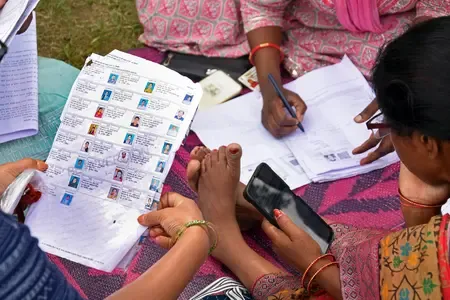
Under SSR 2027, political parties will receive soft copies of both the Draft and Final Electoral Roll in a readable PDF format, without photos of electors. This replaces the earlier practice of sharing rolls in an image PDF format — a format widely criticised as difficult to search, sort, or process electronically. The shift to readable PDFs was among the top demands raised after the recent state elections, where parties alleged difficulties in verifying voter data.
Cap on Form-7 Submissions and New Supplements Rule
Another major change introduced in SSR 2027 is the fixing of a maximum limit for submitting Form-7 — the form used by individuals to object to the inclusion of a name in the electoral roll. No such limit existed previously, a gap that critics had flagged as susceptible to bulk, potentially frivolous deletions. Additionally, the ECI has revised provisions related to supplements shared with recognised political parties. According to an official statement, 'Earlier, the addition, deletion and modification supplements were kept only for record and future use. These were not shared with any recognised political parties during draft stage.' From SSR 2027, these supplements will now be shared with parties during the draft stage itself, giving them earlier visibility into roll changes.
Alphabetically Arranged Rolls for Contesting Candidates
In another first, contesting candidates will now be eligible to receive a readable PDF of the alphabetically arranged electoral roll at the time of poll, via a pendrive or other electronic storage device, on a demand-and-payment basis from the office of the Returning Officer or District Election Officer. Previously, candidates received soft copies of the alphabetically arranged roll only on the last date of nomination, in CD or DVD format — a delivery mechanism now considered outdated.
Weekly Claims and Objections List, Plus Special Enrolment Camps
The Electoral Registration Officer (ERO) will now share a weekly list of claims and objections with political parties, along with a printed copy of the previous week's list. Earlier, such weekly lists were incremental in nature and considered harder to track cumulatively. Separately, the ECI has directed that district and Assembly constituency-level facilities be set up to facilitate enrolment of migrant, vulnerable, and marginalised persons — a category previously without dedicated access points. Chief Electoral Officers (CEOs) have been tasked with launching special drives where needed, including special camps at night shelters, labour colonies, and for homeless persons and other vulnerable groups. This marks a structural expansion of outreach beyond traditional voter registration channels.
Why These Changes Matter
Taken together, the SSR 2027 reforms represent the most substantive set of process-level changes to electoral roll management in recent cycles. The switch to readable PDFs directly addresses complaints from opposition parties about accessibility of voter data. The Form-7 cap plugs a loophole that had drawn scrutiny after post-election disputes in Haryana and Maharashtra. The Commission's move to share supplements at the draft stage and provide weekly objection lists enhances transparency at multiple points in the revision process. How effectively these changes are implemented at the ground level — particularly the special enrolment drives — will determine their real-world impact ahead of upcoming state and national elections.
Point of View
But it is anything but — it is the difference between a document you can search and one you cannot. Opposition parties have long complained that image-format rolls were effectively unverifiable at scale, and the timing of this reform, coming on the heels of disputed rolls in Haryana and Maharashtra, makes the Commission's intent clear. The Form-7 cap is equally significant: unlimited deletion requests with no accountability created a structural vulnerability that could be exploited to suppress voter rolls. The real test, however, lies in the special enrolment drives — India's migrant and marginalised populations are perennially undercounted, and a policy announcement without granular monitoring mechanisms risks becoming another well-intentioned directive that fades at implementation.
NationPress
16 Oct 2026
Frequently Asked Questions
What is SSR 2027 and why is it significant?
SSR 2027 refers to the Special Summary Revision of photo electoral rolls with 1 January 2027 as the qualifying date, issued by the Election Commission of India on 15 October 2026. It is significant because it introduces several major process changes — including readable PDF rolls for parties and a cap on Form-7 submissions — responding to demands raised after the Haryana and Maharashtra Assembly elections.
How is the electoral roll format changing under SSR 2027?
Under SSR 2027, political parties will receive soft copies of the Draft and Final Electoral Roll in readable PDF format, without elector photos. Earlier, rolls were shared in image PDF format, which was difficult to search or process electronically.
What is the new Form-7 limit introduced by the Election Commission?
The Election Commission has fixed a maximum limit on the number of Form-7 applications — used to object to a name's inclusion in the electoral roll — that an individual elector can submit. No such limit existed in previous Special Summary Revision cycles.
Who benefits from the new special enrolment camps under SSR 2027?
The Election Commission has directed the setting up of district and Assembly constituency-level facilities specifically to enrol migrant, vulnerable, and marginalised persons — a facility that did not exist in earlier SSR cycles. Special camps will also be organised for people in night shelters, labour colonies, and homeless individuals.
When will contesting candidates get the alphabetically arranged electoral roll?
From SSR 2027, contesting candidates can receive a readable PDF of the alphabetically arranged electoral roll at the time of poll itself, via pendrive or another electronic storage device, on a demand-and-payment basis from the Returning Officer or District Election Officer's office. Earlier, this was available only on the last date of nomination, in CD or DVD format.