Did ECI Address Trinamool's Concerns Over Bengal SIR?
Synopsis
In a robust defense, the Election Commission of India has countered Trinamool Congress allegations about the ongoing Special Intensive Revision of electoral rolls in West Bengal, asserting that all concerns were addressed. The ECI emphasizes its constitutional role and urges cooperation from political entities.
Key Takeaways
ECI refutes allegations from Trinamool Congress regarding inadequate responses.
Point-wise rebuttal provided to all concerns raised.
Revision process adheres to constitutional mandates.
Political parties must engage constructively with the electoral process.
Safety of booth-level officers is a priority for the ECI.
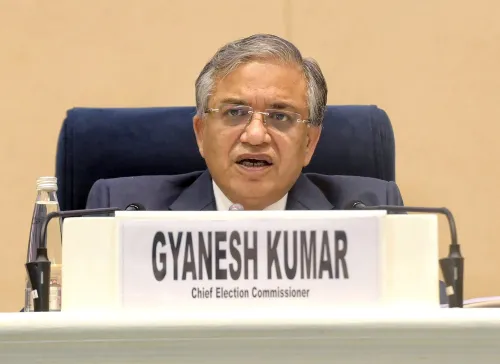
Kolkata/New Delhi, Nov 28 (NationPress) The Election Commission of India (ECI) vehemently denied the allegations made by the Trinamool Congress regarding Chief Election Commissioner (CEC) Gyanesh Kumar's inadequate responses to five critical inquiries concerning the ongoing Special Intensive Revision (SIR) of electoral rolls in West Bengal.
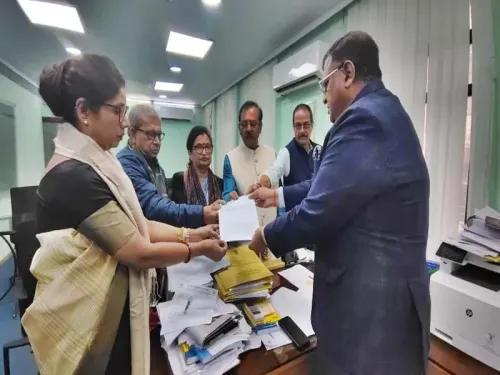
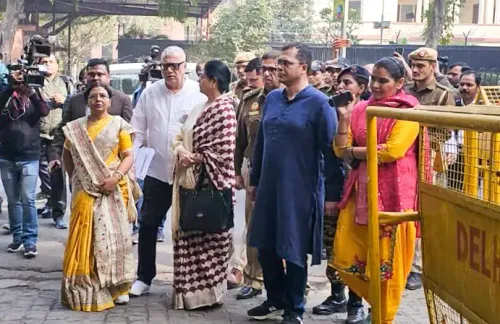
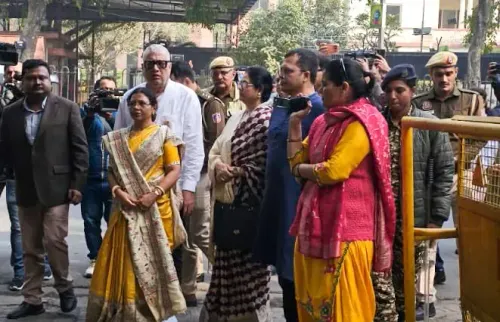
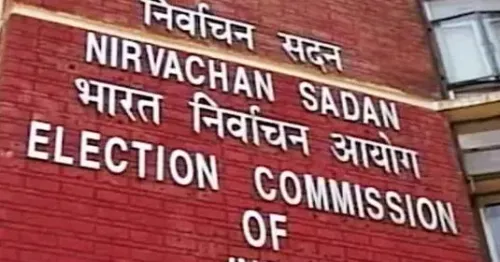
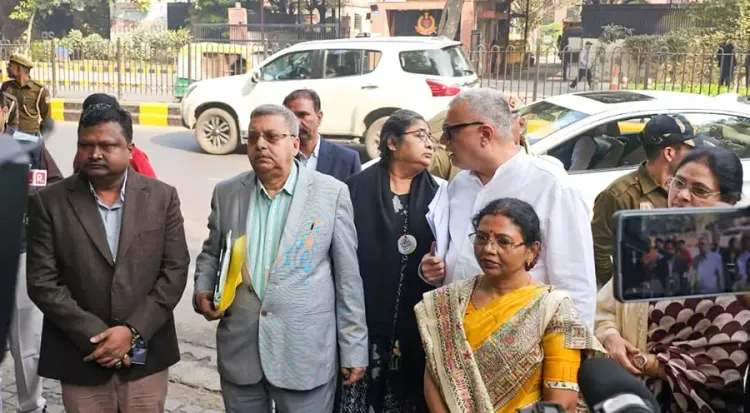
In a comprehensive statement, senior officials from the commission asserted that a point-by-point rebuttal was provided for every concern expressed by the 10-member Trinamool Congress parliamentary delegation, which met with senior election officials at Nirvachan Sadan in Delhi earlier that day.
The ECI emphasized that the revision process is being conducted in strict adherence to constitutional requirements and electoral legislation, urging political entities to engage positively with this process rather than attempting to undermine it.
The officials also rejected the Trinamool Congress' assertion — made public post-meeting — that the commission had not addressed five specific questions, including the party's claim that the SIR was being implemented selectively in Bengal while other border states faced no similar scrutiny.
According to sources within the commission, the ECI informed the delegation that all objections, grievances, and documentation related to the revision process must be submitted after the draft electoral rolls are released on December 9.
Formal claims and objections can only be evaluated following the publication of the draft rolls, they noted.
The ECI also conveyed to the Trinamool Congress delegation that the responsibilities of preparing voter rolls and conducting elections are constitutionally assigned to the commission, and all involved parties, including political groups, must operate within the legal framework governing these processes.
Regarding the allegations from the Trinamool Congress that booth-level officers (BLOs) and data-entry personnel were experiencing undue pressure or intimidation, the commission assured the delegation that such claims are taken seriously.
Insiders from the Election Commission stated that the ECI has already instructed the senior police leadership in West Bengal to ensure that BLOs, electoral registration officers, assistant electoral registration officers, and data-entry operators — who are state government employees assigned to ECI duties — are not coerced, threatened, or subjected to political pressure from any source.
As per officials, the ECI also clarified that the SIR is intended to maintain accuracy and integrity in electoral rolls, including the removal of ineligible entries. The commission emphasized that all legally mandated measures to eliminate fraudulent voters or non-citizens from the rolls would be implemented as part of the current revision process.
Earlier, following their meeting with the ECI, members of the Trinamool Congress delegation claimed that the commission lacked credible responses regarding whether the SIR aimed to identify “fake voters” or supposed “infiltrators”, and questioned why West Bengal was the only border state undergoing this initiative.
They further asserted that the ECI failed to clarify procedures, the workload facing field officers, and the reasoning behind conducting the revision at this particular time.
However, insiders from the Election Commission maintained that every issue raised by the TMC MPs had been adequately addressed during the meeting, and the delegation was advised to file formal objections once the draft rolls are available.
Point of View
The ongoing dialogue between the Election Commission and Trinamool Congress reflects the vital role of electoral integrity in India's democratic process. As the ECI ensures adherence to constitutional mandates, it is crucial for political parties to engage constructively to uphold the democratic framework.
NationPress
30 Sept 2026
Frequently Asked Questions
What is the Special Intensive Revision (SIR)?
The Special Intensive Revision (SIR) is a process conducted by the Election Commission to update and ensure the accuracy of electoral rolls.
Why did the Trinamool Congress raise concerns?
The Trinamool Congress raised concerns regarding the perceived selective application of the SIR in West Bengal compared to other border states.
What did the ECI say about the allegations of pressure on booth-level officers?
The ECI stated that it takes allegations of pressure on booth-level officers seriously and has instructed local police to ensure their safety and independence.
When will the draft electoral rolls be published?
The draft electoral rolls are scheduled to be published on December 9.
What should political parties do after the draft rolls are published?
Political parties are advised to formally submit their objections and complaints after the draft rolls are made available.