Eco-Friendly Holi Colors: Environment Ministry's Initiative for Sustainable Celebrations
Synopsis
The Environment Ministry's workshops at Eco-Clubs are raising awareness about eco-friendly Holi celebrations, promoting natural colors derived from vegetables, and encouraging sustainable practices among students. This initiative aligns with Mission LiFE and aims to transform celebrations into vibrant and responsible events.
Key Takeaways
Workshops promote natural color preparation using vegetables.
Initiative aligns with Mission LiFE for sustainable celebrations.
Young learners are becoming ambassadors for eco-friendly practices.
Organic colors are chemical-free and safe for the environment.
The Adamane family continues a legacy of producing eco-friendly colors.
New Delhi, March 3 (NationPress) To promote nature-based solutions for celebrating Holi and other festivities in a vibrant, joyful, and environmentally-friendly manner, the Environment Ministry has organized workshops at various Eco-Clubs. This initiative aligns with Mission LiFE, as announced by an official on Tuesday.
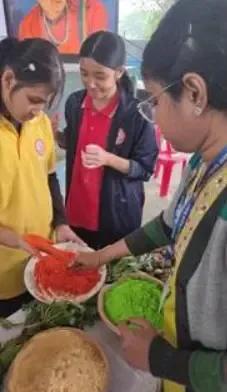
Students are engaging in hands-on sessions where they learn to create natural colors from edible and leafy vegetables. Green shades come from fresh leafy greens, red is made from beetroot, yellow from turmeric (haldi), and orange from Gogupuvvu (Palash), as stated in an official announcement from the Ministry.
These eco-friendly Holi color workshops are part of the Environment Education Programme (EEP) initiated by the Ministry of Environment, Forest and Climate Change, and are being held nationwide.
The colors produced are entirely free from harmful chemicals, ensuring that the celebrations are safe for individuals and the environment, the statement noted.
This campaign is rapidly gaining traction across Eco-Clubs, actively involving students in practical learning and encouraging them to adopt sustainable practices during festivals, the statement highlighted.
By replacing synthetic colors with biodegradable options, these young learners are becoming champions of environmentally responsible celebrations within their communities, the statement added.
This initiative underscores how simple, nature-centric solutions can render festivals vibrant, joyful, and eco-friendly, according to the Ministry's statement.
Mission LiFE (Lifestyle for Environment) is a global movement spearheaded by Prime Minister Narendra Modi aimed at inspiring both individual and collective actions for environmental preservation.
The mission seeks to transform individuals into Pro-Planet People (P3) by adopting sustainable habits—such as minimizing waste, conserving energy, and avoiding single-use plastics—to transition from a 'use-and-dispose' economy to a circular economy.
In Nagpur, Maharashtra, the trend of eco-friendly colors is thriving, with rising demand in various cities across the state.
The Adamane family in the city is a key player in the shift towards eco-friendly colors, having produced organic colors for three generations.
This year, they have prepared a stock of organic colors and are advocating for their use as a natural alternative to artificial colors.
Roshan Adamane, while discussing the family's legacy, informed IANS, "Our grandfather initiated this business. We utilize arrowroot powder as the primary ingredient, mixing it with food-grade, safe colors. No harmful chemicals are included. The mixture is crafted by combining water and color, sun-dried, machine-filtered, and finally packaged to yield 7-8 appealing colors, including green, blue, red, and yellow."
Roshan added, "Our aim goes beyond mere business. We aspire to assist people in celebrating Holi safely with environmentally-friendly colors."
This gulal is distributed across Vidarbha, as well as in regions like Chhattisgarh, Madhya Pradesh, and Maharashtra.
Point of View
It reinforces the importance of environmental stewardship in modern celebrations.
NationPress
3 Oct 2026
Frequently Asked Questions
What are natural Holi colors?
Natural Holi colors are made from edible and leafy vegetables, such as green from leafy greens, red from beetroot, yellow from turmeric, and orange from Gogupuvvu.
How does Mission LiFE relate to Holi celebrations?
Mission LiFE encourages sustainable habits and practices, aiming to promote eco-friendly celebrations, such as using natural colors for Holi.
What is the significance of using eco-friendly colors?
Eco-friendly colors are free from harmful chemicals, ensuring safe celebrations for individuals and the environment.
Who is leading the eco-friendly color initiative?
The initiative is led by the Environment Ministry of India through workshops conducted across Eco-Clubs nationwide.
Why is the Adamane family notable in this context?
The Adamane family has been producing organic colors for three generations and is advocating for the use of eco-friendly colors in celebrations.