Are High-Frequency Indicators Indicating Economic Stability in Q3 FY26?
Synopsis
Discover how high-frequency indicators reveal the state of the domestic economy in Q3 FY26. With signs of resilience despite emerging weaknesses, the RBI outlines the factors propelling growth and potential risks ahead. This analysis sheds light on the complex interplay of domestic demand, investment activity, and external uncertainties shaping India's economic landscape.
Key Takeaways
Domestic economic activity shows resilience in Q3 FY26.
GST rationalization and festival spending boost demand.
Rural demand remains strong , while urban demand recovers.
Investment activity is healthy , driven by private investments.
Real GDP growth projected at 7.3% for 2025-26.
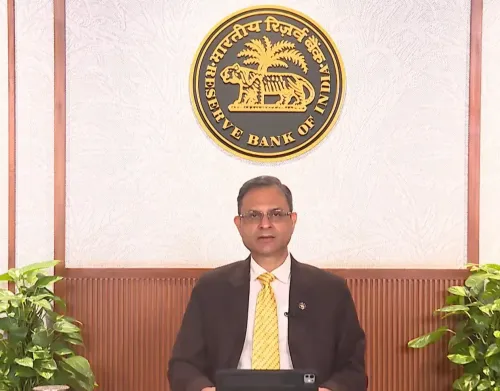
New Delhi, Dec 19 (NationPress) Recent high-frequency indicators indicate that domestic economic activity is stabilizing in Q3 FY26, despite some emerging signs of weakness in several leading indicators, according to the Reserve Bank of India (RBI) on Friday.
In the minutes from the monetary policy committee (MPC), the central bank noted that GST rationalization and festival-related expenditures bolstered domestic demand throughout October and November.
“Rural demand remains strong while urban demand is gradually recovering. Investment activity is robust, with private investments gaining momentum due to an upsurge in non-food bank credit and high-capacity utilization,” the RBI stated.
On the supply front, agricultural growth is supported by healthy kharif crop yields, elevated reservoir levels, and improved rabi crop sowing. Manufacturing activity is on an upward trend, and the services sector is sustaining a steady growth pace.
“Looking forward, domestic factors such as promising agricultural forecasts, ongoing GST rationalization effects, manageable inflation, solid corporate and financial institution balance sheets, and favorable monetary and financial conditions should continue to foster economic activity. Ongoing reform initiatives are expected to further enhance growth,” the MPC minutes highlighted.
Internationally, while services exports are anticipated to remain strong, merchandise exports may encounter some challenges.
“Global uncertainties still present downside risks to the economic outlook; however, swift completion of current trade and investment negotiations may offer potential upside. Considering all these elements, real GDP growth for 2025-26 is projected at 7.3 percent,” the Reserve Bank remarked.
The next MPC meeting is slated for February 4-6, 2026.
In India, the real gross domestic product (GDP) achieved a six-quarter high growth of 8.2 percent in Q2 FY26, driven by resilient domestic demand amid global trade and policy uncertainties.
Economic activity in the first half of the financial year benefitted from income tax and GST rationalization, lower crude oil prices, proactive government capital expenditure, and supportive monetary and financial conditions amid manageable inflation.
Point of View
It is essential to recognize the resilience shown by India's economy in the face of global uncertainties. While challenges persist, the emphasis on domestic demand, investment, and robust agricultural performance indicates a cautiously optimistic outlook for the coming quarters.
NationPress
7 Oct 2026
Frequently Asked Questions
What are high-frequency indicators?
High-frequency indicators are timely data points that provide insights into economic activity, helping gauge performance in real-time.
What impact does GST rationalization have?
GST rationalization can enhance compliance and boost domestic demand, contributing positively to economic activity.
How does agricultural performance influence the economy?
Strong agricultural performance supports rural demand and provides stability to the overall economy, impacting food prices and consumer spending.
What is the GDP growth projection for 2025-26?
The Reserve Bank projects a real GDP growth of 7.3 percent for 2025-26.
When is the next MPC meeting scheduled?
The next Monetary Policy Committee meeting is set for February 4-6, 2026.