ED Freezes Assets Worth Rs 441 Crore in Andhra Liquor Scam

Synopsis
The Enforcement Directorate has seized assets worth Rs 441 crore linked to a significant liquor scam in Andhra Pradesh, implicating key figures in a multi-crore conspiracy that allegedly cost the state exchequer billions.
Key Takeaways
ED has seized assets worth Rs 441 crore related to the liquor scam.
Involvement of major figures in the scandal, including Kessireddy Rajasekhara Reddy.
Estimated loss to the Andhra Pradesh government is around Rs 3,500 crore .
The investigation is based on allegations of kickbacks and corruption.
Further inquiries are ongoing to uncover the complete extent of the fraud.
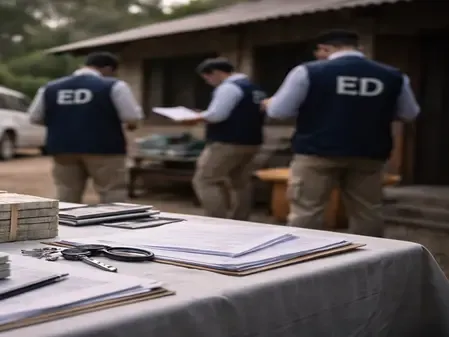
Hyderabad, March 6 (NationPress) The Enforcement Directorate (ED) in Hyderabad has seized movable and immovable assets valued at Rs 441.63 crore linked to Kessireddy Rajasekhara Reddy, his family, and other affiliates involved in the Andhra Pradesh liquor scam.
The seized assets, associated with Rajasekhara Reddy, his relatives, and entities such as Booneti Chanakya, along with kin and entities of Donthireddy Vasudeva Reddy, were confiscated under the Prevention of Money Laundering Act (PMLA), 2002.
According to a statement from the agency on Friday, the attached properties include bank balances, fixed deposits, land, and various other immovable assets.
The ED's investigation commenced following an FIR filed by the Andhra Pradesh CID based on a complaint from the Principal Secretary of the Andhra Pradesh Government, alleging a financial loss to the state amounting to Rs 4,000 crore.
The inquiry revealed that cash kickbacks were collected and stored at various locations across Hyderabad, which were later distributed or disposed of by designated cash handlers within the syndicate.
The ED has traced a money trail amounting to Rs 1,048.45 crore, identified as kickbacks allegedly extracted from numerous distilleries in forms such as cash, gold, and other valuable assets. The agency indicated that these illegal profits were also generated through the control of certain distilleries and the financial gains from liquor transportation.
The PMLA inquiry disclosed that the proceeds of crime were utilized for acquiring immovable properties and for personal gain by members of the liquor syndicate and their associates.
A significant portion of these illicit gains has been concealed or dissipated by the accused individuals. The ED noted that further investigations are currently underway.
Prior to 2019, the liquor trade in Andhra Pradesh was managed through a transparent, automated software system that ensured comprehensive digital tracking of procurement, supply, and sales, thereby creating a verifiable electronic audit trail.
Post the 2019 Assembly elections, the newly established state government monopolized retail liquor sales through Government Retail Outlets (GROs) managed by the Andhra Pradesh State Beverages Corporation Limited (APSBCL).
As part of the suspected criminal conspiracy, the automated tracking system was intentionally disabled and replaced with a manual process, which granted discretionary powers to APSBCL officials concerning the issuance of Orders for Supply (OFS).
The ED contends that the manual OFS protocol was exploited to discriminate against established liquor brands, marginalizing or eliminating them from the market while preferential treatment was allegedly provided to select “favored” brands in exchange for kickbacks.
The syndicate purportedly facilitated the introduction of “similar-sounding brands” (SSBs) with artificially inflated base prices, allowing the distilleries producing these brands to accumulate excess profits, allegedly used to meet the cartel's illegal monetary demands.
The PMLA investigation further indicated that distilleries were reportedly coerced to pay illegal kickbacks ranging from 15% to 20% of the base price per case as a prerequisite for receiving OFS approvals. Manufacturers who declined to comply faced coercive actions, including withheld payments and rejected supply orders.
The ED reported that communications regarding kickback demands and collections were conducted using encrypted VOIP calls and applications like Signal to obscure the identities and roles of key operatives, including Booneti Chanakya (also known as Prakash), Muppidi Avinash (alias Sumeeth), and Mohammed Saif.
The agency asserted that Kessireddy Rajasekhara Reddy and other members of the liquor syndicate orchestrated a multi-crore scam within the liquor procurement and distribution framework in Andhra Pradesh.
As per the ED, this scam involved the manipulation and control of the APSBCL procurement process, resulting in an estimated wrongful loss of Rs 3,500 crore to the state's treasury.
The illicit proceeds generated from this scam were allegedly laundered and distributed among syndicate members for personal enrichment.
The ED alleged that Kessireddy Rajasekhara Reddy, along with Booneti Chanakya, Muppidi Avinash Reddy, Tukekula Eswar Kiran Kumar Reddy, Paila Dileep, Saif Ahmad, and others, amassed kickbacks totaling around Rs 3,500 crore.
Point of View
It reveals a complex web of corruption that has far-reaching implications for governance and accountability. The ED's actions highlight the critical need for transparency and integrity within the state's financial systems.
NationPress
19 Sept 2026
Frequently Asked Questions
What is the Andhra liquor scam?
The Andhra liquor scam involves allegations of corruption and kickbacks within the liquor procurement and distribution system in Andhra Pradesh, leading to significant financial losses for the state.
Who are the key figures involved?
Key figures include Kessireddy Rajasekhara Reddy and Booneti Chanakya, among others, who are alleged to be central to the scam.
What actions has the ED taken?
The Enforcement Directorate has attached properties worth Rs 441 crore and is investigating the money trail linked to the scam.
How much has the state lost due to this scam?
The estimated wrongful loss to the Andhra Pradesh government is around Rs 3,500 crore.
What laws are being applied in this case?
The case is being investigated under the Prevention of Money Laundering Act (PMLA), 2002.