Haryana CM seeks integrated natural farming funding package at Viksit Bharat conference
Synopsis
Haryana CM Nayab Singh Saini used the Centre's Viksit Bharat financing conference to push for a dedicated natural farming and water security funding package — one that would consolidate scattered central scheme resources into a single coordinated framework. With a target of 1.50 lakh acres under natural farming by 2030-31 and a looming groundwater crisis, the demand signals how agrarian states are pressing Delhi to match policy ambition with fiscal architecture.
Key Takeaways
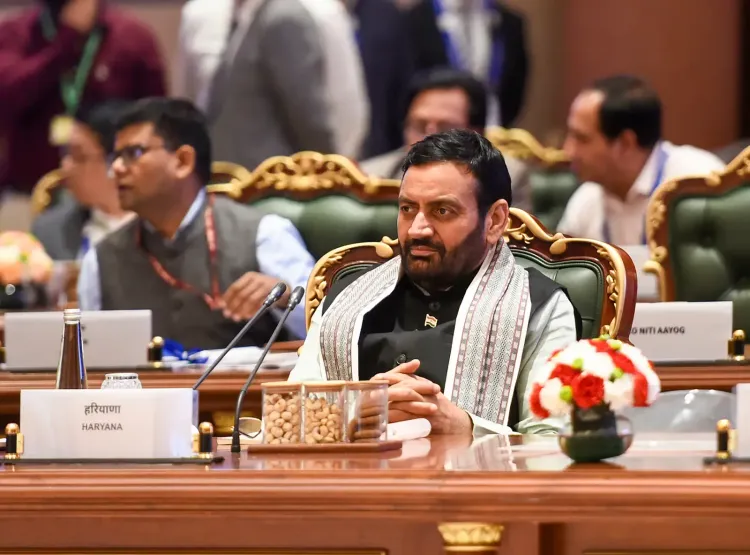
Haryana CM Nayab Singh Saini attended the two-day 'Financing India's Journey Towards Viksit Bharat' conference at Bharat Mandapam, New Delhi on 19 September 2026 .
Saini formally sought an 'Integrated Natural Farming and Water Security Funding Package' from the Centre for Haryana.
The proposed package includes capital investment for groundwater recharge , rainwater harvesting , and micro-irrigation expansion.
Natural and organic farming area in Haryana is targeted to reach 50,000 acres in 2026-27 — a fourfold increase — and 1.50 lakh acres by 2030-31 .
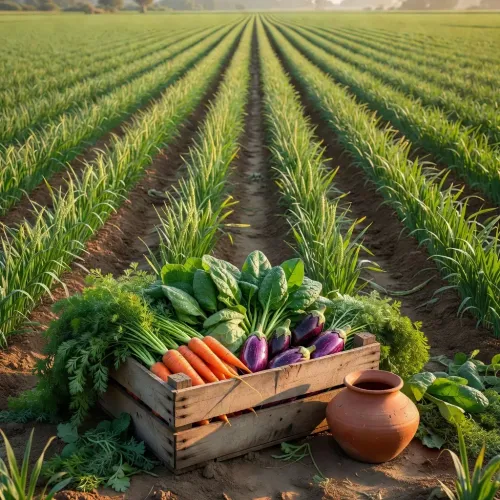
A 2,000-acre natural farming model cluster is being developed in Kurukshetra ; Morni block is being developed as a natural vegetable cultivation model.
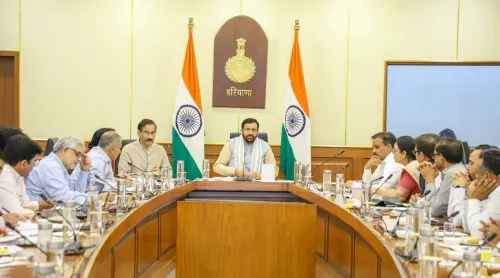
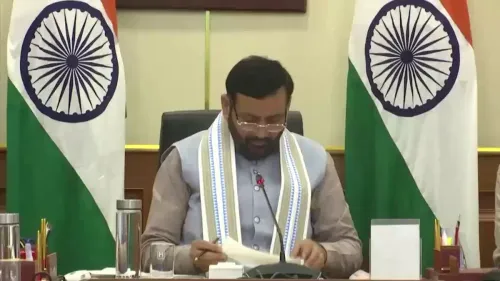
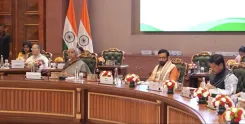
Haryana Chief Minister Nayab Singh Saini on Saturday, 19 September 2026, called for a dedicated 'Integrated Natural Farming and Water Security Funding Package' for Haryana at the two-day conference on 'Financing India's Journey Towards Viksit Bharat' held at Bharat Mandapam, New Delhi. The conference was organised by Union Finance Minister Nirmala Sitharaman, and brought together state governments to discuss strategies for strengthening state and national economies in line with the Viksit Bharat 2047 vision.
Key Demand: A Dedicated Funding Package for Natural Farming
Chief Minister Saini formally requested the Centre to create a special, coordinated financial framework for Haryana that consolidates resources from various existing central schemes. The proposed package specifically seeks capital investment for groundwater recharge, rainwater harvesting, and the expansion of micro-irrigation technologies — reflecting the state's dual challenge of scaling sustainable agriculture while addressing a deepening water crisis.
Saini noted that Haryana, as a predominantly agrarian state, has historically been central to India's food security, making a substantial contribution to national foodgrain reserves and underpinning the country's self-reliance in food production.
Haryana's Natural Farming Ambitions
The Chief Minister outlined an ambitious roadmap for natural and organic farming in the state. The area under natural and organic cultivation is expected to grow fourfold from the previous year to approximately 50,000 acres in 2026-27, with a long-term target of expanding coverage to 1.50 lakh acres by 2030-31.
As part of this push, a 2,000-acre natural farming model cluster is being developed in Kurukshetra. Additionally, the state has designated the Morni block as a dedicated model zone for natural vegetable cultivation, signalling a place-based approach to agricultural transition.
What Was Discussed at the Conference
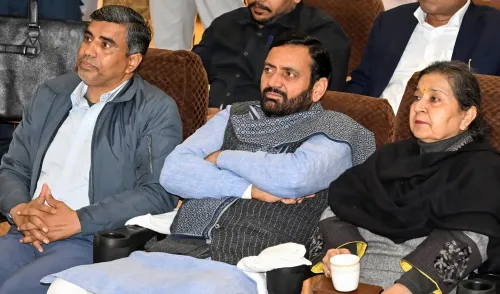
Addressing reporters after the conference, CM Saini said discussions covered the broader strengthening of state and national economies, with detailed deliberations on future plans for the agriculture and energy sectors. Haryana showcased ongoing initiatives across agriculture and horticulture, while other participating states also presented their own perspectives and priorities.
Saini credited Finance Minister Nirmala Sitharaman for convening the conference, calling such gatherings 'extremely important' for realising Prime Minister Narendra Modi's Viksit Bharat vision and acknowledged that farmers have a 'crucial role to play' in India's development journey to 2047.
Broader Context and What Comes Next
Haryana's request reflects a growing recognition among states that the shift to natural farming requires structural fiscal support — not just policy encouragement. The state's groundwater stress, long documented by central agencies, adds urgency to the water security dimension of the proposed package. Whether the Centre agrees to ring-fence a special integrated package for Haryana — rather than directing it to existing scheme windows — will be the key outcome to watch from this conference.
Point of View
Rainwater harvesting, and natural farming under one financial umbrella is effectively a demand that the Centre acknowledge its own role in creating Haryana's water stress through decades of rice procurement policy. Whether this conference produces specific fiscal commitments or remains a platform for intent will determine if Viksit Bharat 2047 means anything concrete for India's most water-stressed farming belt.
NationPress
19 Sept 2026
Frequently Asked Questions
What did Haryana CM Nayab Singh Saini demand at the Viksit Bharat conference?
CM Saini formally requested the Centre to provide an 'Integrated Natural Farming and Water Security Funding Package' for Haryana. The package is intended to cover capital investment in groundwater recharge, rainwater harvesting, and micro-irrigation, consolidated from various existing central scheme resources into a single coordinated framework.
What is the Viksit Bharat conference held at Bharat Mandapam?
The 'Financing India's Journey Towards Viksit Bharat' conference is a two-day event organised by Union Finance Minister Nirmala Sitharaman at Bharat Mandapam in New Delhi. It brings together state governments to discuss strategies for strengthening state and national economies in line with the Prime Minister's Viksit Bharat 2047 vision.
What are Haryana's natural farming targets?
Haryana aims to expand the area under natural and organic farming to approximately 50,000 acres in 2026-27, which represents a fourfold increase over the previous year. The long-term target is to scale this up to 1.50 lakh acres by 2030-31.
What is the Kurukshetra natural farming model cluster?
A 2,000-acre natural farming model cluster is being developed in Kurukshetra as a showcase initiative for sustainable agriculture in Haryana. Separately, the Morni block has been designated as a model zone specifically for natural vegetable cultivation.
Why is Haryana seeking a special central package rather than using existing schemes?
Haryana has requested the Centre to create a coordinated financial framework that consolidates resources available under various existing central schemes into one integrated package. The rationale is that a unified package would be more effective in simultaneously addressing natural farming promotion and the state's critical water security challenges.