ED raids 13 premises in Tripura, Bengal, Maharashtra over fake tender scam
Synopsis
A suspended Tripura cadre IAS officer and his alleged co-conspirators used a fake entity named 'Directorate of Higher Education' to collect over ₹44 crore in fraudulent EMDs from businesses across India. The ED's 13-location sweep on Wednesday — spanning Tripura, Bengal, and Mumbai's Shivaji Park — signals the probe has reached the asset-acquisition layer, with shell companies, hawala trails, and luxury properties all now in investigators' sights.
Key Takeaways
The ED raided 13 premises in Tripura , West Bengal , and Maharashtra on Wednesday, 5 November 2025 under the PMLA, 2002 .
Suspended Tripura cadre IAS officer Abhishek Chandra is a key accused; Utpal Kumar Chowdhury allegedly ran the fictitious entity used to collect funds. ₹14.55 crore in EMDs was allegedly collected from one Nagpur-based firm between September 2024 and February 2025 ; total fraud across five FIRs allegedly exceeds ₹44 crore .
Alleged proceeds were used to acquire properties including a flat in Mumbai's Shivaji Park , and funds were routed through a Kolkata-based hawala conduit .
Provisional attachments in the parallel West Bengal-Tripura case were issued on 22 January 2026 and 31 July 2026 .
Digital devices, hawala transaction records, and high-value property details were seized during Wednesday's searches.
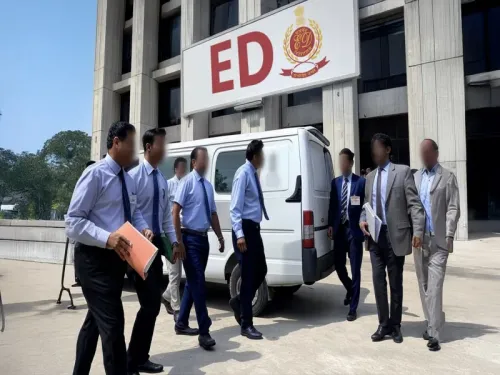
The Enforcement Directorate (ED) on Wednesday, 5 November 2025, conducted search and seizure operations at 13 premises spread across Tripura, West Bengal, and Maharashtra, targeting an alleged fake government tender racket that used a fictitious entity called the 'Directorate of Higher Education' to defraud businesses of crores of rupees. The searches were carried out under the Prevention of Money Laundering Act (PMLA), 2002, by the ED's Agartala Sub-Zonal office.
The Alleged Scam: How It Worked
The investigation stems from a first information report (FIR) registered at the Capital Complex Police Station in Agartala, following a complaint by Nagpur-based firm M/s S.K. Sales Corporation. The firm alleged it was fraudulently induced to pay Earnest Money Deposits (EMDs) of approximately ₹14.55 crore between September 2024 and February 2025 against fabricated tenders purportedly issued by the Tripura government in the mid-day meal and power sectors — tenders that, according to investigators, were never actually floated.
According to the ED, Abhishek Chandra, a Tripura cadre IAS officer currently under suspension, allegedly represented himself as the official overseeing tender processes for the state government and introduced the complainant to Utpal Kumar Chowdhury as the person responsible for processing payments. The EMDs were paid through demand drafts made out to the fictitious 'Directorate of Higher Education' — a proprietary concern of Chowdhury bearing a name deceptively similar to a genuine government department.
Forged tender notices and work orders were allegedly used to sustain the deception. A joint venture with one Krishna Chakraborty, represented by her husband Sudip Paul, was reportedly used to structure the collection of funds. Partial refunds were allegedly made at critical junctures to maintain the victim's confidence and induce further payments — a classic long-fraud mechanism.
Money Trail: Shell Entities, Hawala, and Mumbai Properties
The ED said funds deposited into the fictitious entity's accounts were allegedly layered within days — in some instances within 24 hours — through a network of shell entities, several of which are registered in the names of domestic staff and associates of Chowdhury. The proceeds of crime were allegedly used to acquire immovable properties, including flats in a housing project and a residential property in Mumbai's Shivaji Park, registered in the names of family members of Abhishek Chandra, as well as for foreign travel and luxury goods.
Funds were also allegedly routed through a hawala conduit based in Kolkata, investigators said.
Wider Investigation: Over ₹44 Crore Allegedly Defrauded
The ED noted it is already separately investigating Chowdhury and others in connection with five FIRs registered across West Bengal and Tripura, where the same fictitious entity and modus operandi were allegedly used to defraud multiple victims of an aggregate amount exceeding ₹44 crore. In that parallel case, provisional attachment orders were issued on 22 January 2026 and 31 July 2026.
What Was Seized
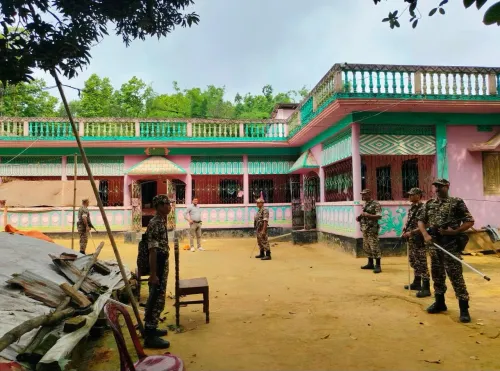
Search operations covered the residential premises of Abhishek Chandra, premises of alleged hawala operators, and offices of several companies and entities connected to the money trail. During the searches, investigators reportedly found and seized voluminous documentary evidence of hawala transactions, details of several high-value properties, and material indicating suspicious control over corporate entities. Digital devices and records belonging to various accused persons were also seized.
The offences registered under the Bharatiya Nyaya Sanhita (BNS), 2023 — including criminal conspiracy, criminal breach of trust, cheating, cheating by personation, and forgery — are scheduled offences under the PMLA, triggering ED jurisdiction. Further investigation is underway.
Point of View
A fake directorate designed to impersonate a real government department, hawala layering within 24 hours, and properties acquired in Mumbai — suggests an operation that exploited institutional trust at multiple levels. What is striking is the longevity: investigators allege the same modus operandi was used across at least five FIRs in two states before the net closed. That raises questions about inter-state coordination in detecting such frauds earlier. The ED's move to trace assets in Mumbai signals it is following the money beyond the northeast, and the shell-company structure — with entities registered in the names of domestic staff — reflects a layering sophistication more commonly associated with large organised fraud than a localised racket.
NationPress
5 Nov 2026
Frequently Asked Questions
What is the fake government tender racket the ED is investigating?
The racket allegedly involved creating a fictitious entity called the 'Directorate of Higher Education' — deceptively similar to a real government body — to collect Earnest Money Deposits from businesses against government tenders that were never actually floated. Victims were allegedly shown forged tender notices and work orders to sustain the deception, and partial refunds were made to induce further payments.
Who are the main accused in this case?
The key accused include Abhishek Chandra, a Tripura cadre IAS officer presently under suspension, and Utpal Kumar Chowdhury, who allegedly ran the fictitious entity. Krishna Chakraborty and her husband Sudip Paul are also named as having been used to structure the collection of funds.
How much money was allegedly defrauded?
One Nagpur-based complainant, M/s S.K. Sales Corporation, allegedly paid EMDs of around ₹14.55 crore between September 2024 and February 2025. Across five FIRs in West Bengal and Tripura involving the same entity and modus operandi, the aggregate alleged fraud exceeds ₹44 crore.
Why did the ED raid premises in Mumbai?
Investigators allege that proceeds of the fraud were used to acquire immovable properties, including a residential property in Mumbai's Shivaji Park, registered in the names of family members of accused IAS officer Abhishek Chandra. The Mumbai raids were part of tracing and seizing assets linked to the alleged money trail.
What is the current status of the investigation?
The ED has registered an Enforcement Case Information Report (ECIR) and is investigating under the PMLA, 2002. In a parallel case involving the same accused and entity, provisional attachment orders were already issued in January 2026 and July 2026. Digital devices, documents, and evidence of hawala transactions were seized during Wednesday's raids, and further investigation is underway.