Did a Former Gujarat District Collector Really Cause a Loss of Rs 1.20 Crore to the Government?
Click to start listening
Synopsis
In a significant ruling, a Special PMLA Court sentenced ex-Gujarat district collector Pradeep Nirankarnath Sharma to five years in prison for causing a massive loss to the state. This case sheds light on corruption and misuse of power within government ranks, raising questions about accountability and integrity in public service.
Key Takeaways
- Corruption consequences: The case illustrates the severe penalties for public officials who engage in corrupt practices.
- Judicial integrity: The ruling reinforces judicial commitment to combating corruption.
- Asset confiscation: The confiscation of Sharma's assets sends a clear message regarding accountability.
- Public trust: This case is crucial for restoring public confidence in government integrity.
- Legal framework: The application of PMLA and the Prevention of Corruption Act showcases the legal tools available to combat corruption.
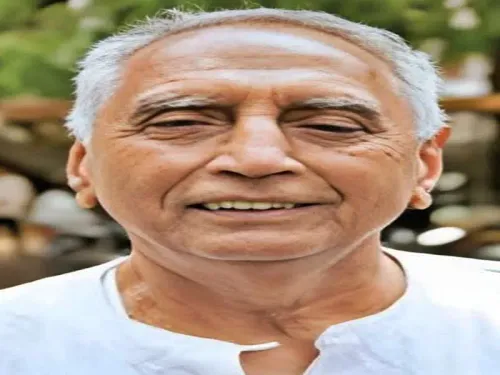
Ahmedabad, Dec 7 (NationPress) A Special PMLA Court has sentenced a former Gujarat district collector to a term of five years in prison and imposed a fine of Rs 50,000 for inflicting a financial loss of Rs 1.20 crore on the state government during the land allotment process in Bhuj, as reported by an official on Sunday.
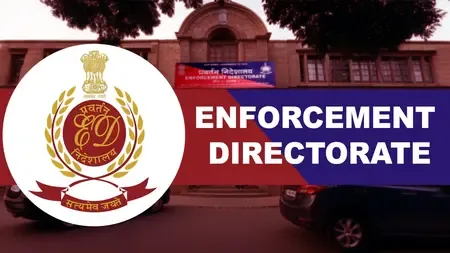
While delivering the sentence to Pradeep Nirankarnath Sharma, a former IAS officer, the Court also mandated the seizure of his assets worth Rs 1.32 crore to the Central government, which were previously attached by the Enforcement Directorate (ED) during its investigations into the money laundering cases tied to these decade-old offenses.
During his tenure as District Collector in Bhuj (Kutch), Sharma colluded with others to engage in a criminal conspiracy, allotting government land at rates lower than his jurisdiction allowed, thereby resulting in a financial detriment of Rs 1.20 crore to the Gujarat government.
The ED statement highlighted that the then Collector gained inappropriate financial advantages through these illicit activities.
“On December 6, the Special Judge (PMLA) in Ahmedabad issued a conviction order against Pradeep Nirankarnath Sharma (Ex-IAS) for PMLA Case Nos. 02/2016 and 18/2018,” stated an ED official.
The Directorate of Enforcement commenced its investigation following various FIRs lodged at multiple police stations in Gujarat, including FIR No. 03/2010 dated 31.03.2010, FIR No. 09/2010 dated 25.09.2010 registered by CID Crime, Rajkot Zone, and FIR 06/2014 dated 30.09.2014 by ACB, Bhuj, under provisions of the Indian Penal Code of 1860 and the Prevention of Corruption Act.
On Saturday, the Special PMLA Court convicted Sharma under Section 3 of The Prevention of Money Laundering Act, 2002, and dismissed his plea for his current sentence to run concurrently with a prior one.
The Court remarked that the accused, as an IAS officer in the role of District Collector and District Magistrate, abused his official capacity by participating in corrupt practices and money laundering offenses. “This disqualified him from receiving any discretion regarding concurrent sentencing,” it noted.
The Court indicated that both offenses under The Prevention of Corruption Act and the PMLA, 2002, are separate statutes with distinct purposes; thus, engaging in violations of both necessitated separate penalties.
“Given the severity and critical nature of the offenses, no valid grounds exist to allow the concurrency of sentences, leading to the rejection of the accused's request,” stated the Special Court.
Previously, a discharge application from the accused was turned down, and upon appeal, the Supreme Court upheld the decision, asserting, “The law recognizes that money laundering constitutes an ongoing act as long as illicit gains are held, portrayed as legitimate, or reintegrated into the economy.”
Thus, the assertion that the offense is not continuous is legally untenable, and the High Court's ruling cannot be overturned on this basis.
Point of View
I commend the judicial system for addressing corruption decisively. This case underscores the need for stringent measures against public officials who misuse their authority. Upholding justice and ensuring accountability are paramount for restoring public trust in government institutions.
NationPress
08/12/2025
Frequently Asked Questions
What was the reason for the sentencing of Pradeep Sharma?
Pradeep Sharma was sentenced for causing a loss of Rs 1.20 crore to the Gujarat government during land allotment by misusing his official position.
What are the consequences of this ruling?
Sharma received a five-year prison sentence, a fine of Rs 50,000, and the confiscation of assets worth Rs 1.32 crore.
What does this case say about corruption in public office?
This case highlights the ongoing issues of corruption and abuse of power within government roles, emphasizing the need for accountability.
What laws were applied in Sharma's conviction?
Sharma was convicted under the Prevention of Money Laundering Act (PMLA) and the Prevention of Corruption Act.
Are there ongoing investigations related to this case?
Yes, the Directorate of Enforcement continues to investigate this case, along with other related FIRs.